Nutsche Filter: The Complete Expert Guide to Filtration and Drying Efficiency
What Is a Nutsche Filter and Why Does It Matter in Modern Process Industries?
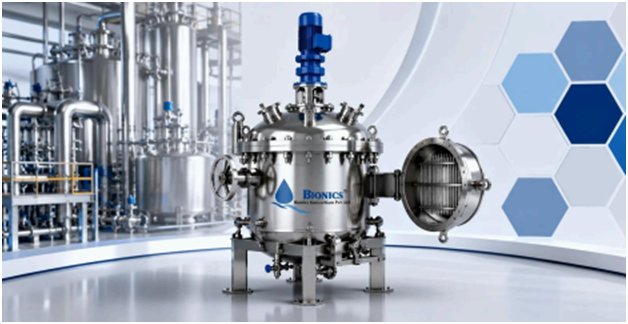
If you work in pharmaceuticals, chemicals, or fine chemical manufacturing, chances are you've heard the term more than once — but do you really know what makes a nutsche filter the backbone of solid-liquid separation? A nutsche filter is a pressure or vacuum-driven filtration vessel used to separate solids from liquids, wash the filtered cake, and in advanced models, dry the product — all inside a single, closed, contamination-free chamber. Unlike an open filtration system, a nutsche filter ensures that everything remains sealed during the entire process – the reason it is relied upon in API manufacturing, dye manufacturing, and specialized chemical facilities.
At Bionics RO, we've seen firsthand how switching from conventional filtration to a well-engineered nutsche filter transforms batch consistency, cuts manual handling, and slashes cycle time.
How Does an Agitated Nutsche Filter Improve Cake Discharge?
The conventional nutsche filter uses gravity or vacuum pressure to push a liquid through a filter fabric, resulting in a solid cake. The challenge? Discharging that cake without opening the vessel. This is where the agitated nutsche filter comes in. It uses a rotating or vertically moving agitator arm to break, mix, wash, and finally scrape the cake toward a bottom discharge valve — no manual scooping, no operator exposure, no cross-contamination.
What Makes an Agitated Nutsche Filter Dryer a Game-Changer?
The agitated nutsche filter dryer, often called ANFD, takes this one step further by combining filtration, washing, and thermal drying in one enclosed vessel. Instead of transferring wet cake to a separate dryer (which risks contamination and product loss), the ANFD heats the jacket, applies vacuum, and dries the product in place. This is now considered a gold-standard technology in pharmaceutical and API plants worldwide because it minimizes handling, reduces solvent exposure, and improves yield recovery significantly.
When Do You Want to Opt for a Pressure Nutsche Filter?
Vacuum filters aren't always the best option. In cases where there is a viscous slurry, fine particles, or a slurry that is hard to filter, the use of a pressure nutsche filter results in faster filtration due to positive pressure on top of the slurry as opposed to using a vacuum underneath.
Comparison Table: Types of Nutsche Filters
|
Type |
Mechanism |
Best For |
Key Advantage |
|
Standard Nutsche Filter |
Vacuum-driven |
Simple filtration, non-viscous slurries |
Cost-effective, easy operation |
|
Agitated Nutsche Filter |
Vacuum + mechanical agitation |
Cake washing, easy discharge |
Reduces manual handling |
|
Agitated Nutsche Filter Dryer (ANFD) |
Vacuum/pressure + heating jacket + agitation |
Filtration, washing, and drying in one unit |
Eliminates product transfer, boosts purity |
Pressure Nutsche Filter
Positive pressure Viscous or slow-filtering slurries
Faster filtration cycles
What Makes Bionics RO the Best Choice for Your Nutsche Filter Needs?
Selecting the right nutsche filter is not only about meeting certain specifications; it’s also about engineering solutions which fit well with your slurry properties and batch sizes. Bionics RO specializes in designing and manufacturing GMP certified nutsche filters, agitated nutsche filter dryers, and pressure nutsche filters for pharmaceutical, chemical, and food grade applications.
Frequently Asked Questions (FAQs)
1. State the principal function of a nutsche filter?
The separation of solid and liquid phases either under vacuum or pressure with the ability to wash and dry the filter cake if the machine allows it, all in a sealed chamber.
2. Explain the difference between agitated nutsche filter and simple nutsche filter?
The agitated nutsche filter consists of a mechanical arm that mixes, washes, and discharges the filter cake while the simple one has to be discharged manually.
3. In what industries is there high use of agitated nutsche filter dryers?
The most frequently utilized industries by Agitated Nutsche Filter Dryers are the pharmaceutical industry, fine chemicals, dye industry, pigment industry, and the specialty polymer industry.
4. Can a pressure nutsche filter deal with viscous slurries better than a vacuum system?
Yes, because pressure will make the process faster compared to vacuum when dealing with viscous products.
5. Can we use a nutsche filter in GMP pharmaceutical processing?
Definitely, because nowadays, nutsche filters are produced to be GMP compliant with CIP systems.
Looking to Improve Your Filtration System?
Why get left behind by out-of-date technology when it comes to filtration? For those who need a standard nutsche filter, agitated nutsche filter, agitated nutsche filter dryer system or fast high pressure nutsche filter, the experts from Bionics RO will be there to create one that best suits your process requirements.
Contact Bionics RO right away for a complimentary process consultation & quotation.
What's Your Reaction?