The Future of Workforce in India: Why Hybrid Hiring Models Are Replacing Traditional Recruitment
From IT staffing solutions to managing a dynamic blue-collar workforce, organizations are rethinking how they build and scale teams in 2026.
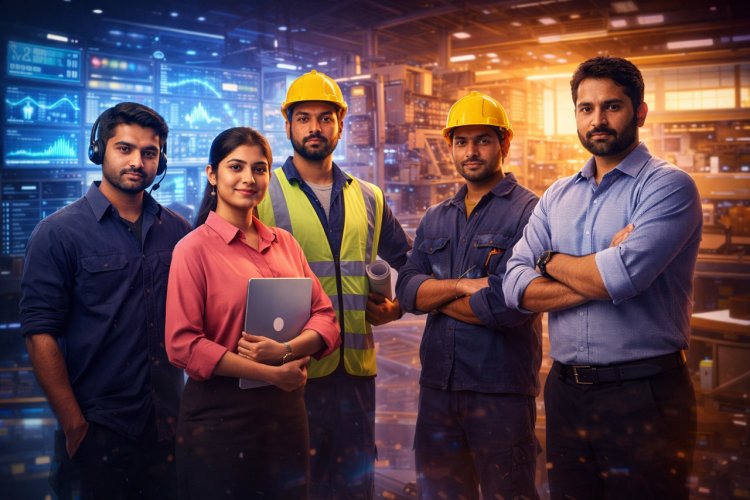
India’s workforce landscape is evolving faster than ever.
With rapid digital transformation, changing business needs, and the rise of project-based work, traditional hiring models are no longer enough. Companies today are moving towards hybrid hiring models—a strategic mix of permanent employees and flexible talent.
From IT staffing solutions to managing a dynamic blue-collar workforce, organizations are rethinking how they build and scale teams in 2026.
What is a Hybrid Hiring Model?
A hybrid hiring model combines:
● Permanent employees for stability and long-term roles
● Contract professionals for flexibility and specialized skills
This approach allows businesses to stay agile while maintaining a strong core team.
In industries driven by innovation and execution, this balance has become essential.
Why Traditional Recruitment is Falling Short
Traditional hiring focuses heavily on full-time employees. While this worked in the past, it creates challenges today:
● Slow hiring processes
● High fixed costs
● Limited flexibility
● Difficulty in scaling quickly
For sectors like IT staffing, where skill requirements change rapidly, and industries relying on a blue-collar workforce, where demand fluctuates, this model often leads to inefficiencies.
The Rise of Flexible Workforce Solutions
Modern businesses need speed and adaptability.
Flexible workforce solutions, including contract staffing, gig workers, and apprenticeships, are gaining popularity. They help companies:
● Access skilled talent quickly
● Reduce operational costs
● Improve workforce productivity
● Respond to market changes faster
In IT staffing, this means bringing in experts for short-term projects like product launches or system upgrades.
For the blue-collar workforce, it ensures smooth operations in sectors such as manufacturing, logistics, and infrastructure.
How Hybrid Hiring Supports Business Growth
A hybrid workforce model offers several advantages:
1. Cost Optimization
Companies can control costs by balancing fixed and variable workforce expenses.
2. Faster Execution
Quick access to skilled talent ensures projects move forward without delays.
3. Better Scalability
Businesses can expand or adjust their workforce based on demand.
4. Reduced Risk
Organizations are not locked into long-term commitments during uncertain times.
This combination makes hybrid hiring one of the most effective workforce management strategies in 2026.
The Role of IT Staffing and Blue-Collar Workforce
Both segments are critical to business success.
● IT staffing solutions enable innovation, automation, and digital transformation
● The blue-collar workforce ensures on-ground execution and operational efficiency
A hybrid model allows companies to manage both effectively—ensuring the right talent is available at the right time.
Technology is Driving the Shift
Technology is playing a key role in enabling hybrid hiring.
Modern workforce platforms help businesses:
● Track and manage talent
● Streamline hiring processes
● Monitor productivity
● Ensure compliance
This has made it easier than ever to manage a mix of permanent and contract employees.
Final Thoughts
The future of hiring is not about choosing one model over another.
It is about building a workforce that is:
● Flexible
● Scalable
● Cost-efficient
● Future-ready
In 2026, companies that adopt hybrid hiring models will have a clear advantage.
Whether it’s IT staffing for innovation or managing a blue-collar workforce for operations, the key is balance.
Because the future of work is not fixed—
it is designed.
What's Your Reaction?