Early Signs of Autism in Children: What Parents Should Know
Learn the early signs of autism in children, from eye contact and speech delays to play and behaviour changes, and when to seek an evaluation.
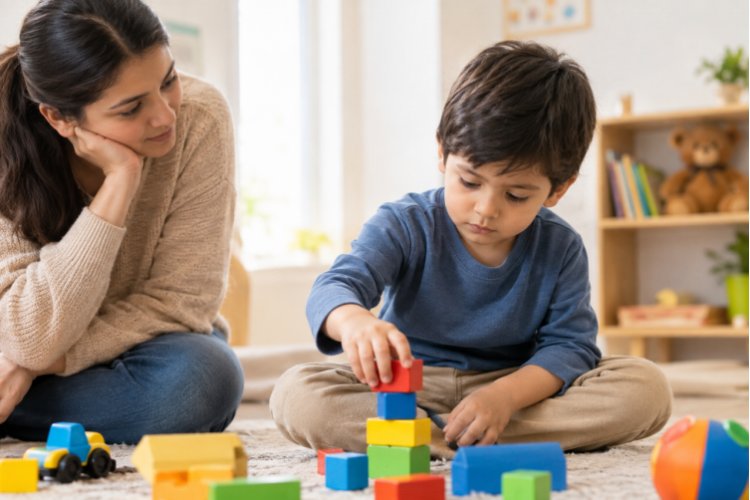
Early Signs of Autism in Children: What Parents Should Know
By the AutismCue Editorial Team
Every parent watches closely as their baby learns to smile, babble, point, and play. Most children grow at their own pace, and a small delay does not always mean a problem. But sometimes, differences in how a child communicates, plays, or reacts to the world can point to autism spectrum disorder (ASD). Knowing the early signs of autism in children helps parents act sooner, ask better questions, and get support at the time it helps the most.
This guide explains the common early signs, how they usually look at different ages, what is normal, and what to do if you are worried.
Quick Answer: What Are the Early Signs of Autism in Children?
The early signs of autism in children include limited eye contact, not responding to their name, delayed or unusual speech, little back-and-forth interaction, repetitive movements or play, strong need for routine, and unusual reactions to sounds, textures, or lights. These signs often appear between 12 and 24 months, and sometimes earlier.
What Is Autism Spectrum Disorder?
Autism is a developmental condition that affects how a person communicates, interacts with others, and experiences the world. It is called a "spectrum" because it looks different in every child. One child may speak very little and need daily support. Another may speak well, have strong interests, and still find social situations hard.
Autism is not caused by bad parenting, and it is not caused by vaccines. Large studies across many countries have found no link between vaccines and autism. Current research points to a mix of genetic and early brain development factors.
According to the U.S. Centers for Disease Control and Prevention (CDC), about 1 in 31 children aged 8 years was identified with autism in its most recent monitoring report (2022 data). Autism is common, and many families go through the same questions you may have today.
Why Spotting the Signs Early Matters
A child's brain grows and changes fastest in the first few years of life. Support given during this time can help children build communication, social, and daily living skills. Organisations such as the American Academy of Paediatrics (AAP) recommend autism-specific screening at 18 and 24 months, in addition to regular developmental checks.
Early support does not "fix" a child. Autism is a lifelong difference, not an illness. What early help does is give a child tools to express needs, connect with family, and feel more comfortable in daily life.
Early Signs of Autism in Children: Main Areas to Watch
Doctors usually look at three broad areas: social communication, speech and language, and behaviour. Here is what each can look like.
1. Social Communication and Interaction
This is often the first area parents notice. Signs may include:
● Avoiding eye contact or looking at faces less than expected
● Not responding when their name is called, even though hearing is normal
● Few or no smiles back when you smile at them
● Not pointing to show you something they find interesting
● Not waving, clapping, or using other gestures
● Little interest in other children or in games like peek-a-boo
● Not bringing objects to share, such as showing you a toy
● Trouble understanding or showing feelings
A key idea here is "joint attention". This means sharing focus with another person, such as looking at a plane in the sky and then looking back at you to share the moment. Children with autism often find this harder.
2. Speech and Language Differences
Not every child with autism has a speech delay, but many show differences such as:
● Little or no babbling by 12 months
● No single words by 16 months, or no two-word phrases by 24 months
● Repeating words or phrases again and again (called echolalia)
● Using words but not to communicate, or not using them in conversation
● A flat, sing-song, or unusual tone of voice
● Losing words or skills they once had
3. Repetitive Behaviours and Strong Routines
Many children with autism show repeated actions or a strong need for sameness. This can include:
● Hand flapping, rocking, spinning, or toe walking
● Lining up toys instead of playing with them in a pretend way
● Focusing on parts of toys, such as spinning a wheel, rather than the whole toy
● Getting very upset by small changes in routine
● Very intense interest in one topic or object
● Repeating the same action or phrase many times
4. Unusual Responses to Sensory Input
Many autistic children react differently to sound, touch, taste, smell, or light. For example, a child may cover their ears at a vacuum cleaner, refuse certain clothing textures, gag on certain foods, or seem not to notice pain. Others may seek out sensations, such as staring at lights or touching the same surface again and again.
Early Signs of Autism by Age
Signs can look different as a child grows. The list below is a general guide, not a test.
6 to 12 Months
● Rarely smiles or shows joy back at you
● Does not respond to their name by 9 to 12 months
● Little or no babbling or sound play
● Does not copy simple actions or sounds
● Rarely reaches out to be picked up
12 to 24 Months
● No pointing or waving by 12 to 14 months
● Delayed first words
● Little interest in other children
● Repeated body movements
● Strong reactions to routine changes
● Loss of words, babbling, or social skills
2 to 3 Years
● Limited pretend play, such as feeding a doll
● Speech that is repeated, unusual, or very limited
● Prefers to play alone most of the time
● Trouble with turn-taking
● Very strong reactions to sounds, textures, or changes
Early Signs in Girls
Autism has long been diagnosed more often in boys, but research suggests many girls are missed. Girls may be better at copying others, hiding difficulties, or appearing quiet and shy. Their interests may also look more "typical", such as animals or books, but may be unusually intense. If your daughter seems socially exhausted, struggles to keep friendships, or has strong sensory reactions, it is still worth speaking with a professional.
What Is Normal, and What Is Not? Always Autism?
One sign alone does not mean a child has autism. Many toddlers are picky eaters, throw tantrums, or prefer favourite toys. Some children talk late and are simply late talkers. Hearing problems, language disorders, and other developmental conditions can also look similar to autism.
What doctors look for is a pattern: several signs together, lasting over time, that affect how the child connects with others and manages daily life.
Red Flags That Need Prompt Attention
Talk to your child's doctor soon if your child:
● Has no babbling, pointing, or gestures by 12 months
● Has no single words by 16 months
● Has no two-word phrases by 24 months
● Loses speech or social skills at any age
● Does not respond to their name or to sounds
Sudden loss of skills should always be checked quickly.
What Parents Can Do If They Are Concerned
1. Write down what you see. Note specific behaviours, when they happen, and how often. Short phone videos can help doctors see what you describe.
2. Talk to your paediatrician. Share your worries clearly. You know your child best, and your concerns matter. Do not accept "wait and see" if your instinct says something is different.
3. Ask about a developmental screening. Doctors may use tools such as the M-CHAT-R/F, a short parent questionnaire used for toddlers between 16 and 30 months. A screening is not a diagnosis. It only shows whether a closer look is needed.
4. Request a full evaluation. A diagnosis is usually made by a team, which may include a developmental paediatrician, child psychologist, speech therapist, or occupational therapist. They observe the child and talk with parents about development and behaviour.
5. Start support without waiting. In many countries, early intervention programmes can begin before a formal diagnosis. Speech therapy, occupational therapy, and parent coaching can start while you wait for results.
6. Check your child's hearing. A simple hearing test can rule out hearing loss as the reason for limited response.
How Parents Can Support Their Child at Home
You do not need special training to help your child connect. Small daily habits make a difference:
● Get down to your child's eye level and talk during play
● Copy your child's sounds and actions to encourage turn-taking
● Use simple words, gestures, and pictures together
● Keep routines predictable and prepare your child for changes
● Offer quiet breaks if your child seems overwhelmed
● Celebrate small steps, such as a look, a sound, or a shared smile
Also look after yourself. Parenting a child with extra needs can feel tiring, and support groups or trusted family members can help.
Final Thoughts
The early signs of autism in children can be subtle, and they look different from child to child. Limited eye contact, delayed speech, repetitive behaviours, and unusual sensory reactions are among the most common signs, but only a qualified professional can say whether a child has autism. If something feels different, trust your instinct, speak with your child's doctor, and ask for a developmental screening. Acting early gives your child the chance to learn, grow, and be understood in their own way.
Frequently Asked Questions
What are the first signs of autism in babies?
The first signs often include little eye contact, few smiles in response to you, not responding to their name by 9 to 12 months, and limited babbling or gestures. These signs vary, and one sign alone is not a diagnosis. A doctor should review any ongoing concerns.
At what age can autism be detected?
Autism can sometimes be recognised as early as 12 to 18 months, and a reliable diagnosis by an experienced professional is possible by age 2. Many children are diagnosed later, but screening at 18 and 24 months helps doctors notice differences early.
Can a child with good eye contact still have autism?
Yes. Some autistic children make eye contact, especially if they have learned to do so. Autism is identified by a pattern of social communication differences and repetitive behaviours, not by eye contact alone. A full evaluation looks at the whole picture of development.
Is a speech delay always a sign of autism?
No. Many children with speech delays do not have autism. Causes can include hearing problems, language disorders, or simply being a late talker. A speech delay together with limited gestures, little social interaction, or repetitive behaviour is more likely to need an autism evaluation.
What should I do if I notice signs of autism in my child?
Speak with your paediatrician, share your observations, and ask for a developmental screening. Keep notes or short videos of behaviours. If needed, request a referral for a full evaluation and early intervention services, which can often start before a formal diagnosis.
Can autism be diagnosed without a speech delay?
Yes. Many autistic children speak on time or have strong vocabularies. They may still struggle with conversation, understanding social cues, or flexible thinking. This is why professionals look at communication, behaviour, and play together, not speech alone.
What's Your Reaction?