How to Choose the Right Air Compressor Receiver Tank for Your Business
An air compressor receiver tank is a small part of your system that has a big effect on performance, energy use and safety. Match the size to your demand, choose the right material and certified design, and keep up with basic maintenance.
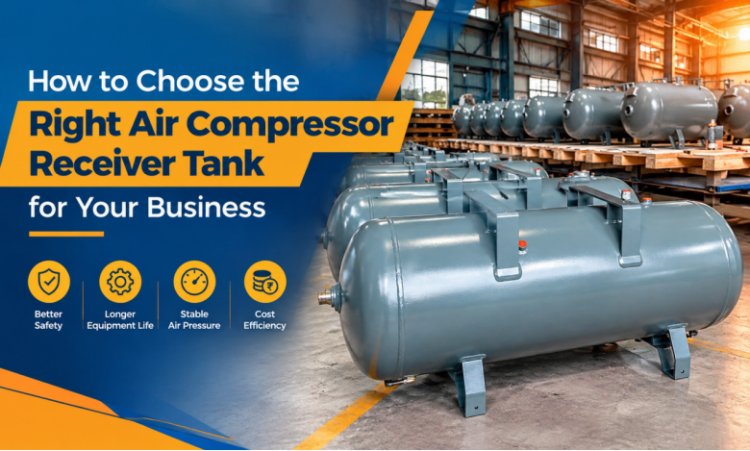
If your air compressor starts and stops constantly, or your tools lose power when demand spikes, the problem may not be the compressor. It may be the air compressor receiver tank, or the lack of a properly sized one. This guide explains what a receiver tank does, how to size it and what to check before you buy.

What Is an Air Compressor Receiver Tank?
An air compressor receiver tank is a pressure vessel that stores compressed air between the compressor and the points where the air is used. Instead of the compressor reacting to every small change in demand, the tank holds a reserve of air that tools and equipment can draw from.
Think of it as a buffer. The compressor fills the tank, and the tank delivers steady air to your system.
Why Your System Needs a Receiver Tank
A receiver tank does more than store air. Here is what it does for your setup:
● Reduces compressor cycling. Fewer starts and stops mean less wear on the motor and lower energy use.
● Handles peak demand. When several tools run at once, the stored air covers the sudden spike.
● Stabilises pressure. A steady supply protects tools and processes that need consistent pressure.
● Cools the air. Air loses heat inside the tank, and moisture condenses so it can be drained.
● Gives the compressor a rest. Short breaks between cycles help extend equipment life.
A well sized receiver tank lets the compressor work calmly instead of constantly chasing demand.
Types of Air Receiver Tanks
Vertical tanks save floor space and make draining condensate easier. They suit compact workshops and plant rooms.
Horizontal tanks are easier to mount directly under or beside a compressor and are common in portable and smaller stationary units.
Wet and dry receivers are used in larger systems. A wet receiver sits right after the compressor and collects most of the moisture. A dry receiver sits after the air dryer and holds clean, dry air for sensitive uses.
How to Size an Air Compressor Receiver Tank
Sizing depends on how much air your system uses and how the compressor behaves. Here are the main inputs:
● Compressor capacity. Check the airflow rating, usually in CFM or litres per minute.
● Air demand pattern. Steady demand needs a smaller tank, while fluctuating demand needs a larger buffer.
● Pressure range. Know the minimum pressure your tools need and the maximum your compressor delivers.
● Duty cycle. Heavy, continuous use calls for more storage.
A common rule of thumb is to size the tank at about 3 to 10 gallons per CFM of compressor output for general use, with the higher end for systems with big demand swings. Treat this as a starting point and confirm with an engineer or your equipment supplier.
Materials, Standards and Safety
A receiver tank holds air under pressure, so safety is not optional. Before buying, check these points:
● Material. Carbon steel is common for general use. Stainless steel suits clean air or corrosive settings.
● Design code. In India, vessels typically follow SMPV (U) Rules, IS 2825 or ASME Section VIII, depending on the application.
● Pressure rating. The tank's design pressure should exceed your maximum working pressure with a safe margin.
● Safety fittings. Look for a pressure relief valve, pressure gauge and a working drain valve.
● Test records. Ask for hydrostatic test results and material certificates.
Installation Tips That Make a Difference
Even a good tank performs badly if installed poorly. Keep these tips in mind:
● Place the tank in a cool, well ventilated area away from direct sunlight.
● Leave enough space around it for inspection and maintenance.
● Mount it on a level, stable base.
● Install the drain valve at the lowest point, so water can leave completely.
● Keep piping connections tight and free from leaks.
Maintenance Checklist
Regular care keeps your tank safe and extends its life. Follow this simple routine:
1. Daily: Drain condensate from the tank.
2. Monthly: Check the pressure gauge and test the safety valve.
3. Every 6 to 12 months: Inspect the exterior for rust, dents or leaks.
4. Periodically: Arrange a professional inspection and pressure test as required by local regulations.
Moisture is the biggest enemy of a receiver tank. Water left inside causes internal corrosion, which weakens the wall over time. Draining often is the easiest way to prevent it.
Common Mistakes to Avoid
● Buying a tank that is too small and causing constant compressor cycling
● Ignoring drain maintenance
● Skipping safety valve checks
● Choosing a tank without proper certification
● Placing the tank in a hot or damp spot
Final Thoughts
An air compressor receiver tank is a small part of your system that has a big effect on performance, energy use and safety. Match the size to your demand, choose the right material and certified design, and keep up with basic maintenance. Do that, and your compressed air system will run smoother and last longer.
What's Your Reaction?