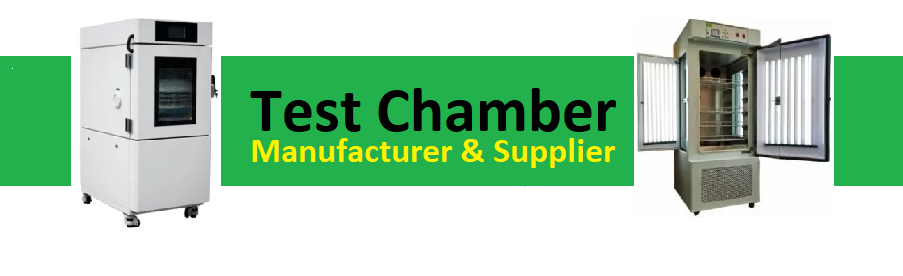
Plant Growth Chambers-Guide: Types, Features, and Applications
Plant growth chambers are environmental test chambers designed to create optimal conditions for plant germination and growth by controlling temperature
What Is a Plant Growth Chamber?
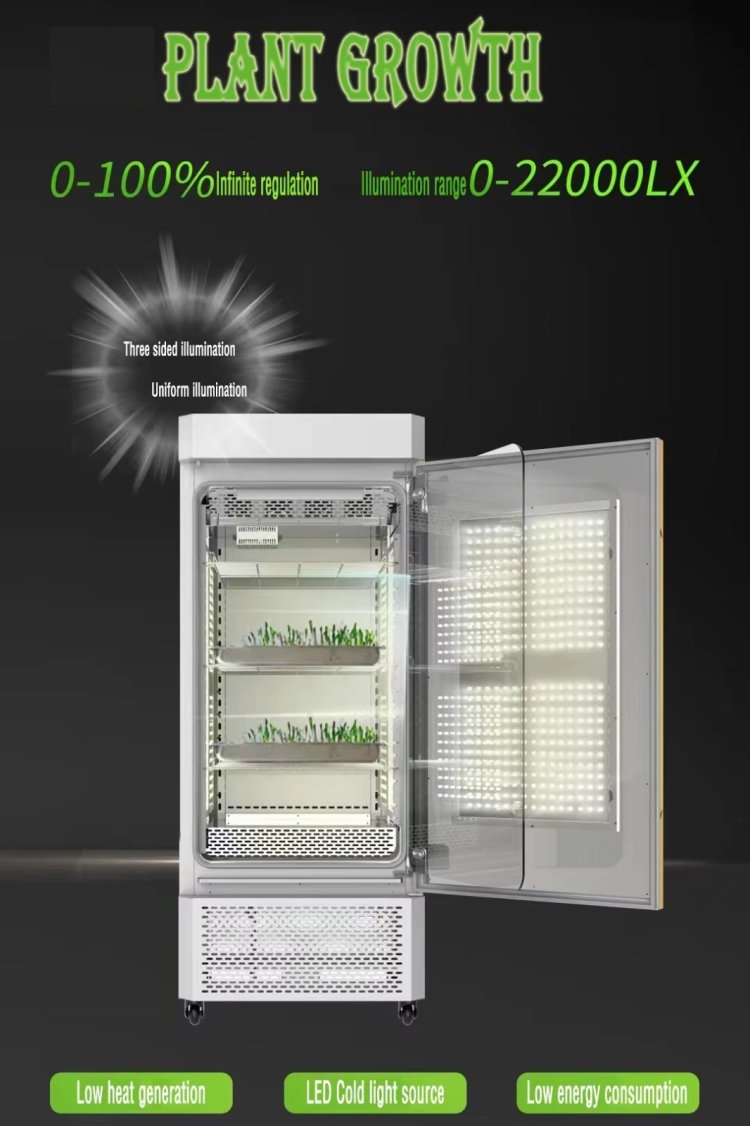
A Plant Growth Chamber is a self-contained, enclosed system designed to simulate and control environmental conditions required for plant growth.
These chambers allow precise regulation of:
-
Temperature
-
Humidity
-
Light intensity and spectrum
-
Photoperiod (day/night cycles)
-
Air circulation
-
CO₂ levels
In simple terms:
It’s a custom-built climate where plants grow on command.
Why Plant Growth Chambers Matter in the USA
The United States faces complex agricultural and environmental challenges:
-
Climate change
-
Food security
-
Sustainable farming
-
Urban agriculture
-
Pharmaceutical crop development
Plant growth chambers help researchers and growers answer urgent questions — faster and more accurately than field trials alone.
They support innovation from coast to coast.
From Field Uncertainty to Lab Precision
Traditional farming depends on weather patterns that can no longer be trusted.
Plant growth chambers eliminate unpredictability.
Inside a chamber:
-
Droughts can be simulated
-
Heat stress can be tested
-
Frost can be recreated
-
Optimal growth conditions can be perfected
This level of control transforms trial-and-error into reliable science.
A Story of Discovery
Imagine a university researcher in the Midwest studying drought-resistant crops.
Instead of waiting years for natural dry seasons, they adjust humidity and temperature inside a growth chamber.
Within weeks, results appear.
The chamber doesn’t rush nature — it reveals it.
How a Plant Growth Chamber Works
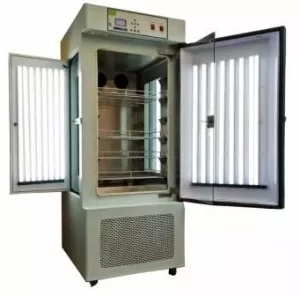
While it may look like a cabinet or walk-in room, a plant growth chamber is a carefully engineered ecosystem.
Step 1: Environmental Programming
Researchers define precise conditions — temperature cycles, light schedules, and humidity targets.
Step 2: Lighting Control
Advanced LED or fluorescent systems provide tailored light spectrums for photosynthesis.
Step 3: Climate Regulation
Heating, cooling, and humidity systems maintain stability around the clock.
Step 4: Air and CO₂ Management
Fresh airflow and controlled CO₂ levels support healthy plant respiration.
Step 5: Monitoring and Data Collection
Sensors continuously track conditions to ensure repeatable results.
The Power of Light: More Than Brightness
Light inside a plant growth chamber is carefully engineered.
It’s not just about intensity — it’s about quality.
Different light spectrums influence:
-
Leaf development
-
Flowering
-
Fruit production
-
Root growth
In U.S. research labs, lighting customization unlocks deeper insights into plant behavior.
Temperature: Simulating Seasons on Demand
Growth chambers can replicate:
-
Spring warmth
-
Summer heat
-
Autumn cooling
-
Winter cold
This allows year-round experimentation.
For American agriculture, this means faster crop development cycles and climate resilience testing.
Humidity and Airflow: Invisible Influencers
Humidity affects transpiration, disease risk, and nutrient uptake.
Airflow ensures:
-
Even temperature distribution
-
Stronger plant structure
-
Reduced mold and fungus
Plant growth chambers balance these invisible forces with precision.
CO₂ Control: Feeding Photosynthesis
Plants breathe carbon dioxide.
By adjusting CO₂ levels, researchers can:
-
Enhance growth rates
-
Study climate change impact
-
Improve yield efficiency
This capability is especially valuable in controlled environment agriculture across the USA.
Types of Plant Growth Chambers
Reach-In Chambers
Compact systems ideal for universities and small labs.
Walk-In Chambers
Large-scale rooms supporting extensive research and crop trials.
Customized Research Chambers
Built to meet specific scientific or commercial goals.
Industries That Rely on Plant Growth Chambers
Agriculture and Crop Science
Improving yield, resilience, and nutrition.
Biotechnology and Pharmaceuticals
Growing plants used in medicine and vaccines.
Academic Research
Supporting plant biology, genetics, and climate studies.
Vertical Farming and Urban Agriculture
Optimizing indoor food production for U.S. cities.
Supporting Food Security in America
As population grows and farmland shrinks, plant growth chambers help develop:
-
High-yield crops
-
Climate-tolerant varieties
-
Efficient growing methods
They play a quiet but powerful role in feeding the nation.
Sustainability and Environmental Research
Growth chambers support sustainability by:
-
Reducing water usage
-
Minimizing chemical dependency
-
Testing eco-friendly practices
They help align science with environmental responsibility.
Ease of Use and Automation
Modern plant growth chambers are designed for productivity.
Features often include:
-
Touchscreen controls
-
Automated cycles
-
Data logging
-
Remote monitoring
This allows researchers to focus on discovery, not equipment.
Reliability and Consistency
Repeatable conditions lead to trustworthy results.
Plant growth chambers ensure experiments can be replicated across seasons and locations.
For U.S. labs, consistency equals credibility.
Choosing the Right Plant Growth Chamber
American buyers typically consider:
-
Chamber size
-
Environmental range
-
Lighting options
-
Control accuracy
-
Long-term support
The right choice supports years of innovation.
The Future of Plant Growth Chambers
As technology advances, growth chambers are evolving.
Future developments may include:
-
AI-driven climate optimization
-
Energy-efficient systems
-
Advanced plant monitoring
But the mission remains the same — understanding plants to improve life.
Frequently Asked Questions (FAQs)
What is a plant growth chamber used for?
It allows controlled plant research by simulating specific environmental conditions.
Are plant growth chambers used only for research?
No. They are also used in agriculture, pharmaceuticals, and vertical farming.
Can growth chambers replace field trials?
They complement field trials by accelerating and refining research.
Do growth chambers use a lot of energy?
Modern designs focus on energy efficiency and sustainability.
Can different crops be grown in one chamber?
Yes, with proper environmental adjustments.
Why are plant growth chambers important in the USA?
They support food security, climate research, and agricultural innovation.
Final Thoughts: Growing Knowledge, One Plant at a Time
A plant growth chamber may look like a box or a room.
But inside, it holds possibility.
It allows scientists, farmers, and innovators to ask bold questions — and receive clear answers.
In a changing world, where climate uncertainty challenges tradition, the Plant Growth Chamber stands as a bridge between nature and technology.
Not to control life —
But to understand it.
And understanding is where progress begins.
What's Your Reaction?