First-Party Data vs. Third-Party Data: What Marketers Need to Know
Explore the differences between first-, second-, and third-party data, their marketing benefits, practical collection methods, and how businesses can combine them to build more informed and responsible marketing strategies.
Imagine a B2B software company planning to promote a new product to IT decision-makers. It already has contact details from website inquiries, webinar attendance records, and information about existing customers. However, it wants to reach businesses that have never interacted with its brand.
Should it rely on its existing customer records, collaborate with an industry partner, or purchase an external audience database?
This is where understanding first-party data vs. third-party data becomes important. Each source offers different opportunities, and choosing the right combination can influence campaign reach, targeting accuracy, and marketing costs.
Understanding First-, Second-, and Third-Party Data
Before developing a marketing data strategy, marketers need to understand where their information originates and how it reaches them.
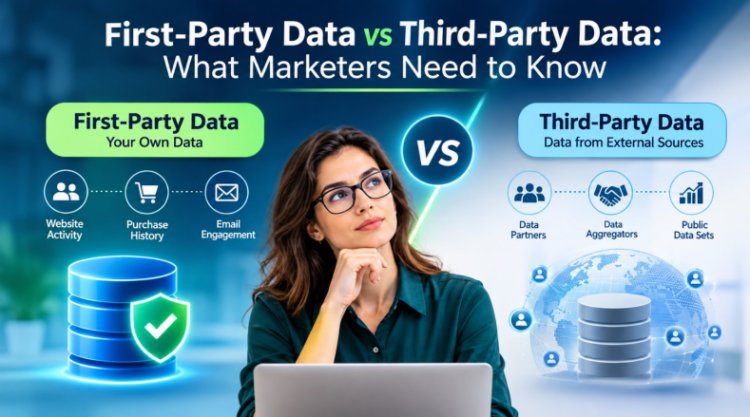
· First-party data: Information a business collects directly through its own interactions with customers and prospects. Examples include website inquiries, purchase histories, newsletter subscriptions, CRM records, and customer support interactions.
· Second-party data: Another organization's first-party data shared directly through a business partnership or commercial agreement. For example, a software company may receive relevant audience insights from an industry association through an agreed data-sharing arrangement.
· Third-Party Data: Information collected or aggregated by external providers that did not have the original direct relationship with the individuals or organizations represented. Such providers may compile information from multiple sources and offer audience segments or business contact records.
The distinction between first-party data vs. second-party data vs. third-party data is primarily about the source and the relationship between the data collector and the business using the information.
First-Party Data: Build Marketing Decisions Around Real Customer Interactions
First-party information gives businesses visibility into how people actually engage with their products, services, and content.
Consider an industrial equipment manufacturer. Its website records inquiries about specific machinery, while its CRM tracks previous purchases, customer locations, and sales conversations. Together, these records help the marketing team understand which industries show interest and what products generate qualified inquiries.
That information is considerably more useful than assuming every business in the manufacturing sector has the same requirements.
The benefits of first-party data include greater insight into existing customer relationships, more relevant personalization, improved audience segmentation, and better coordination between marketing and sales.
How to Collect First-Party Data Responsibly
How to collect first-party data should be a practical consideration, not simply a technology investment.
Businesses can build useful data sources through:
· Website forms that request relevant business or contact information.
· Newsletter subscriptions and content downloads.
· Customer surveys and preference centers.
· Purchase records, service requests, and CRM interactions.
· Webinar registrations and event participation.
· Customer support conversations and product engagement.
However, collecting more information does not automatically produce better results. A company should request information that supports a clear business purpose, explain how it will be used, and maintain reasonable processes for correcting outdated records.
Third-Party Data: Extend Your Reach Beyond Existing Audiences
A business cannot always generate enough customer information through its own channels. A new company, for instance, may have limited website traffic and few existing customer records. Waiting until it builds a substantial database could restrict its market research and lead-generation efforts.
This is where external data providers can help.
How marketers use third-party data depends on their objectives. A marketing team might use externally sourced information to identify companies within a particular industry, understand audience characteristics, expand prospecting opportunities, or enrich existing business records.
For example, a cybersecurity vendor targeting financial institutions may already know its existing customers. An external business database could help identify additional organizations by industry, company size, location, and relevant job function.
The benefits of third-party data include broader audience coverage, faster access to external market information, and opportunities to identify prospects outside a company's existing network.
However, marketers should not assume that every purchased database is accurate or suitable for their campaigns. Data coverage, collection methods, source transparency, recency, permitted usage, and verification procedures all require attention.
First-Party Data vs. Third-Party Data: Which Should Your Business Choose?
There is no universal winner. The right choice depends on the marketing objective.
First-party data is particularly useful for customer retention, existing-account engagement, personalized communication, and understanding how prospects interact with a brand.
Third-party data can support market expansion, prospect identification, audience enrichment, and broader campaign planning.
Second-party data can complement both by providing information from a relevant business partner.
Consider a B2B marketing agency serving healthcare technology companies. Its own CRM may contain previous inquiries and client interactions. A partnership with a healthcare industry organization could provide access to additional relevant audience insights. An external provider might then help identify businesses that fit the agency's target market.
Combining these sources creates a wider view of the potential audience. The agency must still evaluate whether each source is appropriate for its intended use.
Building a Responsible First-Party Data Marketing Strategy
An effective first-party data marketing strategy begins with clear objectives. A business should identify which customer information it needs, where that information originates, and how marketing and sales teams will use it.
Strong customer data collection also requires consistent record management. Duplicate entries, outdated contact details, incomplete company information, and inconsistent field formats can undermine otherwise useful datasets.
This is where marketing data analytics becomes valuable. Marketers can assess audience engagement, campaign responses, conversion patterns, and customer segments to understand which information supports better decisions.
For paid advertising, Google Ads also provides enhanced conversions using hashed first-party customer information for conversion matching. Google consolidated its enhanced conversions for web and leads settings in April 2026, supporting data connections through website tags, Data Manager, and APIs. Businesses still need to configure these features appropriately and meet applicable privacy requirements.
Most importantly, data collection and activation must respect relevant privacy laws, consent requirements, user choices, and disclosure obligations. Hashing data does not automatically remove its status as personal data.
The Smarter Approach: Combine Data Sources with a Clear Purpose
The discussion around first-party data vs. third-party data should not become a choice between using one source and abandoning the other.
First-party data helps businesses understand the audiences they already know. Second-party data can introduce relevant insights through trusted partnerships. Third-party data can extend market visibility beyond existing relationships.
The strongest data-driven marketing programs evaluate all three sources based on accuracy, relevance, transparency, and business objectives.
For marketers, the real advantage does not come from accumulating the largest database. It comes from knowing where the information originated, whether it is suitable for the intended purpose, and how it can better support customer and business outcomes.
What's Your Reaction?