What is a Vibration Test Chamber? How It Works
Yatherm Scientific offers vibration test chambers for combined environmental testing, ensuring durability, safety, and reliability of products across various industries. They are available in volumes of 600, 1200 or 2200 liters.
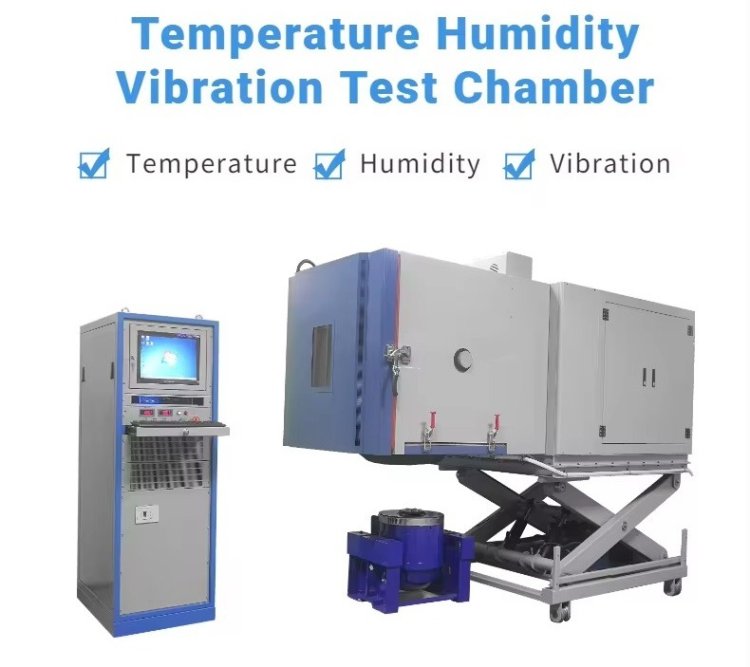
What Is a Vibration Chamber? (In Real Human Words)
A vibration chamber is a specialized testing machine that shakes products in a controlled, programmable, and repeatable way to simulate:
-
Road vibrations
-
Aircraft turbulence
-
Ship and ocean motion
-
Earthquakes
-
Factory machine vibrations
-
Transportation damage
-
Years of wear and tear
In simple words:
A vibration chamber is a time machine for stress. It squeezes years of real-world shaking into hours or days inside a lab.
In the United States, vibration chambers are used every day in:
-
Automotive testing centers
-
Aerospace labs
-
Defense manufacturing
-
Electronics factories
-
Medical device companies
-
Battery and EV development
-
Packaging validation labs
If a product is going into a car, plane, rocket, hospital, factory, or battlefield—it must survive vibration testing.
Why Vibration Is the Silent Killer of Products
Most product failures don’t happen because of big accidents.
They happen because of:
-
A tiny solder joint slowly cracking
-
A connector slowly loosening
-
A screw slowly backing out
-
A wire slowly chafing
-
A plastic housing slowly fatiguing
Vibration is invisible, but it is relentless.
A delivery truck driving from California to New York can shake a product millions of times.
An aircraft component experiences constant vibration for thousands of hours.
A factory machine vibrates every single day for years.
A vibration chamber answers one brutal question:
“Will this product still work after the real world beats on it?”
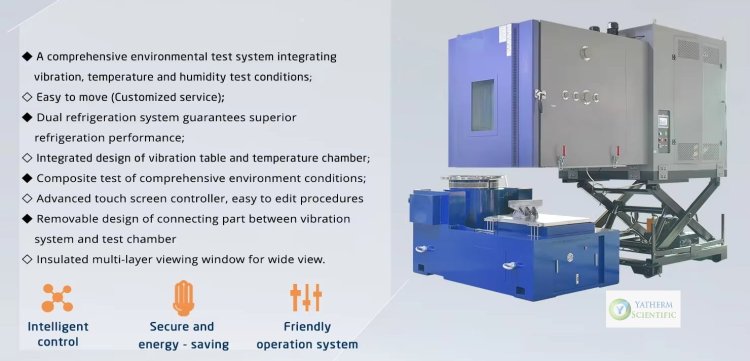
How a Vibration Chamber Works (Step by Step, Human Way)
Let’s break it down in simple terms.
1. The Shaker System (The Muscle)
At the heart of every vibration chamber is a shaker:
-
Either electrodynamic (most common in USA labs)
-
Or servo-hydraulic (for very heavy loads)
This shaker is like a super-powered speaker:
-
Instead of moving air, it moves steel
-
Instead of making sound, it makes controlled earthquakes
2. The Table (The Stage)
Your product is mounted on a vibration table using:
-
Fixtures
-
Clamps
-
Custom mounting plates
This table moves:
-
Up and down
-
Side to side
-
Front to back
-
Or in all directions at once
3. The Controller (The Brain)
A digital controller tells the system:
-
How fast to vibrate (frequency)
-
How strong to vibrate (amplitude)
-
How long to vibrate
-
In what pattern
It can simulate:
-
Smooth highway driving
-
Rough off-road terrain
-
Aircraft turbulence
-
Random chaos
-
Earthquake-like shocks
4. The Sensors (The Nervous System)
Accelerometers are attached to:
-
The table
-
The product
They measure:
-
Actual vibration
-
Product response
-
Resonance points
-
Structural behavior
5. The Test Runs (The Trial by Fire)
The product is shaken for:
-
Hours
-
Days
-
Or even weeks
Then engineers inspect:
-
Cracks
-
Loose parts
-
Electrical failures
-
Performance drops
-
Cosmetic damage
Types of Vibration Tests (And Why Each Matters)
1. Sinusoidal (Sine) Vibration Test
This is a smooth, controlled sweep from low frequency to high frequency.
Used to:
-
Find resonance points
-
Discover weak structures
-
Identify design problems
It’s like slowly turning up the stress knob and watching where the product starts to complain.
2. Random Vibration Test
This is real-world chaos.
Instead of one smooth frequency, the product is hit with:
-
Many frequencies
-
All at once
-
In unpredictable patterns
This simulates:
-
Road conditions
-
Aircraft environments
-
Truck transport
-
Industrial machines
This is the most common test in USA automotive and aerospace industries.
3. Shock Testing
This simulates:
-
Drops
-
Impacts
-
Sudden hits
-
Crashes
Think:
-
A package falling off a conveyor
-
A military device dropped during handling
-
A product slammed during shipping
4. Combined Environmental Testing
Many advanced labs combine:
-
Vibration + Temperature
-
Vibration + Humidity
-
Vibration + Altitude
Because in real life:
Products don’t suffer from only one problem at a time.
What's Your Reaction?