Heat Exchangers Explained: A Practical Guide for Industrial Efficiency
A heat exchanger that isn't performing at its best doesn't usually fail outright. Instead, it quietly forces the rest of the system to work harder, consuming more energy to achieve the same results.
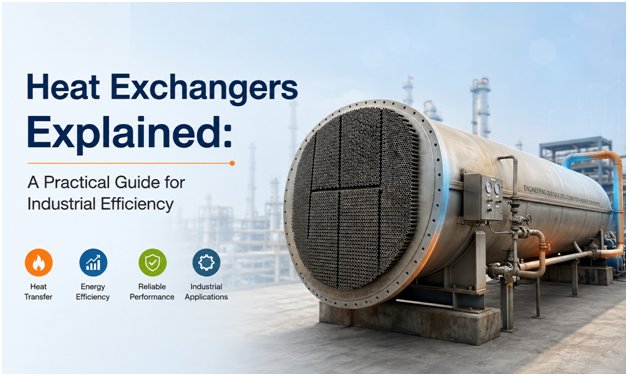
Heat exchangers are among the most essential yet under-discussed pieces of equipment in industrial and commercial systems. They quietly manage the transfer of thermal energy between fluids, keeping processes running smoothly, protecting equipment, and controlling energy costs. Despite their importance, many facility operators don't fully understand how these systems work or how to get the most value from them
This guide breaks down the fundamentals of heat exchangers, the common types in use today, and practical tips for improving their performance.
What Is a Heat Exchanger?
A heat exchanger is a device that transfers heat between two or more fluids without allowing them to mix directly. One fluid is typically hotter and transfers its thermal energy to a cooler fluid, either heating it up or cooling the hotter fluid down, depending on the application.
This simple principle powers countless industrial processes, from chemical manufacturing to HVAC systems to power generation. Without efficient heat exchange, many of these processes would be far more expensive and energy-intensive to run.
Common Types of Heat Exchangers
Different applications call for different exchanger designs. Here's a quick breakdown of the most widely used types:
|
Type |
Common Applications |
Key Advantage |
|
Shell and tube |
High pressure, high temperature processes |
Durable, handles harsh conditions well |
|
Plate heat exchanger |
Food processing, HVAC, moderate pressure systems |
Compact, easy to clean and maintain |
|
Air-cooled |
Remote sites, water-scarce locations |
No water required for cooling |
|
Spiral |
Applications with high fouling potential |
Self-cleaning flow pattern |
Choosing the right type isn't just about upfront cost. It depends on fluid properties, pressure requirements, space constraints, and how easily the unit needs to be maintained over its lifespan.
Why Efficiency Matters More Than Most Realize
A heat exchanger that isn't performing at its best doesn't usually fail outright. Instead, it quietly forces the rest of the system to work harder, consuming more energy to achieve the same results.
Over months or years, this inefficiency adds up to significant, avoidable costs. That's why regular performance monitoring matters just as much as the initial equipment selection.
"The most expensive heat exchanger isn't the one with the highest price tag. It's the one that's been losing efficiency silently for years without anyone noticing."
Factors That Affect Performance
Several variables influence how well a heat exchanger performs over time:
● Fouling and scaling — mineral deposits and particulate buildup reduce heat transfer efficiency
● Flow rate balance — both under-flow and over-flow conditions create inefficiencies
● Material selection — compatibility with the fluids involved affects longevity and performance
● System sizing — an undersized or oversized unit rarely performs optimally
● Maintenance frequency — regular cleaning and inspection prevent gradual performance decline
Each of these factors interacts with the others, which is why a holistic approach to maintenance tends to outperform a reactive, fix-it-when-it-breaks strategy.
Practical Tips for Better Performance
Facility teams looking to get more value from their heat exchangers can start with a few straightforward practices:
1. Establish a cleaning schedule based on actual fouling data rather than guesswork.
2. Monitor pressure drop trends to catch fouling early, before it significantly impacts efficiency.
3. Track temperature differentials across the unit to spot gradual performance decline.
4. Review flow rates periodically, especially after any upstream or downstream process changes.
5. Verify design suitability whenever process conditions shift meaningfully from the original specifications.
None of these steps require major capital investment. They're primarily about consistency and attentiveness, which often deliver outsized returns compared to their cost.
The Bigger Picture
Heat exchangers may not be the most visible equipment in a facility, but their impact on overall energy efficiency and operating costs is substantial. A well-maintained, correctly sized unit can run reliably for years, while a neglected one can quietly erode a facility's energy budget without ever triggering an alarm.
Understanding the basics of how these systems work, along with the factors that influence their performance, puts facility operators in a much stronger position to manage costs and avoid unnecessary downtime.
Final Thoughts
Heat exchangers are a foundational technology across countless industries, and their performance directly affects both operating costs and process reliability. By understanding the different types available, the factors that influence efficiency, and the value of proactive maintenance, facilities can avoid the hidden costs that come with a poorly monitored system.
Whether you're specifying new equipment or maintaining an existing installation, a little attention to the fundamentals goes a long way toward keeping operations efficient and cost-effective over the long term.
What's Your Reaction?