Salt Spray Chamber (Corrosion Test Chamber) | Price, Manufacturer
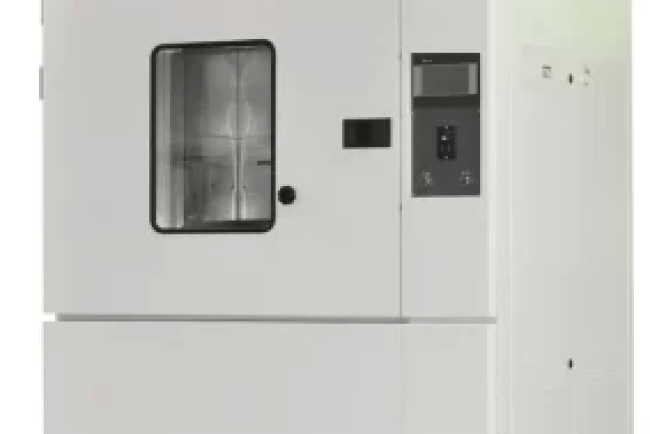
A salt spray test chamber, Corrosion Test Chamber is a lab device that creates a controlled, corrosive salt mist environment to rapidly test the rust and corrosion resistance of painted, coated, or plated materials (metals, plastics) for industries like automotive, aerospace, and electronics
What Is a Salt Spray Chamber?
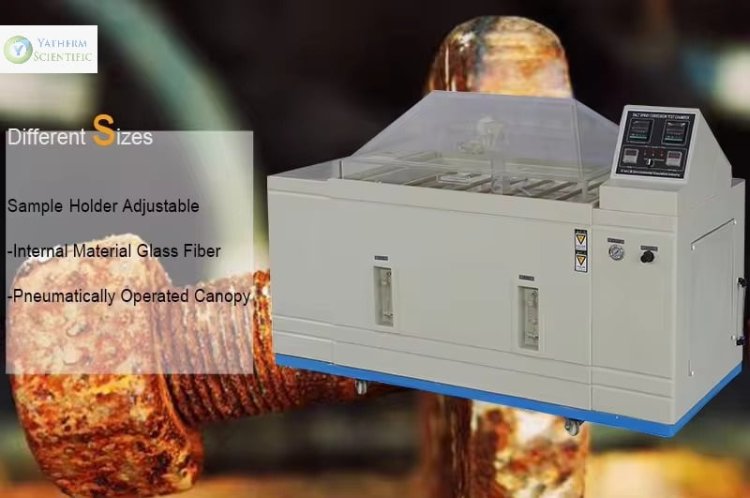
A Salt Spray Chamber, also known as a salt fog or corrosion test chamber, is a laboratory testing system designed to evaluate the corrosion resistance of metals, coatings, surface treatments, and finishes.
It recreates a highly corrosive environment by exposing test samples to a fine mist of salt solution inside a controlled chamber.
In simple terms:
It simulates years of environmental exposure in days or weeks.
Why Salt Spray Testing Matters in the USA
The United States builds for longevity.
From highways and skyscrapers to cars, appliances, military equipment, and consumer products — durability matters.
Salt spray testing helps ensure:
-
Structural safety
-
Product reliability
-
Long service life
-
Reduced maintenance costs
Whether it’s road salt in northern states, coastal air along the Atlantic and Pacific, or industrial pollution, American infrastructure faces constant corrosion challenges.
The Science Behind Accelerated Corrosion
In the real world, corrosion happens slowly due to moisture, oxygen, and salts.
The Salt Spray Chamber accelerates this process by creating a continuous corrosive atmosphere.
Inside the chamber:
-
Salt solution is atomized into a fine mist
-
Temperature is carefully controlled
-
Humidity remains consistently high
This combination forces materials to reveal weaknesses quickly.
How a Salt Spray Chamber Works
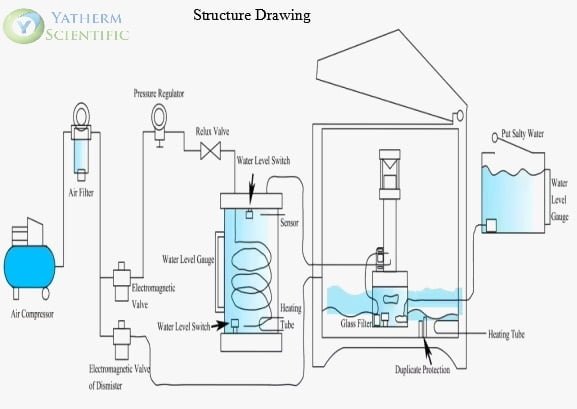
Although the concept is straightforward, the execution requires precision.
Step 1: Preparation of Salt Solution
A carefully prepared salt solution is used to create the corrosive environment.
Step 2: Sample Placement
Test specimens are mounted inside the chamber at specific angles to ensure uniform exposure.
Step 3: Fog Generation
Compressed air passes through a spray nozzle, converting the salt solution into a fine, continuous fog.
Step 4: Controlled Environment
Temperature and fog density are maintained consistently throughout the test duration.
Step 5: Observation and Evaluation
Samples are inspected periodically to assess corrosion behavior.
The Role of Time in Salt Spray Testing
Time behaves differently inside a Salt Spray Chamber.
What might take years outdoors can happen in days.
Engineers use this accelerated aging to:
-
Compare coatings
-
Improve formulations
-
Validate suppliers
-
Predict lifespan
It’s not about recreating nature exactly — it’s about revealing vulnerability.
Key Features of a Modern Salt Spray Chamber
Modern Salt Spray Chambers used in U.S. laboratories are built for reliability and repeatability.
Corrosion-Resistant Construction
The chamber body is designed to withstand continuous exposure to salt and moisture.
Uniform Fog Distribution
Advanced nozzle systems ensure consistent salt mist throughout the chamber.
Precise Temperature Control
Stable temperature maintains repeatable testing conditions.
User-Friendly Control Panel
Digital interfaces allow operators to set and monitor test parameters easily.
Sample Holding Systems
Adjustable racks ensure proper exposure angles and spacing.
Automation and Digital Advancements
American industries value efficiency.
Modern Salt Spray Chambers often include:
-
Automated test cycles
-
Digital timers
-
Data logging
-
Alarm systems
These features reduce manual intervention and improve consistency.
Industries That Depend on Salt Spray Chambers
Automotive Industry
Vehicles face road salt, moisture, and pollution.
Salt spray testing ensures:
-
Body panels resist rust
-
Fasteners maintain integrity
-
Coatings last longer
Aerospace and Defense
Failure is not an option.
Salt spray testing validates corrosion resistance of critical components used in harsh environments.
Construction and Infrastructure
Bridges, railings, and structural steel must survive decades of exposure.
Salt spray chambers help engineers choose durable materials.
Electronics and Electrical Components
Corrosion can cause signal failure.
Salt spray testing protects reliability in connectors and enclosures.
Marine and Coastal Applications
Salt-rich air accelerates corrosion.
Testing ensures long-term performance near oceans and ports.
Why U.S. Manufacturers Rely on Salt Spray Testing
The American market is competitive.
A product that fails early damages trust.
Salt spray testing helps manufacturers:
-
Reduce warranty claims
-
Improve product quality
-
Meet customer expectations
-
Protect brand reputation
Interpreting Test Results
Salt spray results are not just pass or fail.
Engineers evaluate:
-
Type of corrosion
-
Spread pattern
-
Time to first failure
These insights guide design improvements.
Training and Ease of Operation
Modern chambers are designed for real laboratories.
Benefits include:
-
Simple operation
-
Reduced training time
-
Consistent results across shifts
This supports productivity in U.S. manufacturing environments.
Maintenance and Reliability
Salt spray chambers are built for long-term use.
Proper maintenance ensures:
-
Consistent fog quality
-
Accurate temperature control
-
Reliable test outcomes
Reliability is critical when results influence high-value decisions.
Cost Savings Through Prevention
Corrosion failures are expensive.
Salt spray testing helps prevent:
-
Product recalls
-
Structural failures
-
Rework and redesign
Testing early saves millions later.
The Human Impact of Corrosion Testing
Behind every test is a person relying on safety.
A driver on a highway. A worker on a bridge. A passenger in an aircraft.
Salt spray chambers quietly help protect them all.
Choosing the Right Salt Spray Chamber
U.S. buyers often consider:
-
Chamber size
-
Control accuracy
-
Build quality
-
Ease of operation
-
Long-term support
The right system becomes a trusted quality partner.
The Future of Salt Spray Testing
As materials evolve, corrosion testing evolves too.
Future systems may include:
-
Smarter monitoring
-
Advanced data integration
-
Hybrid corrosion tests
But the core mission remains unchanged: durability.
Frequently Asked Questions (FAQs)
What is a Salt Spray Chamber used for?
It tests the corrosion resistance of metals and coatings under accelerated conditions.
Why is salt used in corrosion testing?
Salt accelerates corrosion, revealing material weaknesses quickly.
Who uses Salt Spray Chambers in the USA?
Automotive, aerospace, construction, electronics, and marine industries.
Does salt spray testing predict real-world life exactly?
It accelerates corrosion but is mainly used for comparison and quality control.
How long do salt spray tests run?
Test durations vary from hours to weeks depending on requirements.
Can coatings be compared using a Salt Spray Chamber?
Yes. It is commonly used to evaluate coating performance.
Final Thoughts: Testing Today for a Stronger Tomorrow
Corrosion never rests.
The Salt Spray Chamber gives engineers the power to challenge materials before nature does.
Across the United States, this chamber helps build safer cars, stronger bridges, longer-lasting products, and greater confidence in what we use every day.
By compressing years into days, it allows innovation to move faster — and reliability to last longer.
What's Your Reaction?