Ultrasonic Thickness Gauge with Data Logging: Fully Measured and Automatically Logged
Ultrasonic Thickness Gauge often called ultrasonic wall thickness gauge is a handheld, microprocessor controlled instrument designed to perform data logging and general thickness measurement activities even in tough conditions.
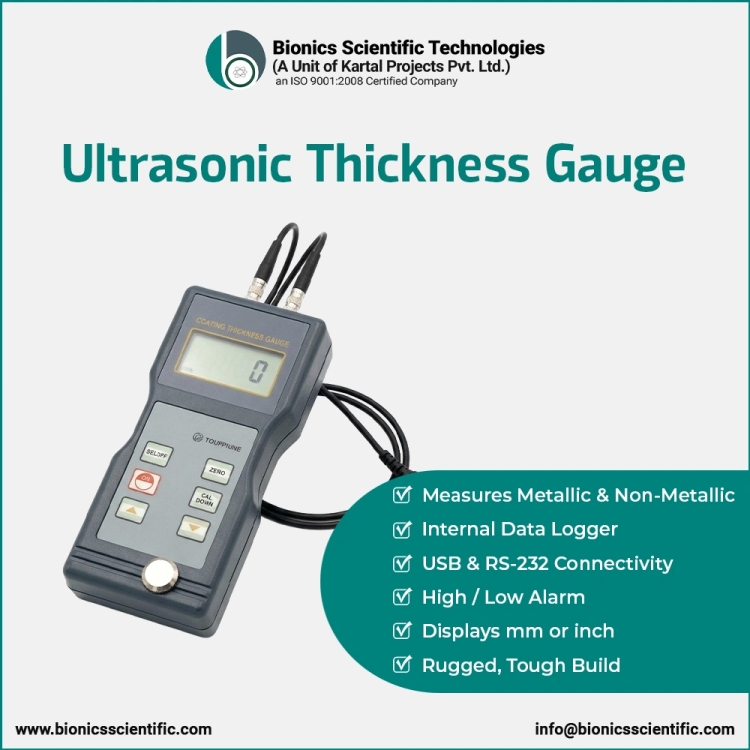
Checking the condition of material has moved away from using measuring instruments and guessing. Industries that operate in a safe and reliable manner need measuring and logging instruments that provide exact and reliable measurements. The example of such instruments is an Ultrasonic Thickness Gauge with Data Logging which has two remarkable qualities -
precise measurement and automatic logging. An Ultrasonic Thickness Gauge with Data Logging is one of the most valuable instruments of modern quality control systems.
What Is an Ultrasonic Thickness Gauge with Data Logging?
An Ultrasonic Thickness Gauge with Data Logging is a non-destructive testing instrument used for measuring the thickness of metals, plastics and composites with the help of high-frequency sound waves. The feature that distinguishes this instrument from others is its automatic logging function.
Ultrasonic Thickness Measurement Technology Principle of Operation
The ultrasound travels through the metal and reflects from the other side, making it possible for the device to calculate the thickness of the metal based on the time required for the wave to get back and forth. Therefore, the user gets the information about any corrosion inside, thinning of walls and deterioration of the material. With data logging, all the readings will be registered in the database, which makes it easier to analyze the trend of measurements instead of one-time checks.
Why Is the Data Logging Feature Important for This Inspection?
Unlike regular thickness gauges, ultrasonic thickness measurement device needs a person to write down each measurement manually; this way of working is time-consuming and prone to mistakes. If there are many points to measure, this process becomes even more difficult. In case of data logging, all the readings will be done automatically. This feature not only saves time but is very useful in the process of corrosion management.
Important Features of Reliable Units
Some of the features that make an Ultra Sound Thickness Gauge with Data Logging reliable include wide measuring ranges, high resolution display screens, use with different types of transducers, and inbuilt memory that can store thousands of data points. Other advanced features found in some of these units include Bluetooth/USB data transfer capacity, echo to echo mode of operation appropriate for coated materials, and custom logging.
Uses in Different Industries
This kind of equipment is very important in the inspection of pipelines in the oil and gas industry, assessment of ship hulls in the marine construction industry, and inspection of components in aircraft manufacturing industry. It is also very important in industrial boilers and vessels. In the
manufacturing industry, it is used in the quality control department to measure the specifications of the materials used in manufacture.
Considerations to Consider when Choosing the Instrument
When selecting these devices, you should think about accuracy of the measurement, adaptability of the transducer to different materials, memory, and software compatibility with reporting process. And if the company performs lots of inspections, then you should also pay attention to the battery life and durability, as the field conditions require high reliability.
Why Bionics Scientific as Your Partner
Our company offers our customers accurate, durable, and efficient Ultrasonic Thickness Gauges with Data Logging.
Conclusion
Ultrasonic Thickness Gauge with Data Logging does not only involve the measurement but also documentation and protection of your measurements results. Get to know more about our precision measurement devices at Bionics Scientific.
What's Your Reaction?