How Do Our Bodies Naturally Repair and Regenerate Jawbone and Teeth
Here is where CEMP1 ELISA kit research becomes relevant. The CEMP1 is a novel cementum component the presence of which appears to be limited to cementoblasts and their progenitors.
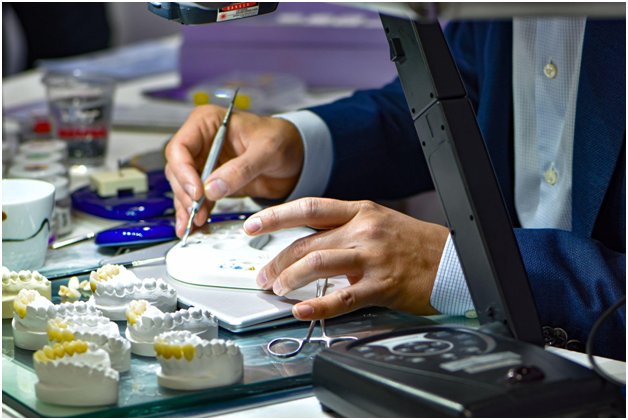
Your teeth and jawbone do not regenerate the same way other tissues do, and the window for repair is shorter than you might think.
Your jawbone is actively remodeling itself every single day. A continuous cycle involves specialized cells: osteoclasts break down old bone, and osteoblasts create new bone material. This balance is important for maintaining bone density and strength.
This process seems straightforward, but it requires constant signaling and coordination. When teeth are present and intact, the forces of chewing send mechanical signals into the bone. Those signals tell osteoblasts to maintain density. When a tooth is lost, that signal vanishes.
How Teeth Repair Internal Damage
When a cavity reaches the inner part of the tooth, your tooth fights back. When a dental injury reaches the dental pulp, dentine matrix derivatives and breakdown products from the dental pulp influence pulp cell migration. Recruited cells exhibited increased stem cell marker expression, indicating that dental extracellular matrices and their breakdown products selectively attract progenitor cells that contribute to repair processes.
What this means in practice is that your body mobilizes stem cells in response to injury. Mobilized resident dental pulp mesenchymal stem cells differentiate into new odontoblast-like cells that secrete a form of tertiary reparative dentine. This dentine is laid in the form of a thin band of dentine that walls off the pulp from bacterial infection.
This process works for small injuries and cavities caught early. But once bacteria penetrate deep enough, this natural defense fails, and root canal treatment becomes necessary.
The Cementum Connection
Cementum is the specialized tissue covering your tooth roots. It is what anchors teeth to your jawbone through the periodontal ligament. Unlike bone, cementum does not have blood vessels running through it. It must be maintained by cells on its surface.
Cementum is a calcified tissue covering the tooth root surface, which functions as a rigid tooth-anchoring structure. The periodontal ligament is a unique non-mineralized connective tissue and is a source of mineralised tissue-forming cells, such as cementoblasts and osteoblasts.
Here is where CEMP1 ELISA kit research becomes relevant. The CEMP1 is a novel cementum component the presence of which appears to be limited to cementoblasts and their progenitors.
Understanding CEMP1 function is critical because CEMP1 is expressed preferentially in alkaline phosphatase positive periodontal ligament cells. Over-expression of CEMP1 in periodontal ligament cells enhanced cementoblast differentiation and attenuated periodontal and osteoblastic phenotypes.
Periodontal Ligament Cells Hold the Key
The periodontal ligament sits between the cementum and bone. It is a thin but incredibly important structure. Periodontal ligament stem cells highly express mesenchymal stem cell surface markers and have multipotent differentiation capacity. With particular induction, they are capable of differentiating into cementoblast-like cells that produce mineralized nodules and express cementum-specific markers such as cementum protein 1 and cementum attachment protein.
These cells are regenerative powerhouses. Periodontal ligament stem cells can create collagen fibers that form alveolar bone and cementum.
The challenge is controlling which direction they differentiate. Cementum protein 1 plays a role in promoting octacalcium phosphate crystal nucleation, thereby promoting the biomineralization process. By measuring CEMP1 levels, researchers can track whether cells are successfully being directed toward cementum formation rather than bone formation.
Growth Factors Accelerate Repair
Your body has natural chemicals that accelerate healing when a jaw injury or bone loss occurs. Multiple bone morphogenetic proteins, including Bmp2, Bmp4, and Bmp7 enhance bone volume, remodeling, and mature bone formation. Nerve growth factor induces bone formation around the regenerating axons and improves mechanical strength. Insulin-like growth factor appears to increase the mineral deposition rate, suggesting a positive anabolic effect.
These growth factors work because they activate stem cells to differentiate into bone and cementum building cells. Growth factors can enhance regeneration rates significantly. Platelet-rich plasma contains concentrated growth factors from your own blood that accelerate healing. Bone morphogenetic proteins stimulate stem cells to become bone-forming cells, working particularly well in areas with compromised healing potential.
Research Tools Drive Understanding
Measuring protein markers like CEMP1 is how scientists understand what is happening during regeneration. A CEMP1 ELISA kit allows researchers to quantify CEMP1 levels in periodontal wound fluid and tissue samples, tracking whether regeneration is progressing as intended.
Cementum protein 1 is a tissue-specific protein for cementum expressed by cementoblasts, their progenitors, and by periodontal ligament-derived cells. It has been detected lining the cementum surface, in the perivascular area and within the periodontal ligament throughout the root surface.
For researchers studying periodontal regeneration, a validated CEMP1 ELISA kit provides quantitative data about protein expression during healing. Reliable detection tools like those available at AAA Biotech enable precise measurement of CEMP1 in human samples.
What's Your Reaction?