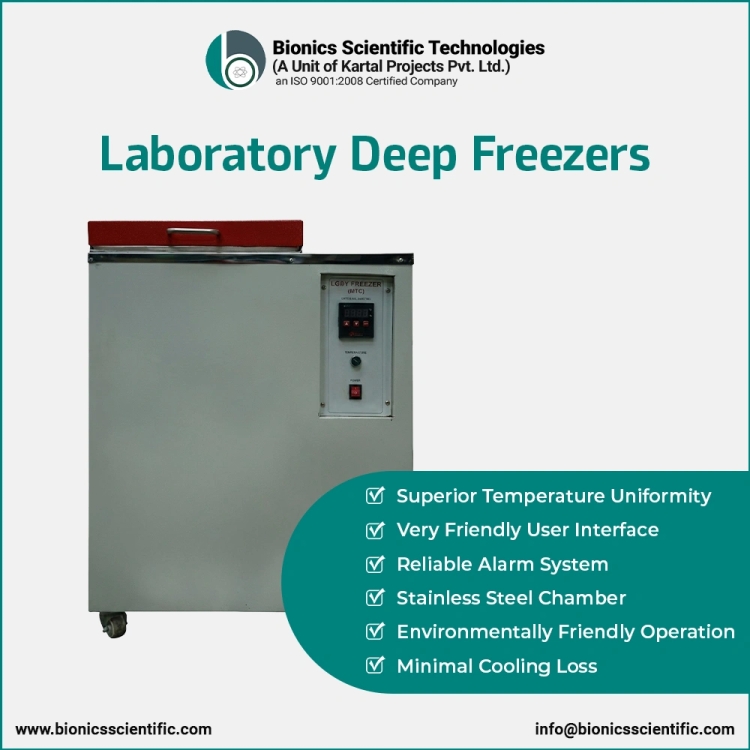
Laboratory Deep Freezers Manufacturer for Laboratory Use – What Makes Samples Safe?
Laboratory freezers are known for maintaining steady temperatures which range from -20°C for reagents up to -86°C for enzymes, vaccines, cell cultures, and DNA/RNA samples.
A single change in temperature overnight will make all the samples stored for months null. This is precisely what laboratories need to be careful about when acquiring the appropriate equipment from the appropriate laboratory deep freezers manufacturer for laboratory use. It is essential to know the reasons why one equipment may be reliable and the other not.
Why Commercial Refrigerators Are Not Suitable for Labs
Commercial refrigerators lack the necessary temperature stability required in labs. Laboratory freezers are known for maintaining steady temperatures which range from -20°C for reagents up to -86°C for enzymes, vaccines, cell cultures, and DNA/RNA samples. Any variation in temperature in this range can make the samples unusable, especially those that are biological in nature.
That is why laboratory refrigerators are different from commercial refrigerators.
Factors Distinguishing a Good Manufacturer from a Poor Manufacturer
Not all manufacturers of appliances are aware of the exact specifications of laboratory sample storage requirements. A good manufacturer manufactures appliances that have double or cascade cooling system for ultra-low temperature freezers so that there will always be secondary cooling capacity in the event of compressor failure. The use of technology like vacuum insulated panel has been proven to be vital as it has better heat insulation ability than the ordinary foam insulation and decreases recovery time of the interior in case the doors are opened.
An alarm system is just as crucial as the cooling system. A reputable manufacturer includes alarm systems in the appliances that include temperature alarm system and remote temperature alarm system, as well as battery backup in case of power failure and data logging system.
Difference Between the Design of Freezers as Chest Type and Upright
As the cold air is heavier, the chest-type deep freezers are characterized by stable temperatures since the cold air will not be disturbed anyway even when the lid is opened. Therefore, the chest-type deep freezers are suitable for the storage of a huge number of samples in case they do not require frequent access. The upright laboratory freezers are characterized by a shelf-and-drawer sample organization which is ideal for laboratories that require frequent access to specific samples without shifting all other samples.
The Industries That Require Such Freezers on a Daily Basis
Biobanks and laboratories require biological sample storage; pharmaceutical companies require ultra-low freezers for stability testing and vaccine components' storage; diagnostic and pathology laboratories require sub-zero storage for reagents and patient samples; academic research laboratories require freezers.
Verification Prior To Purchase
Ensure that the temperature uniformity of the chamber is good within the entire chamber and not just at the point of detection, since there is a risk of creating hotspots due to poor air circulation. Provision of backup power, warranty on the compressor, and after-sales reaction time are some of the issues to consider given the high costs involved in the event of any downtime when dealing with samples.
Conclusions
Selection of a qualified laboratory deep freezer manufacturer in terms of use of these freezers in the lab goes beyond purchasing of the unit but involves investment in the safety of the samples and experiments conducted. In cases where many years of research are involved and/or invaluable biological samples require protection against deterioration, it becomes very important to select the best laboratory deep freezer manufacturer.
FAQ – Laboratory Deep Freezer
1. What is a Laboratory Deep Freezer?
A Laboratory Deep Freezer is a specialized refrigeration unit designed to store laboratory samples, reagents, chemicals, biological materials, and other temperature-sensitive products at controlled low temperatures.
2. What is the main purpose of a Laboratory Deep Freezer?
The primary purpose is to preserve temperature-sensitive laboratory materials for longer periods while maintaining a stable and controlled storage environment.
3. What temperature does a Laboratory Deep Freezer maintain?
The operating temperature depends on the model and application. Laboratory deep freezers are available in different temperature ranges, so the required temperature should be selected according to the material being stored.
4. What can be stored in a Laboratory Deep Freezer?
Depending on the freezer's specifications, it may be used for storing biological samples, reagents, enzymes, research materials, laboratory chemicals, specimens, and other temperature-sensitive products.
5. What is the difference between a laboratory freezer and a deep freezer?
A laboratory freezer is generally designed with features suitable for scientific and controlled sample storage, while a conventional deep freezer is primarily intended for general-purpose freezing. Laboratory models may offer better temperature monitoring, alarms, insulation, and temperature stability.
6. Why is temperature stability important in laboratory freezers?
Temperature stability helps protect sensitive samples from unwanted temperature fluctuations. Consistent storage conditions can help maintain the quality and usability of laboratory materials.
7. Does a Laboratory Deep Freezer require a temperature monitoring system?
Temperature monitoring is highly useful for laboratory applications. Depending on the model, a freezer may include a digital temperature display, controller, alarm system, data logging, or other monitoring features.
8. What safety features are available in Laboratory Deep Freezers?
Safety features vary by model but may include high- and low-temperature alarms, door-open alarms, overload protection, temperature monitoring, backup systems, and secure locking mechanisms.
9. How does a Laboratory Deep Freezer work?
A Laboratory Deep Freezer uses a refrigeration system to remove heat from the storage chamber. The refrigeration cycle continuously maintains the internal temperature within the selected operating range.
10. What type of insulation is used in a Laboratory Deep Freezer?
Laboratory deep freezers generally use high-quality thermal insulation around the storage chamber to reduce heat transfer and improve temperature retention. The exact insulation material and construction depend on the manufacturer and model.
11. Is a Laboratory Deep Freezer suitable for biological sample storage?
Yes, appropriate laboratory deep freezers can be used for biological sample storage when their temperature range and specifications meet the requirements of the particular samples and laboratory application.
12. How should samples be arranged inside a Laboratory Deep Freezer?
Samples should be organized so that cold air can circulate properly. Overloading the chamber or blocking ventilation areas can affect temperature uniformity. Proper labeling and compartmental organization also make sample retrieval easier.
13. How can I maintain a Laboratory Deep Freezer?
Regular maintenance may include checking temperature performance, inspecting door seals, cleaning the interior, keeping ventilation areas clear, checking alarms, and following the manufacturer's maintenance recommendations.
14. How often should a Laboratory Deep Freezer be cleaned?
Cleaning frequency depends on usage, stored materials, laboratory procedures, and manufacturer recommendations. Spills should be cleaned promptly, while routine cleaning should be performed according to the laboratory's maintenance schedule.
15. What should I consider when buying a Laboratory Deep Freezer?
Important factors include temperature range, storage capacity, temperature uniformity, insulation, energy consumption, alarm systems, monitoring options, door configuration, security features, backup requirements, and after-sales service.
16. Are Laboratory Deep Freezers available in different sizes?
Yes. Laboratory deep freezers are available in different capacities and configurations, from compact units for smaller laboratories to larger models designed for high-volume sample storage.
17. Can a Laboratory Deep Freezer operate continuously?
Laboratory deep freezers are generally designed for continuous operation, but the specific operating requirements depend on the model. Proper installation, electrical supply, ventilation, and routine maintenance are important for reliable operation.
18. Why is an alarm system important in a Laboratory Deep Freezer?
An alarm can alert laboratory personnel when conditions such as abnormal temperature or an open door are detected. This can provide an early warning and help reduce the risk of sample damage.
19. What is temperature recovery in a Laboratory Deep Freezer?
Temperature recovery refers to how quickly the freezer returns to its specified operating temperature after events such as door opening or temporary temperature changes. Good recovery performance can be important in frequently accessed laboratories.
20. Can Laboratory Deep Freezers be used in research laboratories?
Yes. They can be used in research laboratories for controlled low-temperature storage of samples, reagents, specimens, and other materials, provided the freezer's specifications match the research requirements.
21. What is the importance of a digital temperature controller?
A digital temperature controller allows users to monitor and manage the freezer's operating temperature more conveniently. Depending on the model, it may also work with alarm and monitoring functions.
22. How do I choose the right Laboratory Deep Freezer?
Choose a model based on the required temperature range, sample type, storage capacity, temperature stability, monitoring requirements, available space, energy efficiency, safety features, and laboratory operating conditions. Always check the manufacturer's technical specifications before purchase.
What's Your Reaction?