What Tractors Tell Us About Modern Farming in India
Many people believe tractors are only meant for large farms, but that is no longer true. Most tractor models today are made specifically for small plots. Compact tractors are affordable, easy to maintain, and well-suited for narrow fields and orchards.
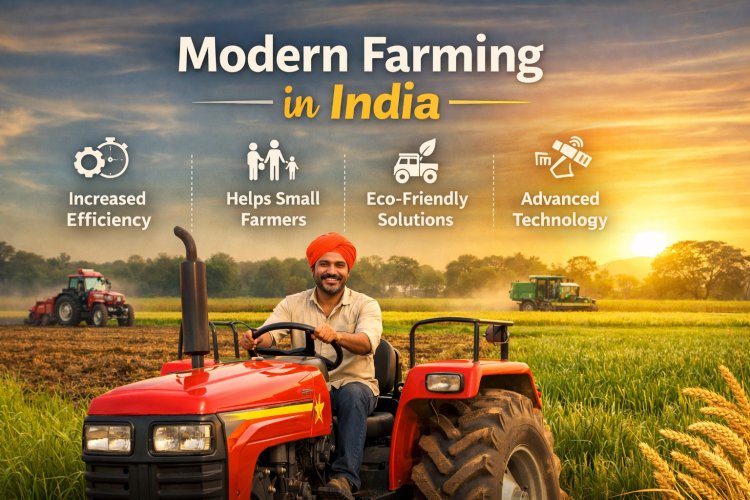
Agriculture in India has always been linked to tradition, nurture, and close proximity with the land. But agriculture has undergone many changes over the years. Among the most significant changes is the replacement of human labour with machines, particularly tractor. Today the tractor is more than just a farming implement; it is also an integral part of modern farm life.
In this blog, we will see how tractors are enabling the farmers to work smarter, save time, and ensure higher productivity in the field while contributing to keeping Indian agriculture growing.
The Relevance of Tractors in Agriculture Keep Increasing
In the olden days, farming activities such as ploughing, sowing, and harvesting were traditionally performed manually or using animals. Although they were suitable for short lengths, these approaches demanded substantial effort and time. As the demand for greater production in farming became higher and higher, so did the need for faster solutions.
This is where the tractor came in. Farmers are able to accomplish a variety of tasks, including ploughing the land, seeding crops, hauling goods, and harvesting, with much less muscle power by using a tractor. Properly equipped, one tractor can do multiple agricultural tasks over twelve months.
A lot of farmers now rely on credible platforms such as tractor price websites that help them get informed about models, features, and prices before making any procurement. Correct information allows them to choose machines that are appropriate for their acreage, soil type, and most importantly, their budget.
How Tractors Improve Farming Efficiency
Efficiency is among the most significant benefits of using tractors. It is particularly important during the busiest times of farming when saving time matters the most.
Here are a few of the main ways tractors help ramp up efficiency:
· More rapid land preparation: Tractors can plough large fields fast and uniformly.
· Reduced labour reliance: Farmers do not have to rely heavily on manual labour anymore.
· Versatile application: Tractors can be applied to ploughing, sowing, fumigating, and transportation.
· Fuel and cost savings: Today’s tractors use a variety of high-tech equipment to save on fuel costs.
With tractors, farmers are able to pay more attention to planning and crop management rather than tiring manual work.
Technology and Modern Tractors
Tractors of today are a far cry from tractors of the past. They are equipped with superior engines, better fuel economy, comfortable seating, and easy-to-use control switches. Some tractors also include functions such as power steering, improved hydraulics, and digital dashboards.
Technology has also helped make tractors safer and more user-friendly. Even smaller and marginal farmers can now drive tractors with confidence. This development has increased productivity as well as rural income.
Popular Tractor on Road Video and Farmer Belief
Trust is one of the most important aspects when it comes to buying a tractor. Farmers favour brands that stand for durability, lower running costs, and strong service support. There are many tractor brands available, but most people widely recognized Mahindra tractor for their presence and reliability.
Mahindra tractors are known worldwide for their quality and performance. This reflects how important it is for farmers to choose brands that understand real farming challenges and provide long-term value.
Tractors and Small Farmers
Many people believe tractors are only meant for large farms, but that is no longer true. Most tractor models today are made specifically for small plots. Compact tractors are affordable, easy to maintain, and well-suited for narrow fields and orchards.
Rental services for tractors have also become widespread in rural areas. Farmers who cannot afford to purchase a tractor can hire one during the farming season. This sharing approach has made mechanisation available to more people.
Environmental Impact and Responsible Use
Although tractors offer many advantages, responsible usage is necessary. Excessive use or poor maintenance can increase fuel consumption and emissions. To address this, manufacturers are now focusing on cleaner engines and improved fuel efficiency.
Farmers are also becoming more aware of sustainable practices such as proper machine maintenance and efficient field operations. These steps help protect the environment while maintaining high productivity.
Future of Tractors in Indian Farming
Innovation is key to the future of farming. Tractors will continue to develop with better technology, higher efficiency, and environmentally friendly features. Smart farming tools, GPS support, and precision farming are gradually becoming part of Indian agriculture.
As access to information improves through digital platforms, farmers can make informed choices about machinery and farming methods. This data-driven approach will help agriculture become stronger and more sustainable.
Conclusion
Tractors have transformed the face of farming in India. They save time, reduce physical effort, and allow farmers to manage land more effectively. From small farms to large agricultural fields, tractors remain a key asset for boosting productivity and strengthening rural economies.
With better access to reliable information, advanced technology, and trusted brands, tractors will continue to remain the backbone of modern agriculture. As farming evolves, tractors will keep supporting farmers as they move forward with confidence and efficiency.
What's Your Reaction?