What Is a Stability Chamber? How a Stability Chamber Works
A stability test chamber works by creating a controlled environment to test how products react to temperature, humidity and other conditions over time.
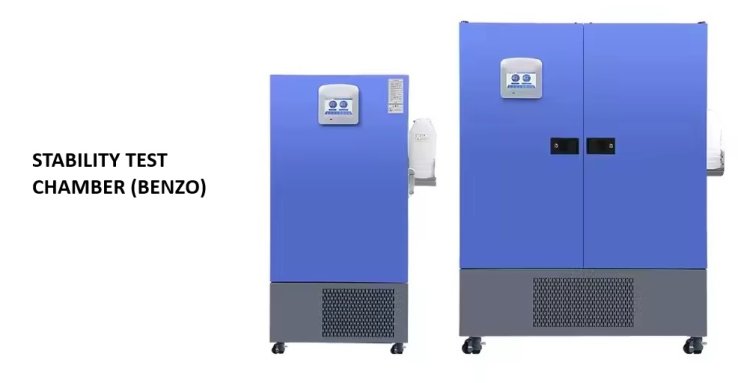
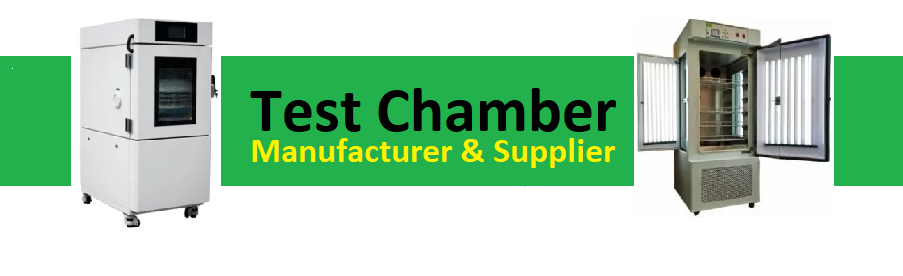
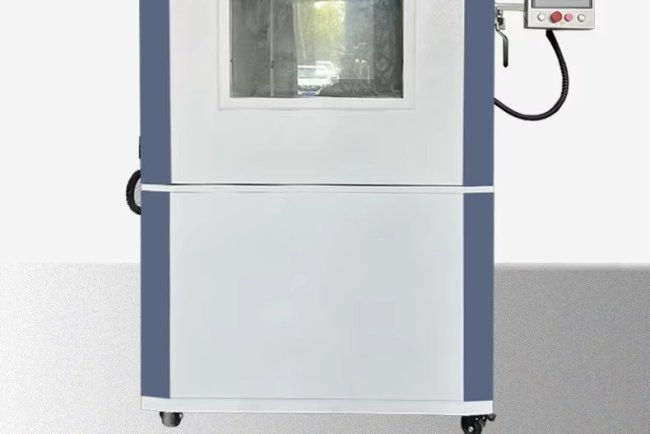
A stability chamber is a precisely controlled environmental testing system designed to simulate real-world conditions such as temperature, humidity, and sometimes light. Its main purpose is to study how products behave over time under specific environmental conditions.
Think of it as a time machine for products.
Instead of waiting two or three years to see if a tablet loses potency or a cosmetic cream separates, companies can recreate months or years of environmental stress inside a stability chamber—safely, accurately, and predictably.
In the United States, stability chambers play a vital role in industries where quality, safety, and compliance are non-negotiable.
Why Stability Testing Matters So Much in the USA
American consumers expect consistency. Whether it’s a life-saving drug, a protein supplement, or a skincare serum, trust is built on performance that doesn’t fade with time.
Stability chambers help companies:
-
Determine shelf life
-
Ensure product safety
-
Maintain regulatory compliance
-
Protect brand reputation
-
Reduce recalls and liability risks
In regulated U.S. markets, stability testing is not a luxury—it’s a responsibility.
How a Stability Chamber Works (In Simple Terms)
At its core, a stability chamber creates a controlled micro-environment. Inside the chamber:
-
Temperature is maintained within tight tolerances
-
Humidity levels are precisely regulated
-
Air circulation is uniform
-
Sensors continuously monitor conditions
-
Data is logged and analyzed over time
Products are placed inside, and scientists observe how physical, chemical, or biological properties change under defined conditions.
The result? Predictable answers to unpredictable questions.
Types of Stability Chambers
Not all stability chambers are created equal. Different industries and applications require different designs, capacities, and performance levels. Let’s explore the main types commonly used across the USA.
1. Temperature Stability Chambers
These chambers focus primarily on temperature control, ranging from cold storage conditions to elevated heat environments.
Common temperature ranges:
-
Sub-zero conditions
-
Ambient room temperature
-
High-temperature accelerated testing
Where they are used in the USA:
-
Pharmaceutical tablets and capsules
-
Medical devices
-
Food and beverage storage testing
-
Industrial materials
Temperature-only chambers are often used when humidity is not a critical factor but thermal stress is.
2. Temperature and Humidity Stability Chambers
This is the most widely used type in American laboratories.
These chambers control both:
-
Temperature
-
Relative humidity
This combination closely simulates real-life storage conditions across different U.S. climates—from dry Arizona heat to humid Florida summers.
Key applications:
-
Drug stability testing
-
Nutraceuticals and supplements
-
Cosmetics and personal care products
-
Packaging materials
This type of stability chamber is the backbone of long-term and accelerated testing programs.
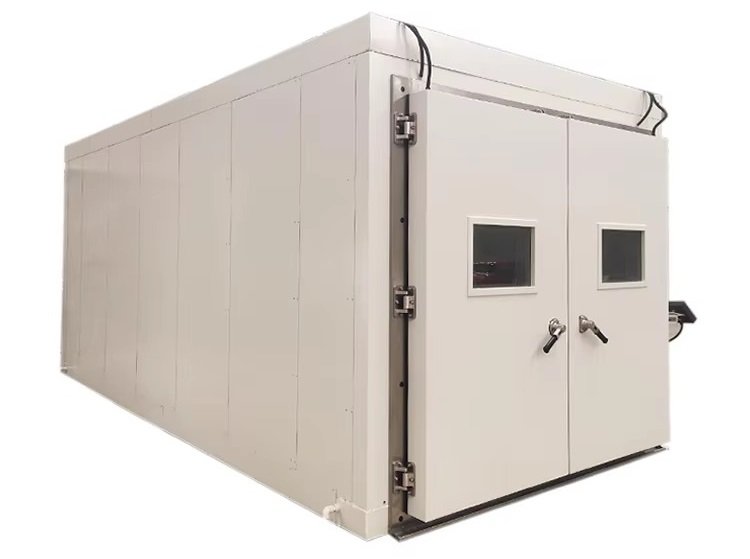
3. Walk-In Stability Chambers
When product size or volume increases, so does the chamber.
Walk-in stability chambers are large, room-sized systems designed for:
-
Bulk testing
-
Pallet-scale storage
-
High-volume production samples
Common users in the USA:
-
Large pharmaceutical manufacturers
-
Food processing plants
-
Biotechnology companies
These chambers allow technicians to physically walk inside, making them ideal for large-scale stability programs.
4. Reach-In Stability Chambers
Smaller in size but big in performance, reach-in chambers are perfect for laboratories with limited space.
Advantages:
-
Compact footprint
-
Energy-efficient
-
Ideal for R&D labs and startups
Many U.S. research labs and contract testing facilities rely on reach-in stability chambers for flexibility and cost control.
5. Photostability Chambers
Some products don’t just fear heat or humidity—they fear light.
Photostability chambers expose samples to controlled light sources to study degradation caused by:
-
UV light
-
Visible light
Used heavily in:
-
Pharmaceuticals
-
Cosmetics
-
Packaging research
These chambers help determine whether products need opaque packaging or special labeling.
6. Customized Stability Chambers
In the USA, innovation often demands customization.
Custom stability chambers may include:
-
Specialized temperature profiles
-
Multi-zone testing
-
Advanced data logging systems
-
Remote monitoring
These are commonly used in aerospace, advanced materials, and biotech research.
Applications of Stability Chambers Across Industries
Stability chambers quietly support some of the most critical industries in the United States. Let’s look at how they’re used in real-world applications.
Pharmaceutical Industry
This is where stability chambers truly shine.
They are used to:
-
Establish drug shelf life
-
Study degradation pathways
-
Validate packaging
-
Support regulatory submissions
Every tablet, capsule, or injectable product sold in the U.S. has likely spent months—or years—inside a stability chamber before reaching consumers.
Biotechnology and Life Sciences
Biological products are sensitive by nature.
Stability chambers help:
-
Preserve protein integrity
-
Monitor biological activity
-
Test vaccines and biologics
For biotech companies in the USA, stability testing ensures life-saving products remain effective throughout distribution and storage.
Food and Beverage Industry
From dairy products to energy drinks, food stability matters.
Applications include:
-
Shelf-life determination
-
Texture and flavor retention
-
Packaging interaction testing
Stability chambers help American food brands deliver consistent taste and safety nationwide.
Cosmetics and Personal Care
Consumers expect skincare and beauty products to perform the same on day one and day 300.
Stability chambers test:
-
Color changes
-
Separation
-
Odor development
-
Texture stability
This is especially important in the competitive U.S. beauty market.
Medical Devices
Medical devices must remain safe and functional over time.
Stability chambers are used to:
-
Validate storage conditions
-
Test material durability
-
Support product labeling
Consistency here directly impacts patient safety.
Packaging Industry
Packaging is often the unsung hero.
Stability chambers evaluate:
-
Barrier properties
-
Moisture resistance
-
Interaction with contents
This ensures packaging protects products under various U.S. climate conditions.
Chemical and Material Testing
Industrial materials face long-term exposure challenges.
Stability chambers test:
-
Polymers
-
Adhesives
-
Coatings
-
Specialty chemicals
These tests help manufacturers predict performance in real-world environments.
Accelerated vs Long-Term Stability Testing
Stability chambers support two major testing approaches:
Long-Term Testing
-
Mimics real storage conditions
-
Can last months or years
-
Provides the most realistic data
Accelerated Testing
-
Uses higher temperature and humidity
-
Speeds up degradation
-
Helps predict long-term behavior faster
Most U.S. companies use a combination of both for reliable decision-making.
Key Features to Look for in a Stability Chamber
When American businesses choose a stability chamber, they typically look for:
-
Precise temperature and humidity control
-
Uniform air circulation
-
Reliable sensors and alarms
-
User-friendly control systems
-
Data logging and reporting
-
Energy efficiency
-
Compliance-ready design
The right features reduce risk and improve confidence.
The Human Side of Stability Chambers
Behind every chamber is a team of scientists, quality managers, and engineers working quietly to protect consumers.
A stability chamber might not look exciting—but it represents:
-
Trust
-
Responsibility
-
Scientific discipline
-
Long-term thinking
In many ways, it’s one of the most honest machines in a laboratory. It doesn’t rush results. It simply observes, records, and tells the truth.
Future Trends in Stability Chambers
As U.S. industries evolve, so do stability chambers.
Emerging trends include:
-
Remote monitoring and cloud connectivity
-
Energy-efficient designs
-
Smart diagnostics and predictive maintenance
-
Higher precision control systems
The future stability chamber will be more intelligent, more sustainable, and more integrated than ever before.
Conclusion: Why Stability Chambers Truly Matter
A stability chamber is not just a piece of equipment. It’s a promise.
A promise that a medicine will heal as intended.
A promise that food will stay safe.
A promise that products will perform consistently—no matter where or when they’re used.
In the USA, where quality expectations are high and competition is fierce, stability chambers quietly stand guard over time itself.
And that makes them indispensable.
Frequently Asked Questions (FAQs)
1. What is the main purpose of a stability chamber?
The primary purpose is to evaluate how products behave over time under controlled temperature, humidity, and sometimes light conditions to determine shelf life and safety.
2. Which industries use stability chambers the most in the USA?
Pharmaceuticals, biotechnology, food and beverage, cosmetics, medical devices, and packaging industries are the largest users.
3. What is the difference between a stability chamber and an environmental test chamber?
A stability chamber focuses on long-term, precise environmental control, while environmental test chambers often simulate extreme or rapidly changing conditions.
4. How long does stability testing usually take?
It can range from a few weeks for accelerated studies to several years for long-term testing.
5. Are walk-in stability chambers better than reach-in chambers?
Neither is better universally. Walk-in chambers suit large volumes, while reach-in chambers are ideal for smaller labs and flexible testing needs.
6. Why is humidity control important in stability testing?
Humidity can significantly impact chemical stability, microbial growth, packaging integrity, and product performance.
7. Can stability chambers be customized?
Yes, many U.S. manufacturers offer customized chambers tailored to specific testing requirements.
8. How accurate are modern stability chambers?
Modern chambers offer extremely tight control and high accuracy, making results reliable and repeatable.
What's Your Reaction?