What Is a Hot Air Oven Diagram? Parts, Uses and Working
Choose a laboratory oven by looking at factors such as chamber size, temperature range, airflow rate, insulation, controller accuracy, safety features, and intended applications. The Bionics Scientific laboratory hot air oven line features PID digital control, DIN 12880 safety protection, and sizes up to 22 L and 600 L.
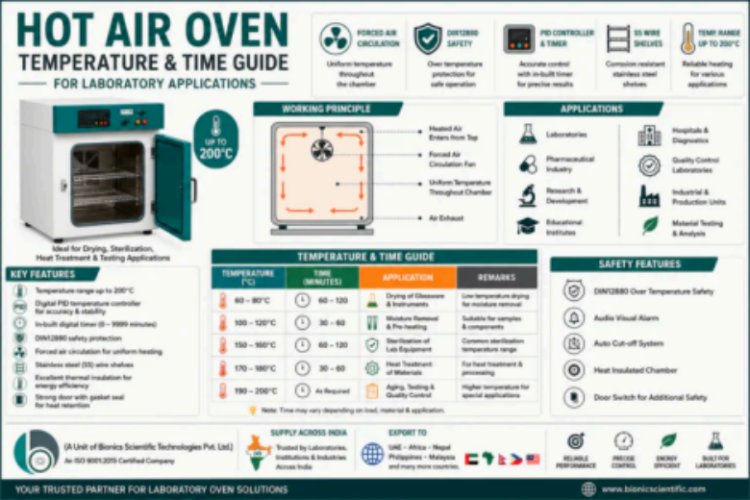
Hot Air Oven Diagram provides better comprehension regarding dry heat sterilization process taking place in a laboratory oven. In contrast to autoclaving, where moist heat is used under pressure, dry heat sterilization process is performed with the help of heated circulating air that is appropriate for sterilizing heat resistant objects like glassware, metal articles, and particular kinds of powder.
Hot Air Oven Diagram and Working Explained
A typical laboratory hot air oven contains several important components that work together to provide controlled dry heat.
Part Function
Heating element Provides the required amount of heat
Blower or fan Ensures circulation of warm air inside the chamber Thermostat Ensures that set temperature is maintained Digital display Displays the working temperature of the equipment Insulated chamber Prevents heat loss
Shelves or racks Holds material during sterilization process Air vent Facilitates the entry and exit of air
Door gasket Prevents leakage of heat from the chamber
The components including the heater, blower/fan, thermostat, insulated walls, display, air vent, shelves, and door gasket are some of the key components of the oven according to the reference from Bionics Scientific.
How Does a Hot Air Oven Work?
Temperature regulation is achieved through constant measurement of the temperature using the thermostat. The process of distributing the air is meant to ensure that there are no hot or cold spots in the room.
In order to use the equipment effectively, laboratories should preheat the oven, avoid overcrowding the shelves, ensure circulation of air around the material, and allow objects to cool before removal.
Common Laboratory Applications
The diagram of Hot Air Oven would be very helpful to comprehend uses like:
● Sterilization of laboratory glassware
● Treatment of appropriate metal instruments
● Treatment of heat stable powders
● Drying of laboratory material
● Useful for microbiology/pharmaceutical laboratories
Practical Use Cases
Microbiology lab: Dry-heat process is applicable for flasks, pipettes, and beakers, which are made of glass.
Pharmaceutical lab: Moisture free process is suitable for heat stable powders and selected items.
Research lab: Dry-heat process can be used for the purpose of sterilization and drying applications.
Hot Air Oven vs Autoclave
Feature Hot Air Oven Autoclave Sterilization method Dry heat Pressurized steam Moisture No steam Uses steam Suitable materials Glass, metal, heat-stable powders Moisture-tolerant materials Main advantage Dry processing Faster steam sterilization
Choosing a Laboratory Hot Air Oven
Choose a laboratory oven by looking at factors such as chamber size, temperature range, airflow rate, insulation, controller accuracy, safety features, and intended applications. The Bionics Scientific laboratory hot air oven line features PID digital control, DIN 12880 safety protection, and sizes up to 22 L and 600 L.
Looking for Hot Air Oven for Laboratory? Bionics Scientific can help you in this regard. Frequently Asked Questions
What is Hot Air Oven in Laboratory?
It is a dry-heat sterilizer used for sterilization, drying, and thermal processing of heat resistant materials.
Can you draw a Hot Air Oven?
Yes. A good diagram would indicate heater, fan, thermostat, chamber, shelves, digital display, vents, and door gasket.
What is the purpose of laboratory oven?
To control heating of samples for drying, sterilization, and other purposes in laboratory. What is the purpose of Hot Air Oven in Blood Bank?
Depending on the material and procedure, it is used for some other purpose other than placing heat sensitive blood products inside.
What are PV & SV in Hot Air Oven?
PV normally stands for Process Value which is the present temperature while SV is the set value of temperature.
What is the purpose of hot air?
Hot air transfers dry heat to the entire chamber where the materials are allowed to attain the required temperature.
What's Your Reaction?