Laboratory Ball Mill Grinding Machine 2kg to 100Kg Manufacturer and Supplier
Lab Ball Mill is a grinding device used to grind materials for research, mining, and ceramics applications.
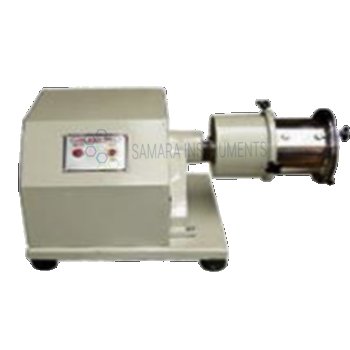
What Is a Laboratory Ball Mill Grinding Machine?
A laboratory ball mill is a compact, powerful grinding machine used to:
-
Crush
-
Grind
-
Mix
-
Blend
-
And reduce materials into fine powder or uniform particles
It works by rotating a jar or chamber filled with:
-
The material to be ground
-
And grinding media (usually steel, ceramic, or zirconia balls)
As the chamber rotates, the balls:
-
Fall
-
Roll
-
Collide
-
And crush the material into finer and finer particles
A laboratory ball mill is a controlled, mechanical way to turn hard materials into fine, testable powders.
Why Grinding Matters More Than Most People Realize
In science and industry, particle size changes everything.
-
It changes how chemicals react
-
It changes how materials dissolve
-
It changes strength, color, conductivity, flow, and stability
-
It changes whether an experiment succeeds or fails
In many American labs, no real testing begins until the material is properly ground.
A ball mill doesn’t just make things smaller.
It makes them usable.
A Quiet Hero in American Laboratories
You won’t see a laboratory ball mill on the cover of a magazine.
-
EV battery development in California
-
Cement and concrete research in Texas
-
Pharmaceutical formulation in New Jersey
-
Aerospace materials in Washington
-
Mining and mineral research in Nevada
-
University research labs across all 50 states
Whenever someone in a lab says:
“We need this sample in powder form…”
A ball mill is usually what they turn to.
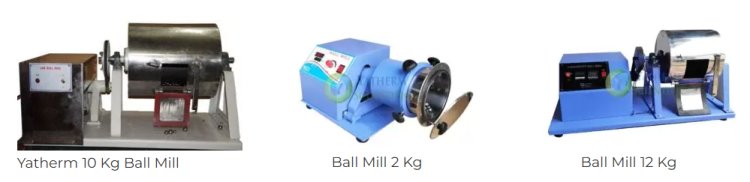
How a Laboratory Ball Mill Works (The Simple, Honest Explanation)
1. The Grinding Jar (The Arena)
The material is placed inside a jar or container made of:
-
Steel
-
Stainless steel
-
Ceramic
-
Teflon
-
Or other special materials
2. The Grinding Media (The Workers)
Balls are added to the jar. These can be:
-
Steel balls
-
Ceramic balls
-
Zirconia balls
-
Tungsten carbide balls
Crash into the material until it breaks down.
3. The Rotation (The Engine of Destruction)
The machine rotates the jar at a controlled speed.
-
Balls rise
-
Balls fall
-
Balls roll
-
Balls collide
This creates:
-
Impact force
-
Shear force
-
Friction force
Together, these forces grind the material.
The Beautiful Physics Behind the Chaos
Inside a ball mill, three things happen constantly:
-
Impact – Balls fall and hit particles
-
Attrition – Balls rub and shear particles
-
Compression – Particles get squeezed between balls
This combination is what makes ball milling:
-
Powerful
-
Uniform
-
And extremely reliable
Types of Laboratory Ball Mills Used in the USA
1. Planetary Ball Mill
This is the high-energy champion.
-
Jars rotate on their own axis
-
While also rotating around a central axis
-
Produces extremely fine powders
-
Used in advanced materials, nanomaterials, battery research
2. Roller Ball Mill
-
Simpler design
-
Slower grinding
-
Great for mixing and gentle grinding
-
Popular in universities and quality control labs
3. Vibratory Ball Mill
-
Uses vibration instead of rotation
-
Very fast grinding
-
Very efficient for small samples
4. Attritor / Stirred Ball Mill
-
Uses internal stirring arms
-
Extremely uniform grinding
-
Used for high-precision materials
What Materials Can Be Ground? (Almost Everything)
In American labs, ball mills are used for:
-
Minerals and ores
-
Cement and clinker
-
Chemicals and pigments
-
Pharmaceuticals and APIs
-
Ceramics and glass
-
Polymers
-
Soil and geological samples
-
Battery materials
-
Metal powders
-
Slag and industrial waste
-
Food and agricultural samples
If it can be crushed, it can probably be ball milled.
Wet Grinding vs Dry Grinding
Dry Grinding :
-
Material is ground as-is
-
Easier handling
-
Common for minerals, cement, powders
Wet Grinding
-
Material is mixed with liquid
-
Reduces dust
-
Improves uniformity
-
Used in pharmaceuticals, ceramics, chemicals
What's Your Reaction?