The Role of Nursing Assignments in Healthcare Training
Explore how nursing assignments equip students with practical knowledge, evidence-based skills, and confidence for real-world healthcare settings.
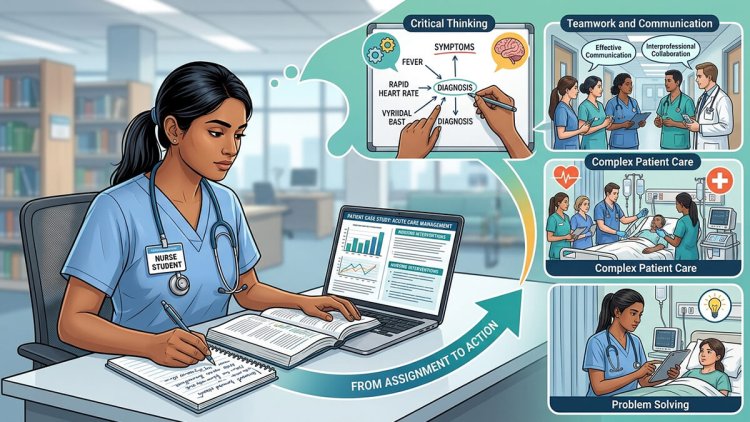
How Nursing Assignments Prepare Students for Healthcare Challenges?
Nursing students think that assignments are another thing that they need to complete in order to graduate. Whether it is research papers, care plans, reflective essays or even case studies, working on them can be tough.
Why, you might ask?
Because students have to balance them with clinical placements and their personal lives. However, nursing assignments have a far greater purpose than just marks. They build students' hands-on experience, critical thinking skills, and professional judgment in actual healthcare settings.
The transition from classroom to clinical setting is one of the most crucial periods in one’s nursing career. Assignments make up for this by allowing students to utilize theoretical information in healthcare scenarios. Whether it’s a care plan, assessment or case study, all these tasks help develop the skills used by nurses in daily routine.
1. Teaching Students to Think Critically
Nurses need to make decision based on patients need, learn about symptoms and reach to situations which may directly impact them.
Working on nursing assignments, teaches them analytical thinking, preparing for their role. Students are given assignments where they have to understand the requirements and then provide solutions.
For example, students might work on assignment where a patient has a heart disease. For this, they have to assess the patient’s health, develop strategies and look for potential risks.
These assignments are mostly designed to encourage pupils go beyond the simple learning. They learn to interpret rather than simply memrozing facts.
2. Developing EBP Skills
EBP is very crucial in nursing. Current research is expected to support and not be based on assumptions or old methods for healthcare decisions. This practice is introduced to the student through nursing assignments in which he or she reads, assesses, and applies research evidence to recommendations.
For example, a student has to work on the case study based on how to prevent infections. While studying, pupils can learn what hygiene practices would work, risks associated and prevention tips. Also, they might also read research articles and clinical guidelines based on this. It ultimately helps them learn how evidence shapes healthcare policies. This way they are more ready to face the challenges.
3. Teaching Documentation
Nursing is all about communication. Not providing or having enough information can cause medication errors, delays and misunderstandings within the team.
When working on nursing assignments, pupils learn how to develop clear communication skills. They have to work on different reflective essays, patient reports and care plans to learn how to structure information and present it properly.
These skills are essential in the workplace for recording patient observations and making notes. Let’s take an example within the hospital setting.
When nurses are changing shifts, they need to clearly tell the one replacing them what issues they are facing, treatment plans and any concerns that need addressing.
Well, the writing and communication skills you develop while doing tasks come in handy to ensure critical information is shared.
4. Learning Through Case Studies
Case studies are a type of nursing assignments that help reflect real-life healthcare scenarios. Pupils are given patient scenarios to assess, diagnose, plan interventions, and evaluate.
For example, pupils are given a case study based on a senior citizen with diabetes who is admitted for a foot ulcer. While working, they will assess risks, consider potential risks, and provide treatment options.
This enables students to gain clinical reasoning practice in a safe learning environment. Also, they have confidence that they can handle such situations in the future with ease.
Simulation-based education and case-based evaluation are becoming important aspects of healthcare education since they are effective in preparing students for real-life clinical decisions. Patient scenarios are the foundation of assignments that reinforce this preparation.
5. Learning Patient-Centred Care
Good nursing is more than simply the treatment of illness. Nurses should also consider the emotional, psychological, cultural and social needs of the patient.
Students are often given different assignments that provide them with a comprehensive overview of health care.
For example, a student is given a report about dementia care. In this assignment, they will explore the role of communication methods, the involvement of family, and how to help the patient.
Patient care is quite important in healthcare. Nurses who understand the patient’s needs better can help enhance healthcare outcomes.
6. Preparing for Communication
Team efforts play a vital role in the healthcare industry. Nurses collaborate with physicians, physiotherapists, pharmacists, social workers and numerous other individuals. Nursing assignments often involve analyzing various health care providers and their collaboration.
Imagine a person making a recovery from a stroke. The nursing care, physiotherapy, speech therapy, occupational therapy and social support services may all be used in the successful recovery.
Furthermore, these assignments teach students how to work with different professionals to provide the best possible health care. It is very crucial for the students in their clinical placements.
7. Helps with Ethical Decision Making
The nursing field is all about being ethical. Nurses need to maintain professionalism. Moreover, they have to make transparent decisions with patients’ consent, maintain confidentiality and be true to their role.
Pupils are given different ethical scenarios as their assignments. The main purpose is to judge their reasoning skills and teach them how to think transparently.
Students are taught to assess conflicting viewpoints, practice professional standards and think about legal accountability. This helps future nurses prepare for the real-life world and make ethical choices.
8. Teaches You How to Apply Theory in Practice
Working on nursing tasks teaches you how to apply whatever you have learned in the class in real life.
While some of the topics might be a little theoretical, during your placements, you will realize how relevant they can be.
A student studying wound management may complete an assignment examining pressure ulcer prevention. While doing the housework they might work with a patient who has a high risk of developing pressure injuries.
That’s when their coursework will come in handy. This will allow them to know the warning signs and contribute to preventive care.
A Pro Tip: Working on these assignments can be tough, especially if you are new to it. Therefore, students even consider seeking help from the nursing assignment writing service. These professionals can help them understand the topic clearly.
Conclusion
Nursing assignments are not your regular tasks. Working on them helps you develop critical thinking and boost communication skills. You also learn how to tackle healthcare problems. By working on cases, research papers, reflective writing and care planning, one learns how to translate theory into practice.
The journey from class to professional life is not easy. You have to be confident, make good decisions and have knowledge.
Such tasks help build these qualities to ensure future nurses are prepared to meet the complex demand. This way, you can also deliver safe patient care.
FAQs
1. Why are nursing assignments essential for students?
Working on nursing tasks boosts your critical thinking. You also develop skills like research, communication and decision-making. They also teach you how to apply theory to practice.
2. How do nursing assignments support evidence-based practice?
Assignments encourage students to read current research, analyse the evidence of the health-care system and use it in health-care situations.
3. What skills you can develop by working on nursing assignments?
Students can enhance their analytical thinking, problem-solving, documentation, communication, teamwork and ethical decision making abilities through a variety of nursing activities and case studies.
4. How can case studies help you?
Case studies mostly involve real-world patient scenarios. This helps pupils analyze conditions, identify risks and learn about the outcomes.
Author Bio
Meet Halena Bob, a 28-year-old nurse who completed her graduation from the top university of the UK. She is also one of the best nursing dissertation helpers, helping students with their assignments. Halena is extremely talented and quite punctual. Moreover, when not working, she likes to volunteer at a nursing home.
What's Your Reaction?