Sodium Ion Concentration Meter: Precision in Ion Detection Not Based on Guesswork
The principles of working of a sodium ion concentration meter are based on the measurement of the voltage signal that is generated by the ion-selective electrode that responds to the presence of sodium ions in the solution.
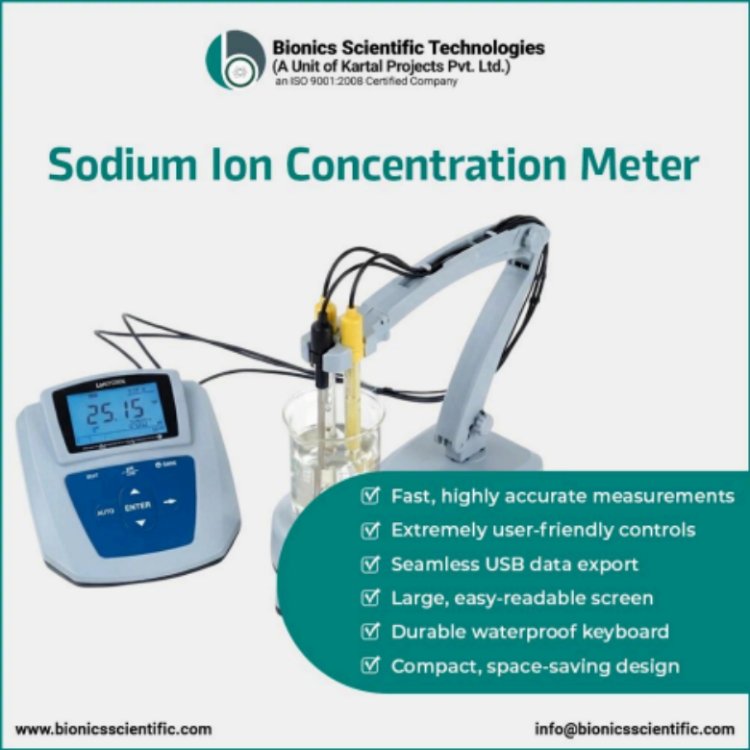
Facilities working in water treatment industry, laboratories working in the pharmaceutical sphere, and enterprises of food industry all face the same challenge – there is a need to determine the quantity of sodium ions in a particular water sample. With the help of a sodium ion concentration meter, one can get precise and consistent readings, which cannot be provided by simple titration.
Principles of Working of a Sodium Ion Meter
The principles of working of a sodium ion concentration meter are based on the measurement of the voltage signal that is generated by the ion-selective electrode that responds to the presence of sodium ions in the solution. The thing is that using a particular electrode is the major advantage of this kind of meter comparing to other traditional colorimetric and titration ones because it gives much more precise results in contrast to the visual observation of a reaction.
Why Different Sectors of Economy Opt for Digital Sodium Meters
There is the whole list of different sectors of economy where sodium concentration test is used. Boiler feed water treatment facilities perform such tests in order to ensure that the sodium level stays within acceptable limits in order to avoid scaling and corrosion. Sodium concentration test is necessary for pharmaceutical companies in order to preserve electrolyte balance in their
formulations.
Food and beverages companies also perform the same tests for quality control purposes, as sodium concentration is the thing to label for many products. All these uses of sodium concentration testing require digital water analysis meters with sodium ion detection capabilities.
Characteristics of a Good Meter
It is necessary to note that not all ion meters provide consistent results. For being reliable, a sodium ion detector needs to have stable electrode response, automatic temperature compensation, and calibration memory for saving several reference points. Those who use this equipment in laboratories that are obliged to work according to some quality standards will certainly prefer the meter to have data logging options as traceable calibration is required for audits.
Another really important characteristic of a good meter is its durability as its membrane starts deteriorating when the electrode is not well-designed.
Other Uses
While the aforementioned uses of a sodium ion concentration meter are the most common ones, there are a few other fields in which these devices can be applied – clinical diagnostics for electrolyte panels, agriculture, and testing of soil and water samples used for irrigation as well as production of alcohol and dairy products in which the level of sodium has a significant impact on taste and shelf life of the end product.
Why There is Growing Demand for This Meter
Apart from the variety of applications discussed above, another reason why the demand for this meter is continuously growing is the fact that the device is widely used in India.
Things to Keep in Mind When Buying One
There are a few aspects that may be considered when buying a sodium ion concentration meter: electrode replacement cost, calibration procedures and even availability of a particular application within the scope of a certain manufacturer.
Conclusion
Though it is just a small piece of equipment, sodium ion concentration meter has to be calibrated properly in order for measurement results to be reliable.
To find out more about sodium ion concentration meters and other instrumentation visit Bionics Scientific web site.
What's Your Reaction?