Seed Germination Chamber Manufacturers India
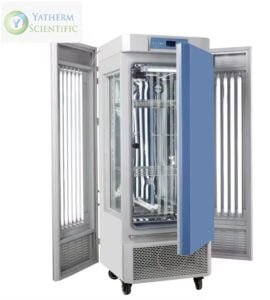
A Seed Germination chamber is a machine used for the germination of different types of seeds in laboratories. We manufacture seed germinators with single and double chambers with height adjustable shelves, heating and cooling options and digital light timer.
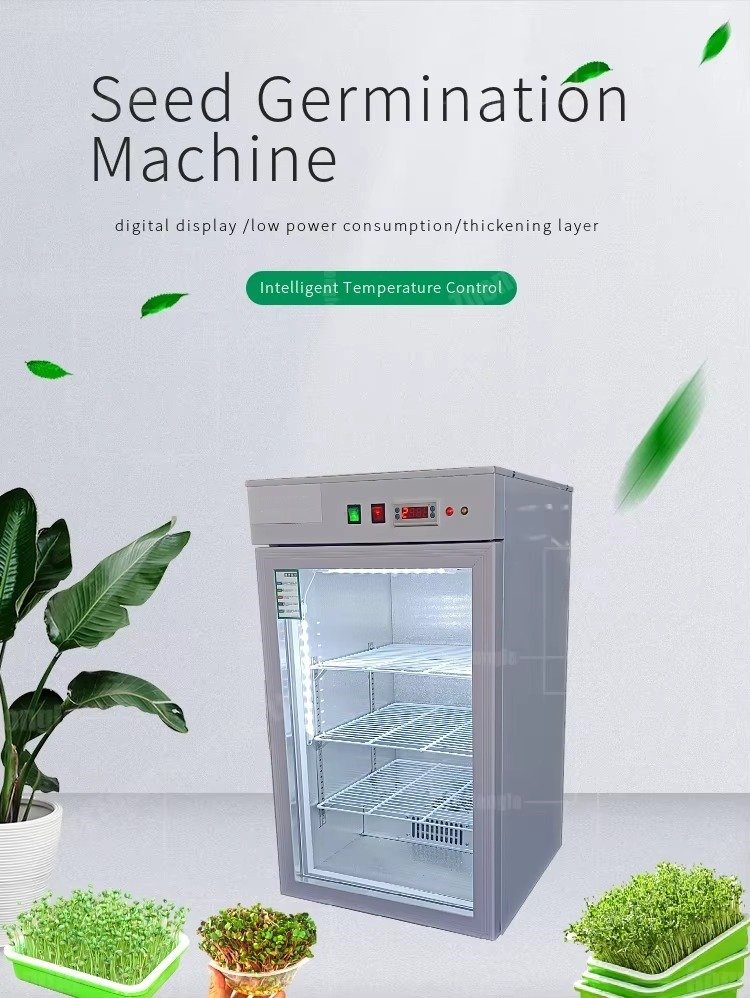
What Is a Seed Germination Chamber—Really?
At its core, a seed germination chamber is a controlled environment system designed specifically to create ideal conditions for seeds to sprout. But describing it this way barely scratches the surface.
A germination chamber is not just a box with heat. It is a carefully engineered space where:
-
Temperature is steady and accurate
-
Humidity is balanced, not guessed
-
Light cycles are programmable
-
Air circulation is gentle but constant
-
Conditions are repeatable, day after day
In the United States, where agriculture and research demand consistency, scalability, and data-driven results, these chambers have become essential.
Think of them as nurseries for ideas as much as seeds.
Why Seed Germination Chambers Matter So Much in the USA
America grows food on a massive scale. But scale without consistency is risky. Weather patterns are shifting. Growing seasons are unpredictable. Regulations around seed quality are strict. Research timelines are tight.
Seed germination chambers help solve these challenges by offering control in an uncontrollable world.
1. Predictability in an Unpredictable Climate
From drought-prone states to regions experiencing unseasonal frosts, climate uncertainty is a reality. Germination chambers allow growers and researchers to bypass early-stage weather risks entirely.
2. Faster Time to Results
In commercial farming and seed development, time equals money. Germination chambers reduce variability, speeding up testing, trials, and production cycles.
3. Higher Germination Rates
When seeds are expensive—hybrids, genetically improved varieties, specialty crops—failure is costly. Controlled germination maximizes success.
4. Regulatory and Quality Compliance
Seed certification and research trials in the USA require documentation, repeatability, and accuracy. Chambers provide that foundation.
A Walk Inside the Chamber: What Happens to a Seed?
Imagine being a seed inside a germination chamber.
The temperature never shocks you. It stays exactly where it should—warm enough to wake enzymes, cool enough to protect delicate tissue.
Humidity surrounds you like a light blanket. Moisture is present, but never overwhelming. No mold. No dryness. Just balance.
Light arrives when needed. Some seeds demand darkness. Others respond to gentle illumination. In a chamber, light is not accidental—it’s intentional.
Air moves quietly, preventing stagnation and supporting oxygen exchange.
And time? Time is measured precisely. Every hour, every day is accounted for.
This environment removes chance and replaces it with confidence.
Types of Seed Germination Chambers Used Across America
The needs of a university research lab in Massachusetts are different from a commercial seed company in California or a vertical farm in New York. That’s why germination chambers come in many forms.
1. Bench-Top Germination Chambers
Common in schools, small labs, and quality control departments, these compact units are perfect for limited sample sizes and routine testing.
2. Reach-In Germination Chambers
Used widely in agricultural research stations and seed companies, these chambers offer more space, stronger environmental control, and higher accuracy.
3. Walk-In Germination Rooms
Large-scale seed producers, government research facilities, and agricultural universities often rely on walk-in chambers. These rooms allow hundreds of trays to be tested simultaneously under identical conditions.
4. Customized Germination Systems
In advanced research or commercial breeding programs, chambers are often customized for specific crops, light spectra, or experimental protocols.
Who Uses Seed Germination Chambers in the USA?
The answer is broader than most people expect.
Farmers and Growers
From row crops to specialty produce, farmers use germination chambers to test seed viability before planting entire fields.
Seed Companies
Seed development, quality testing, and certification depend heavily on controlled germination data.
Universities and Research Institutions
Plant science, genetics, ecology, and climate research all begin with controlled germination.
Government and Regulatory Bodies
Standardized testing requires environments that remove bias and variability.
Cannabis and Hemp Facilities
Where regulations are strict and margins are tight, consistent germination is critical.
Vertical Farms and Urban Agriculture
With no room for error, indoor farms rely on chambers to ensure uniform starts.
The Emotional Side of Precision Agriculture
It’s easy to talk about technology. It’s harder—and more important—to talk about trust.
When a grower places seeds into a germination chamber, they’re placing hope there too. Hope that the season won’t be wasted. Hope that research won’t be delayed. Hope that investment will pay off.
In the United States, where agriculture is both a business and a legacy, seed germination chambers offer something rare: peace of mind.
Technology Inside Modern Germination Chambers
Behind the quiet hum of a chamber is serious engineering.
Temperature Control
Advanced sensors and control systems maintain stable temperatures with minimal fluctuation.
Humidity Regulation
Automated humidification and dehumidification systems keep moisture levels exact.
Lighting Systems
Energy-efficient lighting provides consistent intensity and timing, often programmable down to the minute.
Airflow Design
Balanced circulation prevents hot spots, condensation, and fungal growth.
Digital Controls and Data Logging
Many modern chambers integrate with software systems that track conditions, store data, and support compliance reporting.
Energy Efficiency and Sustainability
In a country increasingly focused on sustainability, modern seed germination chambers are designed to minimize energy use while maximizing performance.
-
Insulated panels reduce heat loss
-
Efficient compressors lower power consumption
-
LED lighting reduces energy waste
-
Smart controllers optimize cycles automatically
For American businesses and institutions, this means lower operating costs and alignment with sustainability goals.
Seed Germination Chambers vs Traditional Methods
Traditional germination methods—greenhouses, soil beds, open trays—still have value. But they come with risks.
-
Weather interference
-
Uneven conditions
-
Human error
-
Limited repeatability
Germination chambers don’t replace nature. They prepare seeds to succeed in it.
The Role of Germination Chambers in Food Security
As the U.S. population grows and global supply chains face pressure, food security has become a national conversation.
Seed germination chambers support:
-
Faster crop development
-
Stronger plant starts
-
More reliable yields
-
Research into resilient crop varieties
Quietly, without headlines, these chambers help protect the future of food.
Education and the Next Generation
In American classrooms and university labs, students don’t just read about germination—they watch it happen under controlled conditions.
This hands-on exposure builds understanding, curiosity, and respect for plant science. Germination chambers turn theory into reality.
Choosing the Right Seed Germination Chamber
For U.S. buyers, the right chamber depends on:
-
Crop type
-
Volume of seeds
-
Required accuracy
-
Available space
-
Regulatory needs
-
Budget and operating costs
The best choice is not always the biggest or most expensive—it’s the one that fits the purpose.
The Quiet Reliability of Controlled Beginnings
Seed germination chambers don’t shout. They don’t demand attention. They simply work—day after day, seed after seed.
In a world full of uncertainty, they offer something rare: consistency.
They remind us that every strong harvest, every scientific breakthrough, and every restored ecosystem begins with a small, protected start.
And sometimes, giving a seed the right beginning is all it needs to change everything.
Frequently Asked Questions (FAQs)
1. What is the main purpose of a seed germination chamber?
The main purpose is to provide a controlled environment that ensures consistent, reliable, and high-success germination of seeds.
2. Are seed germination chambers only used in laboratories?
No. They are widely used in farming, seed companies, universities, government facilities, vertical farms, and commercial growing operations across the USA.
3. Can a germination chamber improve seed quality?
While it doesn’t change genetic quality, it helps accurately evaluate seed viability and ensures optimal conditions for successful sprouting.
4. Are these chambers energy-efficient?
Modern germination chambers are designed with energy efficiency in mind, using advanced insulation, efficient compressors, and smart controls.
5. How accurate are temperature and humidity controls?
High-quality chambers maintain very tight tolerances, often within fractions of a degree or percentage point.
6. Can different seeds be germinated at the same time?
Yes, if they require similar conditions. Otherwise, programmable chambers allow different cycles in separate runs.
7. Are seed germination chambers suitable for small businesses?
Absolutely. Bench-top and mid-sized models are widely used by small farms, startups, and educational institutions.
8. Do germination chambers replace greenhouses?
No. They complement greenhouses by ensuring strong, uniform starts before plants move to larger growing environments.
What's Your Reaction?