Regenerative Oxidizer: How This Technology Improves Industrial Air Quality Control
Learn how a regenerative oxidizer works, why industries use it for VOC and HAP control, and what to consider before installing one at your facility.
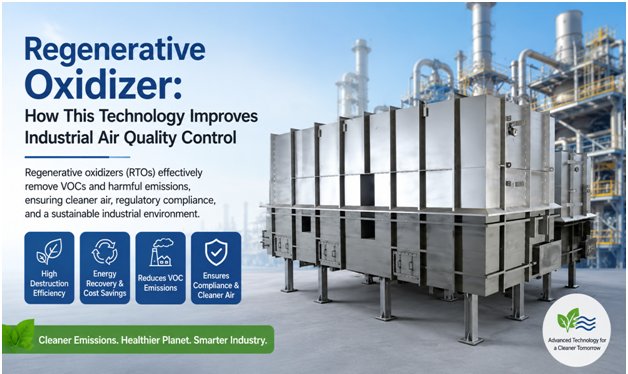
Industrial facilities that release volatile organic compounds (VOCs) or hazardous air pollutants (HAPs) face growing pressure to control emissions without driving up energy costs. A regenerative oxidizer is one of the most widely used solutions for solving this exact challenge, and understanding how it works can help facility owners make smarter equipment decisions.
What Is a Regenerative Oxidizer?
A regenerative oxidizer, commonly known as a Regenerative Thermal Oxidizer (RTO), is a pollution control system that destroys VOCs and HAPs by exposing contaminated air to high heat. The process breaks pollutants down into harmless byproducts, mainly carbon dioxide and water vapor, before releasing the air back into the atmosphere.
What makes this technology stand out is its heat recovery system. Instead of wasting the heat generated during combustion, the unit stores it in ceramic media beds and reuses it to preheat incoming exhaust air. This design can achieve thermal efficiency levels above 95%, significantly reducing the amount of supplemental fuel needed to keep the system running.
How the Process Works
A regenerative oxidizer typically operates in a repeating cycle:
● Contaminated air enters the unit and passes through a heated ceramic media bed
● The air is heated to the required oxidation temperature, destroying VOCs and HAPs
● Clean, hot air exits through a second media bed, transferring its heat to the ceramic material
● The airflow direction alternates between beds, allowing stored heat to preheat the next batch of incoming air
This cycling process is what allows the system to sustain high destruction efficiency while minimizing fuel consumption over long operating periods.
Why Industries Rely on This Technology
Manufacturing plants, chemical processing facilities, printing operations, and coating industries commonly use regenerative oxidizers because they offer a practical balance between environmental compliance and operating cost control.
Key benefits include:
|
Benefit |
Why It Matters |
|
High VOC/HAP destruction rates |
Helps meet environmental regulations |
|
Energy-efficient design |
Lowers ongoing fuel costs |
|
Scalable airflow capacity |
Adapts to different facility sizes |
|
Long equipment lifespan |
Reduces long-term capital expenses |
|
Heat recovery potential |
Can offset other facility heating needs |
Because of these advantages, many facilities view a regenerative oxidizer not just as a compliance requirement, but as a long-term investment that supports operational efficiency.
Factors to Consider Before Installation
Selecting the right system isn't a one-size-fits-all decision. Facility managers should evaluate a few important factors before moving forward with installation.
1. Airflow and Process Requirements
Every facility has a different exhaust profile. The system should be sized according to actual airflow volume, VOC concentration, and any anticipated production growth.
2. Media Bed Quality
The ceramic media inside the unit directly affects thermal efficiency. Higher-quality media typically offers better heat transfer and a longer service life.
3. Maintenance Needs
Like any industrial equipment, a regenerative oxidizer requires periodic inspection of burners, valves, dampers, and media beds to maintain peak performance.
4. Supplier Experience
Working with a knowledgeable equipment provider ensures the system is designed around your specific exhaust stream rather than a generic configuration.
Common Mistakes to Avoid
Many facilities run into avoidable issues after installation. Some of the most frequent problems include:
● Undersizing the unit based only on current production levels
● Skipping routine maintenance schedules
● Ignoring early signs of media degradation
● Failing to monitor fuel consumption trends, which often signal declining efficiency
Avoiding these mistakes can extend equipment life and prevent unexpected downtime.
Final Thoughts
A regenerative oxidizer plays a critical role in helping industrial facilities manage emissions responsibly while keeping operating costs under control. By understanding how the technology works and what factors influence performance, facility managers can make more informed decisions when planning new installations or upgrading existing systems.
As environmental regulations continue to evolve, investing in reliable, well maintained emission control equipment remains one of the most effective ways for industries to stay compliant while protecting long-term operational efficiency.
What's Your Reaction?