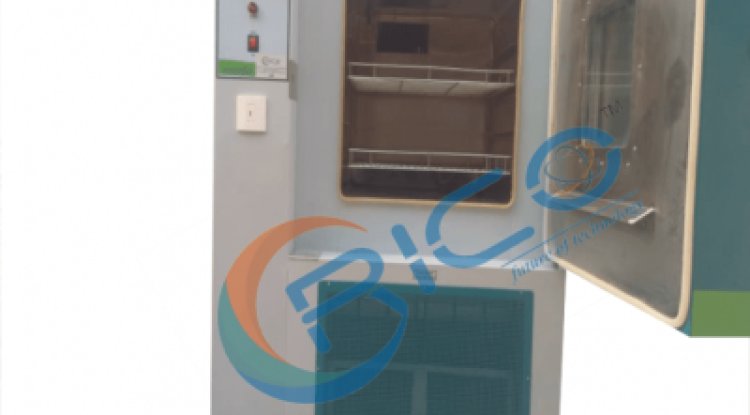
Oxygen Transmission Rate (OTR) Tester
Oxygen transmission rate (OTR) testing is used to measure the speed at which oxygen gas permeates through a material, such as a rigid or flexible plastic film.
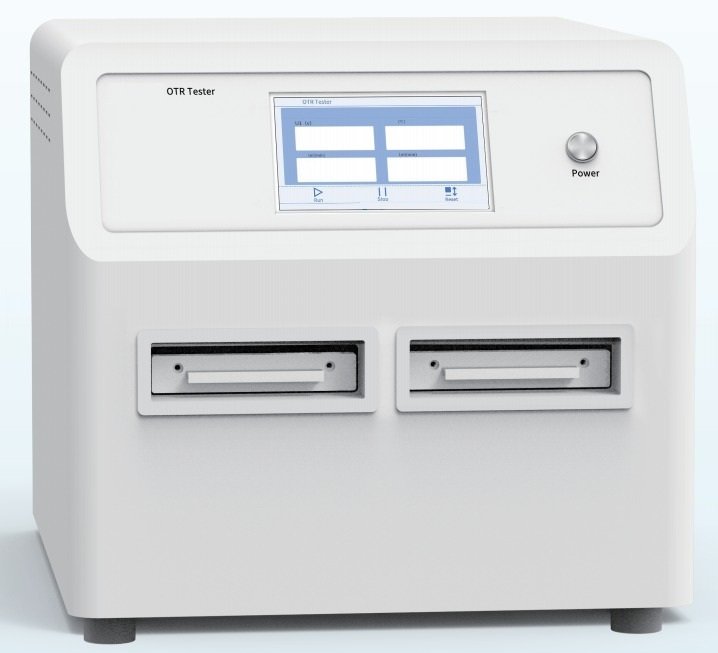
Oxygen Transmission Rate (OTR) Tester: Measuring the Invisible That Protects What We Consume
Understanding Oxygen Transmission in Simple Terms
Every packaging material allows some amount of oxygen to pass through it. This movement is slow, invisible, and continuous.
The Oxygen Transmission Rate measures how much oxygen passes through a material over a specific period under controlled conditions.
Think of packaging as a gate.
Some gates are tightly guarded. Some are loosely watched.
The OTR Tester tells us exactly how guarded that gate really is.
What Is an Oxygen Transmission Rate (OTR) Tester?
An OTR Tester is a laboratory instrument designed to measure the rate at which oxygen permeates through packaging materials such as films, sheets, bottles, and laminates.
It converts something invisible into measurable data.
For manufacturers in the USA, this data is essential for:
-
Product safety
-
Shelf-life prediction
-
Regulatory confidence
-
Brand protection
Why OTR Testing Matters in the United States
The U.S. market demands consistency, transparency, and safety.
Consumers expect food to stay fresh. Patients expect medicine to work. Hospitals expect sterile products.
Even small oxygen leaks can cause:
-
Food spoilage
-
Flavor loss
-
Vitamin degradation
-
Drug instability
-
Medical device contamination
OTR testing ensures these risks are managed before products reach consumers.
A Real-World Story of Oxygen Control
Imagine a snack company launching a new protein bar nationwide. The recipe is perfect. The branding is strong. But months after launch, complaints appear: stale taste, off-smell, shortened shelf life.
The issue isn’t the recipe.
It’s oxygen permeation through the packaging film.
An OTR Tester reveals the truth — allowing engineers to redesign packaging and restore quality.
How an OTR Tester Works
While the science behind OTR testing is advanced, the principle is straightforward.
Step 1: Sample Preparation
A sample of packaging material is mounted securely in the test chamber.
Step 2: Controlled Environment
One side of the sample is exposed to oxygen, while the other side is kept oxygen-free or monitored.
Step 3: Oxygen Detection
As oxygen passes through the material, sensitive sensors detect and measure it.
Step 4: Data Analysis
The tester calculates the oxygen transmission rate, providing clear, actionable results.
Types of Materials Tested
OTR testers are used across many material types common in the USA:
-
Plastic films
-
Multilayer laminates
-
Blister packs
-
Bottles and containers
-
Medical packaging
Each material tells a different oxygen story.
Industries That Depend on OTR Testing
Food and Beverage Industry
Freshness is everything.
OTR testing helps ensure:
-
Longer shelf life
-
Flavor protection
-
Nutritional integrity
Pharmaceutical Industry
Many drugs are oxygen-sensitive.
OTR testing protects:
-
Potency
-
Stability
-
Patient safety
Medical Device Manufacturing
Sterility must be maintained.
OTR testing ensures packaging keeps oxygen exposure under control.
Packaging Development and R&D
Material innovation depends on accurate oxygen data.
OTR testers guide smarter design decisions.
Manual vs Automated OTR Testers
Manual Systems
-
Require higher operator involvement
-
Suitable for small labs
Automated OTR Testers
-
High precision
-
Reduced human error
-
Faster results
-
Digital data handling
U.S. laboratories increasingly favor automation for scalability and compliance.
Data That Drives Decisions
OTR data influences:
-
Packaging selection
-
Supplier approval
-
Shelf-life claims
-
Quality assurance protocols
It turns assumptions into evidence.
Supporting Sustainability Goals
In the United States, sustainability is becoming a priority.
OTR testing helps companies:
-
Reduce over-packaging
-
Select thinner materials
-
Maintain performance while lowering waste
Better data leads to smarter, greener choices.
Accuracy and Repeatability
Consistency is critical.
OTR testers provide:
-
Repeatable measurements
-
Reliable comparisons
-
Confidence in results
This reliability builds trust across teams and partners.
Training and Ease of Use
Modern OTR testers are designed for real-world labs.
Features often include:
-
Intuitive interfaces
-
Automated calibration
-
Clear digital displays
This allows faster onboarding and consistent performance.
Cost Savings Through Prevention
Packaging failures are expensive.
OTR testing helps avoid:
-
Product recalls
-
Waste
-
Reputation damage
Preventing failure costs far less than fixing it.
The Human Impact of OTR Testing
Behind every OTR test is a person depending on quality.
A parent opening fresh food. A patient trusting their medication. A nurse relying on sterile tools.
OTR testers quietly protect all of them.
Choosing the Right OTR Tester
U.S. buyers typically consider:
-
Measurement sensitivity
-
Automation level
-
Sample compatibility
-
Data management
-
Long-term reliability
The right choice supports both growth and compliance.
The Future of OTR Testing
As materials evolve, so will OTR testing.
Future trends may include:
-
Faster analysis
-
Smarter sensors
-
Integrated quality systems
-
Real-time monitoring
But the goal remains unchanged: protecting quality.
Frequently Asked Questions (FAQs)
What does an OTR tester measure?
It measures how much oxygen passes through a packaging material over time.
Why is oxygen transmission important?
Because oxygen can degrade food, drugs, and sterile products.
Who uses OTR testers in the USA?
Food manufacturers, pharmaceutical companies, medical device makers, and packaging labs.
Is OTR testing only for plastic films?
No. It can be used for films, laminates, bottles, and other materials.
Does lower OTR always mean better packaging?
Not always. The ideal OTR depends on the product’s needs.
Can OTR testing reduce product recalls?
Yes. It helps identify packaging weaknesses before launch.
Final Thoughts: Protecting Quality One Molecule at a Time
Oxygen is essential to life — but uncontrolled, it can shorten the life of products we rely on.
The Oxygen Transmission Rate (OTR) Tester makes the invisible visible.
Across the United States, it helps manufacturers deliver freshness, safety, and trust — quietly measuring what the eye cannot see, but the customer can always feel.
What's Your Reaction?