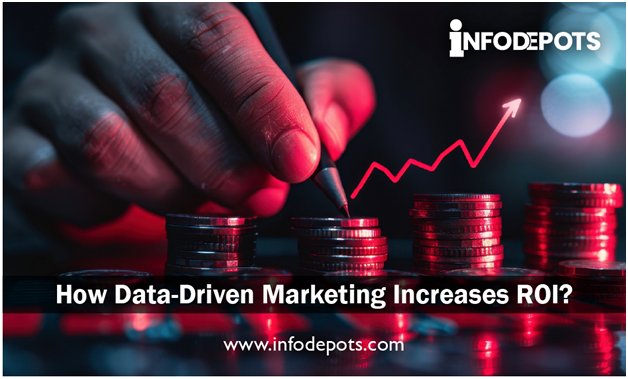
How Data-Driven Marketing Increases ROI?
This comprehensive guide explores how data-driven marketing revolutionizes ROI by transforming raw data into strategic advantages. Learn practical strategies for implementing analytics, predictive modeling, personalization, and real-time optimization to maximize marketing returns. Discover how to overcome common challenges and build a sustainable competitive advantage through informed decision-making that connects marketing activities directly to revenue growth.
In today's hyper-competitive business landscape, marketing decisions based on gut feelings and assumptions are becoming relics of the past. Companies that maximize your ROI with data-driven marketing strategies are consistently outperforming their competitors, transforming raw numbers into revenue-generating insights. The difference between mediocre and exceptional marketing performance often comes down to one critical factor: how effectively you leverage data.
Data-driven marketing ROI isn't just a buzzword—it's a measurable outcome that separates thriving businesses from those struggling to justify their marketing spend. When you harness the power of analytics, customer insights, and performance metrics, you're not just making smarter decisions; you're building a foundation for sustainable growth that compounds over time.
Understanding the Power of Data-Driven Marketing
Data-driven marketing is the strategic approach of making marketing decisions based on data analysis and interpretation rather than intuition alone. This methodology transforms how businesses understand their customers, allocate resources, and measure success. Instead of casting a wide net and hoping for the best, companies can now target the right audience with the right message at precisely the right moment.
The beauty of this approach lies in its precision. Every campaign, every advertisement, and every customer interaction generates valuable data points that inform future strategies. This continuous feedback loop creates a self-improving system where each iteration becomes more effective than the last.
"Marketing without data is like driving with your eyes closed. You might move forward, but you have no idea where you're going or how to get there safely."
How to Use Data-Driven Marketing to Maximize ROI?
The journey to maximizing returns through data begins with establishing clear objectives and measurement frameworks. Here's how successful organizations approach this transformation:
1. Establish Robust Data Collection Systems
Before you can leverage data, you need to collect it properly. This means implementing comprehensive tracking across all customer touchpoints:
- Website analytics that monitor user behavior, conversion paths, and engagement metrics
- CRM systems that capture customer interactions, purchase history, and communication preferences
- Social media monitoring tools that gauge audience sentiment and content performance
- Email marketing platforms that track open rates, click-throughs, and conversion patterns
- Sales data integration that connects marketing efforts directly to revenue outcomes
The key is creating a unified data ecosystem where information flows seamlessly between platforms, providing a complete picture of your customer's journey.
2. Segment Your Audience with Precision
Generic messaging produces generic results. How to maximize ROI with data-driven marketing starts with understanding that your customers aren't a monolithic group. Advanced segmentation allows you to:
- Identify high-value customer segments that generate the most revenue
- Recognize behavioral patterns that indicate purchase readiness
- Personalize messaging based on demographic, psychographic, and behavioral characteristics
- Allocate budget toward segments with the highest conversion potential
- Create tailored experiences that resonate with specific audience needs
When you segment effectively, your marketing spend becomes laser-focused rather than scattered, immediately improving your return on investment.
3. Implement Predictive Analytics
Forward-thinking companies don't just analyze past performance—they predict future outcomes. Predictive analytics uses historical data to forecast customer behavior, enabling you to:
- Anticipate which leads are most likely to convert
- Identify customers at risk of churning before they leave
- Optimize pricing strategies based on demand patterns
- Time campaigns for maximum impact
- Allocate resources to initiatives with the highest projected returns
This proactive approach transforms marketing from a reactive function into a strategic growth driver.
4. Optimize Campaign Performance in Real-Time
One of the most significant advantages of datadriven marketing is the ability to adjust strategies while campaigns are still running. Real-time optimization means:
- Monitoring key performance indicators continuously rather than waiting for end-of-campaign reports
- A/B testing multiple variations to identify winning combinations
- Budget reallocation from underperforming channels to high-performers instantly
- Message refinement based on audience response patterns
- Channel optimization to focus efforts where they generate the best results
This agility ensures that your marketing dollars are always working at peak efficiency.
5. Personalize Customer Experiences at Scale
Modern consumers expect personalized experiences, and data makes this possible even for large customer bases. Personalization driven by data includes:
- Dynamic website content that adapts to individual visitor profiles
- Email campaigns triggered by specific behaviors or milestones
- Product recommendations based on browsing history and purchase patterns
- Customized advertising that speaks directly to individual interests
- Tailored customer service experiences informed by interaction history
Companies that excel at personalization see dramatic improvements in engagement rates, customer lifetime value, and ultimately, data-driven marketing ROI.
Measuring Success: The ROI Equation
Understanding data-driven marketing ROI requires tracking the right metrics. Focus on measurements that directly connect marketing activities to business outcomes:
- Customer Acquisition Cost (CAC): How much you spend to acquire each new customer
- Customer Lifetime Value (CLV): The total revenue a customer generates over their relationship with your brand
- Conversion Rate Optimization: The percentage of prospects who take desired actions
- Attribution Modeling: Understanding which touchpoints contribute most to conversions
- Return on Ad Spend (ROAS): Revenue generated for every dollar spent on advertising
When CLV significantly exceeds CAC, you've achieved the holy grail of marketing efficiency—a sustainable growth engine that generates profit with every new customer acquired.
Overcoming Common Challenges
While the benefits of data-driven marketing are compelling, implementation comes with obstacles. Successful organizations address these challenges head-on:
· Data Quality Issues: Incomplete or inaccurate data leads to flawed decisions. Regular data auditing and cleanup processes are essential.
· Integration Complexity: Connecting disparate data sources requires technical expertise and the right tools. Invest in platforms that facilitate integration.
· Privacy Compliance: Regulations like GDPR and CCPA require careful handling of customer data. Build privacy protection into your data strategy from the ground up.
· Skill Gaps: Data analysis requires specialized knowledge. Invest in training or hire specialists who can extract actionable insights from complex datasets.
The Competitive Advantage
Companies that master how to use data-driven marketing to maximize ROI gain an insurmountable competitive advantage. They understand their customers more deeply, respond to market changes more quickly, and allocate resources more effectively than competitors relying on outdated methods.
This advantage compounds over time. As you collect more data and refine your approaches, your marketing machine becomes increasingly efficient. What starts as incremental improvements evolves into breakthrough performance that separates market leaders from followers.
Taking Action Today
The transition to data-driven marketing doesn't require an immediate overhaul of your entire operation. Start with these practical steps:
- Audit your current data collection to identify gaps and opportunities
- Select one campaign or channel to test data-driven approaches
- Establish clear metrics that connect to business objectives
- Implement tracking systems that provide actionable insights
- Analyze, adjust, and iterate based on performance data
- Scale successful approaches across your marketing ecosystem
The organizations winning in today's marketplace aren't necessarily those with the largest budgets—they're the ones making the smartest, most informed decisions. Data-driven marketing transforms that vision into reality, turning information into your most valuable asset and marketing spend into measurable, sustainable returns.
What's Your Reaction?