Donald John Trump
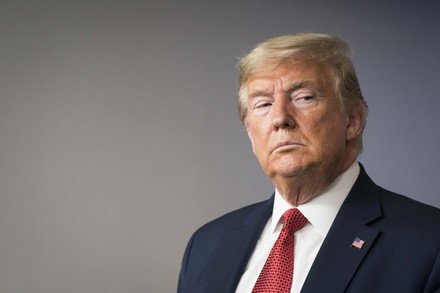
Donald John Trump is an American politician, media personality, and businessman who is the 47th president of the United States.
Birth, Family, and Early Roots
Donald John Trump was born on June 14, 1946, at Jamaica Hospital in Queens. He was the fourth of five children born to Fred Trump, a successful real estate developer, and Mary Anne Trump, a Scottish immigrant who brought with her a strong sense of discipline and traditional values.
Queens in the 1940s and 1950s was not Manhattan glamour. It was practical, residential, and focused on building families and communities. Fred Trump specialized in developing middle‑income housing — brick apartment buildings that weren’t flashy but were profitable and stable. Young Donald grew up watching construction sites, balance sheets, and negotiations long before he ever thought of skyscrapers.
From an early age, Trump showed signs of intensity and competitiveness. Family members often described him as energetic, assertive, and eager to stand out. He was not content to blend into the background.
At age 13, concerned about his discipline and direction, his parents sent him to the New York Military Academy, a decision that would leave a lasting impression. There, Trump learned structure, hierarchy, and the importance of projecting authority — lessons that would later echo through his business and public persona.
Born: 14 June 1946 (age 79 years), Jamaica Hospital Medical Center, New York, United States
Party: Republican Party
Spouse: Melania Trump (m. 2005), Marla Maples (m. 1993–1999), Ivana Trump (m. 1977–1990)
Children: Barron Trump, Ivanka Trump, Tiffany Trump, Donald Trump Jr., Eric Trump
Education: Wharton School of the University of Pennsylvania (1966–1968) · See more
Vice presidents: JD Vance (2025–), Mike Pence (2017–2021)
Parents: Fred Trump, Mary Anne MacLeod Trump
Education and the Formation of Confidence
After graduating from military school, Trump attended Fordham University briefly before transferring to the Wharton School of Finance and Commerce at the University of Pennsylvania. At the time, Wharton was already known as one of America’s most prestigious business schools.
Trump graduated in 1968 with a degree focused on economics. While some future business leaders pursued careers in consulting or banking, Trump’s path was already clear. He was headed back to New York real estate — but with a vision far larger than the outer boroughs.
He didn’t just want to build apartments.
He wanted his name to mean something.
Entering the Family Business — and Rewriting It
Donald Trump joined his father’s company after college. The business was solid, conservative, and focused on residential housing. But Donald saw opportunity elsewhere.
In the 1970s, Manhattan was struggling. Crime was high, buildings were decaying, and many developers stayed away. Trump saw potential where others saw risk. He believed that New York City could be reimagined — and that he could be the one to do it.
One of his earliest and most defining projects was the transformation of the Grand Hyatt Hotel near Grand Central Terminal. The deal was complex, involving negotiations with banks, the city government, and contractors. When the project succeeded, it announced Trump’s arrival as a serious player in Manhattan real estate.
More importantly, it established a pattern that would define his career:
-
High visibility projects
-
Aggressive negotiation
-
Heavy use of branding
-
A willingness to court controversy
The Birth of the Trump Brand
Donald Trump understood something early that many business leaders took decades to realize: perception is power.
He didn’t just develop buildings — he branded them. Towers, hotels, casinos, golf courses — many carried his name in large, unmistakable letters. The “Trump” name became part of the product itself, signaling luxury, confidence, and excess.
Some of his most well‑known projects included:
-
Trump Tower in Manhattan
-
Luxury hotels in major cities
-
Casino developments in Atlantic City
-
High‑end residential properties
-
Golf resorts across the United States
In American culture, Trump positioned himself not merely as a businessman, but as the embodiment of success. He cultivated an image of wealth, decisiveness, and dominance — an image reinforced through media appearances, interviews, and later, television.
Business Ups and Downs — Failure as a Public Event
Trump’s business journey was never smooth. During the late 1980s and early 1990s, economic downturns and heavy debt put many of his ventures under strain. Some businesses failed. Some required restructuring. Critics declared his career finished.
But Trump did not disappear.
Instead, he leaned into reinvention. He renegotiated debts, restructured companies, and shifted his focus. These years shaped his worldview — reinforcing his belief in negotiation, leverage, and public confidence even in adversity.
In America, failure often ends careers.
For Trump, it became part of the story.
Media, Television, and Reinvention
The next chapter of Trump’s business life unfolded on television.
With the launch of “The Apprentice,” Trump entered millions of American homes. Seated behind a boardroom table, delivering decisive judgments, he became a pop‑culture figure. His phrase “You’re fired” entered the national vocabulary.
The show did more than entertain — it reshaped Trump’s public identity. To many Americans, especially younger viewers, he was no longer just a real estate developer. He was a symbol of authority, success, and leadership.
Television amplified his brand in a way real estate never could.
Business Philosophy: Control, Confidence, and Visibility
Trump’s approach to business has always emphasized:
-
Strong personal branding
-
High‑risk, high‑reward deals
-
Negotiation as a competitive sport
-
Loyalty and hierarchy
-
Public confidence, even under pressure
Supporters see this as strength and clarity.
Critics see it as aggression and ego.
Either way, it is unmistakably his.
From Business to Public Life
By the time Trump entered national politics, he was already a household name. Unlike traditional public figures, he arrived with decades of public exposure — both positive and negative.
His background as a businessman shaped how Americans perceived him:
-
Some viewed him as an outsider who could disrupt systems
-
Others saw him as a symbol of excess and division
His life before politics became part of the political debate itself.
How Americans View His Business Legacy
Across the United States, opinions about Trump’s business career vary widely.
Some Americans admire:
-
His confidence
-
His willingness to take risks
-
His ability to command attention
Others criticize:
-
His business failures
-
His management style
-
His emphasis on personal branding
What’s undeniable is that Trump changed how business leaders engage with media and public perception.
A Life Lived in Public
Few Americans have lived as much of their lives in public view as Donald Trump. From tabloids to television, from boardrooms to rallies, his story unfolded openly — successes, failures, and controversies alike.
That visibility shaped how Americans connect to him. For supporters, familiarity breeds loyalty. For critics, it reinforces skepticism.
Either way, his story feels personal to many.
Why His Story Resonates in the USA
Trump’s life taps into core American themes:
-
Reinvention
-
Individualism
-
Wealth as status
-
Confidence as currency
-
The idea that personality can shape destiny
Whether embraced or rejected, these themes remain powerful in American culture.
Legacy Beyond Numbers
Donald Trump’s story is not just about buildings or balance sheets. It’s about how a person can turn a name into a symbol — and how that symbol can spark strong reactions across an entire nation.
For some, he represents aspiration.
For others, caution.
For many, debate.
Frequently Asked Questions (FAQs)
What is Donald Trump’s date of birth?
Donald Trump was born on June 14, 1946.
Where was Donald Trump born?
He was born in Queens, New York City, USA.
What business did Donald Trump start with?
He began working in his family’s real estate business before expanding into large‑scale Manhattan developments.
Is Donald Trump primarily a businessman or a public figure?
He is both. His business career laid the foundation for his public recognition.
What is Donald Trump most known for in business?
He is known for real estate development, branding, and media presence.
Why is Donald Trump’s life story considered uniquely American?
Because it reflects ambition, reinvention, visibility, and the pursuit of influence — core elements of American culture.
Final Reflection
Donald J. Trump’s story began in Queens with a birth date few could have predicted would matter to history. Through business, branding, and boldness, he transformed himself into a national figure whose name carries meaning far beyond real estate.
His life reminds Americans that success is not only about numbers — it’s about narrative. And few narratives have been as debated, studied, and emotionally charged as his.
Whether admired or opposed, Donald Trump remains a figure shaped by America — and one who, in return, has helped shape how America talks about power, ambition, and identity.
What's Your Reaction?