Blackout Curtains vs Blackout Blinds: Full Comparison Guide
Blackout curtains are usually woven in three layers of fabric, and they come with a black inside layer to block the light.
Blackout window coverings are one of the most effective ways to control light in the home. If you’re struggling with early morning sun disrupting your sleep, want privacy from neighbors or just want to create the perfect environment for a home theater, there are plenty of reasons why blackout curtains and blackout blinds make a ton of sense. But the fact is, when it comes to window coverings, the two couldn't be more different in how they work, look, get hung and cleaned — not to mention cost. By understanding how they compare, you can make an informed decision about which is the best solution for your situation.
Understanding Blackout Curtains and Blinds
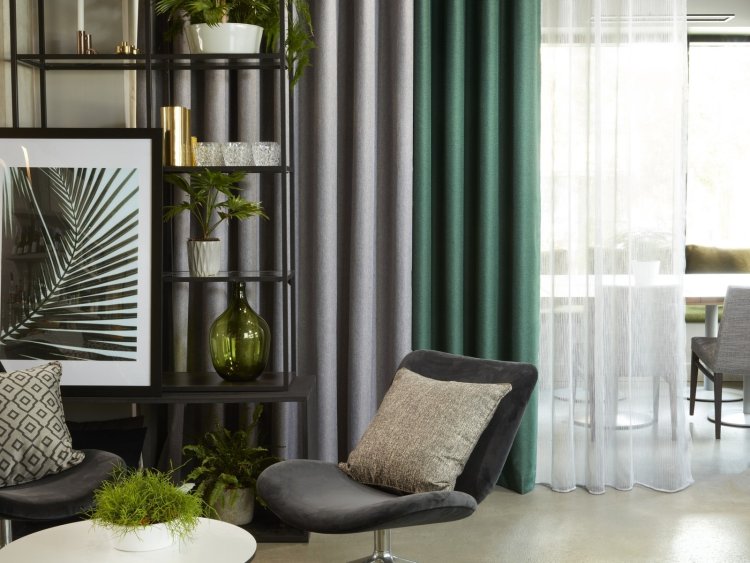
Blackout curtains are usually woven in three layers of fabric, and they come with a black inside layer to block the light. It is a shade that's mounted from above the window and hangs along the length of the window to further cover it (often hitting it at the sill or floor), all in order to block light. The material is typically heavy and does not let the light through – they can have a shiny coating on their back which bounces sunlight away from the window.
Roller shades (also called roll up shades or blackout blinds) are made of a tightly woven, smooth or textured fabric that can be raised and lowered by rolling on or off a simple tube. They work on a pulley system and can be raised to any height so you get partial of full light. Blackout blinds designs include roller shades, cellular shades and panel track systems with their respective mechanisms and looks.
Light Blocking Effectiveness
Both blackout curtains and blackout blinds are great for keeping the light out, but they do so in different ways. Heavy layering of blackout curtains can block up to 99 percent of natural light. The thick material blocks out light instead of people, so it's one of the most effective light- blocking options. Also blackout curtains usually stick out well beyond the window frame and overlap a bit so that light can’t leak in around the sides. And with that full coverage comes true blackout ability.
Blackout blinds also do it wonderfully as they usually can block out 95 up to 99 percent of light, depending on the grade and variety. Premier Blackout cellular shades can provide near-total darkness when closed. But they only work if properly installed, with no gaps around the blind edges. When you do, some light may escape around the edges if it's not installed properly or your window frame has large gaps. High-quality blackout blinds with side channels or brackets that seal against the window frame put up nearly as good a fight against light creeping in as curtains.
Aesthetic Appeal and Design Options
When it comes to curtains choosing the right ones goes beyond aesthetics. Versatile design options are available for blackout curtains Dubai; it is possible to find colors, fabrics and patterns that meet your specific style needs. With minimalist solid colors and decorative patterns, as well as basic or textured materials, there’s a blackout curtain to fit just about every décor. They create a touch of luxury in bedrooms, living rooms and dining spaces. New curtains are available in both contemporary and traditional styles so you can match the existing room decor. The draping fabric can offer visual softness that makes rooms feel more inviting and complete.
Blackout blinds aren’t as visual stunning for purely decorative purposes, but they do the job. They usually have a super-clean, minimalistic look, so there are fewer design choices available as there are with curtains. The majority of blackout blinds are available in neutral shades like white, gray and black intended to disappear inside the window rather than stand out. Some manufacturers even offer patterned and colored shades, while most modern roller shades can have their fabric match interior design. Blackout blinds are especially successful in minimalist, modern or industrial designs where their sleek contours add to the overall design. For those
more concerned about function than form, this plain look may actually be preferred.
Installation and Setup
The amount of installation you need varies greatly for these two types of window treatments. To hang, use a standard or decorative curtain rod (not included) that fits the desired length of the window. The installation is fairly simple, requiring you to attach mounting brackets and hang the rod on each side of your window. It doesn't require any special tools besides a drill and whatever type of wall anchors are best for your particular walls. In an afternoon, most homeowners can install them on their own. And the fact that curtains are very simple to install while still managing a touch of style is also great for renters or anyone not quite ready to get into anything elaborate.
The installation process for blackout blinds depends on their type. Roller shades may also need a very accurate measurement and are generally hung from mounting brackets inside or outside of the window frame. Although it is still a fairly basic job, blind installation is even more inexact than hanging curtain so there's less margin for error when it comes to operating the shades and getting the right size. Some cellular shades and similar high-end blind options can be better if you have them professionally installed- like in a cut-out opening. But I dare say blinds installation is something many homeowners can handle with good measurements and some
simple instructions.
Maintenance and Cleaning
It is important to clean your window treatments to keep them looking good and working well. Blackout curtains do need care, but the maintenance requirements vary by fabric type. The majority of blackout curtains can be vacuumed using an upholstery attachment to evacuate dust, or simply hand-washed in cool water. Certain high-end blackout curtains are machine washable for easy care. But the weight of blackout fabric can mean more labor when it comes to washing and drying than with lightweight curtains. Some fabrics require dry cleaning which increases cost of maintenance.
Blackout blinds are extremely low maintenance which is a great plus when compared to curtains. For dust - Wipe with wet cloth or Vacuum Clean. For minor stains, water dampened cloth shades clean. Because blinds are compact there is less to get dusty and no fabric to take down and wash or dry clean. Tass by aec resources: "Blackout blinds are the best for busy homeowners and people that live in dusty situations, they're lower maintenance." Easy to clean As well as being an incredibly durable blind, it is also easy to clean which means your blinds stay looking fresher for longer with less effort.
Cost Analysis
Finances may also play a part in your choice of window treatment. The cost of blackout curtains ranges greatly depending on the quality of the fabric, design and size. Off-the-shelf blackout curtains can run between $30 and $150 per panel, while custom-made draperies from designer fabrics may be upwards of $300 per panel. It’s usually easy to install and, therefore, costs nothing though some homeowners opt for professional help. Although you may pay more for top quality curtains up front, these pieces are made to last and will give a timeless look. Blackout curtains that are well made and properly cared for can last 10 to 15 years or more.
Blackout blinds tend to be less expensive than curtains, typically priced between $50 and $300 per window depending on its size, quality, and style. If you need professional installation, add an estimated $50 to $200 per window for installation cost. Off-the-shelf blinds are frequently the most economical, and custom-made ones cost more but offer better fit. The overall expense for blinds is generally less than that for drapes, but labor costs may be higher. There isn’t a set time limit, but most blackout blinds last around 8 to 12 years.
Light Control and Adjustability
Either way, you get great light control while having the option for increased adjustability. Blackout shades And they can be opened or closed, with nothing in between — there’s no half- light for you. Blackout curtains do not open a little bit to let in the exact amount of light you want. This limitation makes curtains a good choice for the moments when you either want total darkness or full light. One way homeowners attempt to deal with this is by hanging sheer curtains in conjunction with blackout curtains for a more flexible lighting solution.
I have blackout blinds so I can draw them up as far as I like. This function lets you can control how much of the outside light will enter your room. You can half lower blinds to let in some light while keeping your privacy or fully lower them for total darkness. This graduated control makes blackout blinds more appealing for cases when you want some light, but not too much. Blinds Versatility For homeowners who desire versatility in light management, blinds offer unique opportunities.
Privacy Considerations
PrivacyPart of the reason why a certain kind of treatment is chosen for windows, privacy is definitely one factor to consider. Blackout Curtains Blackout curtains are the ultimate option for privacy, as the opaque material completely prevents visitors from being able to see inside your home. Day or night, curtains are not see through. The complete coverage outside of the window frame means no light is able to get through, to sacrifice yours or other privacy. This full privacy cover makes the curtains suitable for bedroom, bathroom, or any room in the house not exposed to the street or ground floor outside windows.
Blackout blinds also offer good privacy, fully blocking people from seeing in during late night hours when lights are on inside. Although if it is daytime and blinds are being hit by the sun still a little silhouettes will be seen from outside. This drawback causes blinds to accept light better for privacy at night, but also makes it difficult (without additional tricks) for them to provide total daytime privacy. The best daytime privacy with blinds is achieved by using them together with sheer curtains, or by getting a blind design that emphasizes privacy.
Space and Window Considerations
Each type of window may benefit one over the other. Blackout curtains need space around the window on all sides, for the rod and drape to hang. In small spaces like skinny windows or in rooms where don’t have a lot of space on the walls, putting up curtains may not be realistic source: Zillow. Furthermore, curtains take up space when they are open and can be a waste of real estate in small rooms. But big rooms with lots of windows look classy, luxurious, and cozy with curtains.
Blackout blinds are ideal for spaces with tight dimensions, like awkward window proportions, or in small rooms that would be crowded by full-length curtains. Fabric roller shades consume very little space when they are open and can be mounted inside the window frame to provide added room. In casitas, small bedrooms or homes with architecture issues, blinds are often the best choice. Blinds are also perfect for rooms with more than one window where hanging multiple curtains would be overwhelming or impractical.
Thermal Insulation Properties
In addition to blocking light, the two treatments offer thermal advantages that may impact a home’s energy efficiency. Blackout curtains, particularly those that are multi-layered and have a reflective backing, generate great insulation benefits. The dense material minimizes heat transfer through windows and filters light for better insulation. In the wintertime, blackout curtains can be used to keep your interior energy from escaping through cold windows and are able to also help reduce heat in transferring through the windows. This thermal balancing can result in lower heating and cooling expense as well as increased comfort. The heat retention properties of blackout curtains make these increasingly valuable for harsh climate conditions.
Blackout blinds will also offer some degree of thermal insulation, but usually less so than heavyweight curtains because they won't be as thick. The cellular shape carries with itself a natural insulating structure, and hence, they are more insulating than solid roller shades. However, the quality of insulation in blinds tends toward the mediocre side when compared to heavyweight curtain panels. Homeowners who are in favour of insulation and energy saving efficiency will appreciate the functionality blackout curtains bring.
Making Your Decision
It will all depend on what is the best option for you between blackout curtains and blackout blinds. Choose blackout curtains if aesthetics are more important, you value versatility and elegant designs, require the best thermal insulation, or have big windows that could benefit from curtains with a strong visual presence. Curtains are best for those who are working with a little bit of time and want to touch up their blind ranges once in awhile.
Opt for blackout blinds If you want something easy to clean, adjustable and convenient throughout the day in terms of how much light enters a room or if your home has small rooms and limited space in which curtains will fit, or if you have minimal tastes. Those on a tight budget or who want simple, low-maintenance window treatments can always opt for Blinds.
At the end of the day, what matters most is that you have made the choice that makes your home better while still being practical for what you need. A lot of homeowners use a blend of both options – they enjoy curtains for style and blinds for functional light control- making it all the good fit every lifestyle appropriate window treatment.
What's Your Reaction?