What Every Facility Manager Should Ask Before Choosing a Schneider ACB Supplier
Choosing an electrical equipment supplier isn't a task to rush through. The right partner protects your facility's uptime, safety, and long-term operational costs, while the wrong one can create headaches that outlast the initial savings
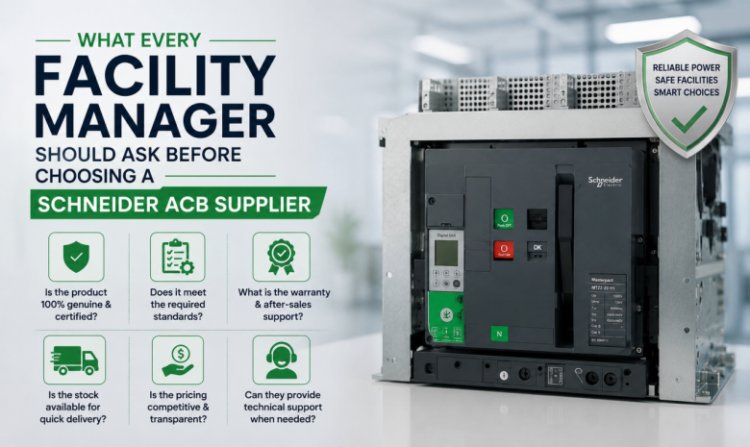
Facility managers rarely get credit for the decisions that keep a building running smoothly, but choosing the right electrical equipment supplier is one of those quiet decisions that carries enormous weight. Air circuit breakers protect entire distribution panels from overloads and faults, and a wrong choice at the sourcing stage can lead to downtime, safety risks, and unplanned maintenance costs down the line.
When it comes to Suppliers of Schneider Air circuit breaker equipment, not every vendor offers the same level of reliability, technical backing, or product authenticity. Before signing off on a purchase order, facility managers should be asking a specific set of questions that go beyond price comparisons. This article breaks down what those questions should be and why they matter.
Is the Supplier Actually Authorized
This is the first and most important question, yet it's often overlooked in the rush to close a deal. Genuine Schneider Electric air breaker suppliers should be able to provide documentation proving their authorization status. This isn't just a formality. Authorized suppliers source directly from Schneider's manufacturing and distribution network, which means the equipment you receive comes with accurate serial numbers, proper certifications, and a warranty that will actually be honored if something goes wrong.
Unauthorized resellers sometimes offer lower prices, but the equipment can be refurbished, mislabeled, or missing critical documentation. For a facility manager, that risk simply isn't worth the short-term savings.
Does the Product Range Match Your System's Needs
Not every project calls for the same type of breaker. Some facilities need standard air circuit breakers for basic overload protection, while others require advanced units like the Schneider Masterpact air circuit breaker, which offers higher current ratings, digital trip units, and communication capabilities for integration with building management systems.
Ask your supplier whether they stock a range of frame sizes, trip unit configurations, and accessory options. A supplier who only carries one or two standard models may not be equipped to handle facilities with more complex load profiles or future expansion plans.
What Does Lead Time and Local Availability Look Like
Downtime is expensive, and facility managers know this better than anyone. When searching for Schneider ACB suppliers near me, it helps to prioritize vendors with regional stock or warehousing, since this drastically reduces the wait time during emergency replacements.
It's worth asking directly:
● How quickly can a replacement unit be dispatched in an emergency
● Is there local stock available, or does everything ship from a central warehouse
● What is the average lead time for custom configurations
A supplier who can answer these clearly, with specific timelines rather than vague estimates, is generally more dependable during a crisis.
Are You Buying New or Refurbished Equipment
There's a meaningful difference between new Schneider ACB for sale and refurbished units being resold as new. For critical infrastructure, especially in industrial or high-occupancy commercial buildings, new equipment is almost always the safer choice. It comes with a full manufacturer warranty and no history of prior wear.
If budget constraints make refurbished units necessary, make sure the supplier provides testing certificates and calibration records. Never accept a refurbished unit without documented proof of its condition and performance testing.
Does the Supplier Understand Your Application
A good supplier does more than sell hardware. They understand how their products perform in real-world conditions. For facilities using breakers for Schneider ACB for industrial use, this means understanding load fluctuations, environmental conditions, and integration requirements with existing switchgear.
During your evaluation, ask the supplier to walk you through how they'd size and configure a breaker for your specific facility. Their answer will tell you a lot about whether they're simply a sales channel or an actual technical partner.
What Support Comes After the Sale
The relationship with a supplier shouldn't end once the invoice is paid. Facility managers should ask about:
● Availability of spare parts and trip units
● Response time for technical troubleshooting
● On-site commissioning support, if needed
● Training resources for maintenance staff
Suppliers who offer strong after-sales support tend to be more invested in long-term client relationships rather than one-time transactions, which is exactly the kind of partner a facility manager wants on speed dial.
Final Thoughts
Choosing an electrical equipment supplier isn't a task to rush through. The right partner protects your facility's uptime, safety, and long-term operational costs, while the wrong one can create headaches that outlast the initial savings. By asking about authorization status, product range, lead times, equipment condition, application expertise, and after-sales support, facility managers can make sourcing decisions with real confidence rather than guesswork.
Taking the time to vet suppliers properly today means fewer emergencies, fewer compliance issues, and a facility that runs the way it's supposed to.
What's Your Reaction?