Tablet Disintegration Test Apparatus
Why Disintegration Is the First Step Toward Healing
When people think about medicines, they often think about active ingredients. But a tablet is more than just chemistry. It is a carefully engineered structure.
Before a drug can dissolve, be absorbed, and begin its therapeutic action, it must first disintegrate—break down into smaller particles once it encounters bodily fluids.
If a tablet:
-
Disintegrates too slowly, the drug may not be absorbed on time
-
Disintegrates too quickly, it may release the drug improperly
-
Fails to disintegrate, it may not work at all
The tablet disintegration test ensures that every dose behaves consistently, predictably, and safely.
What Is a Tablet Disintegration Test Apparatus?
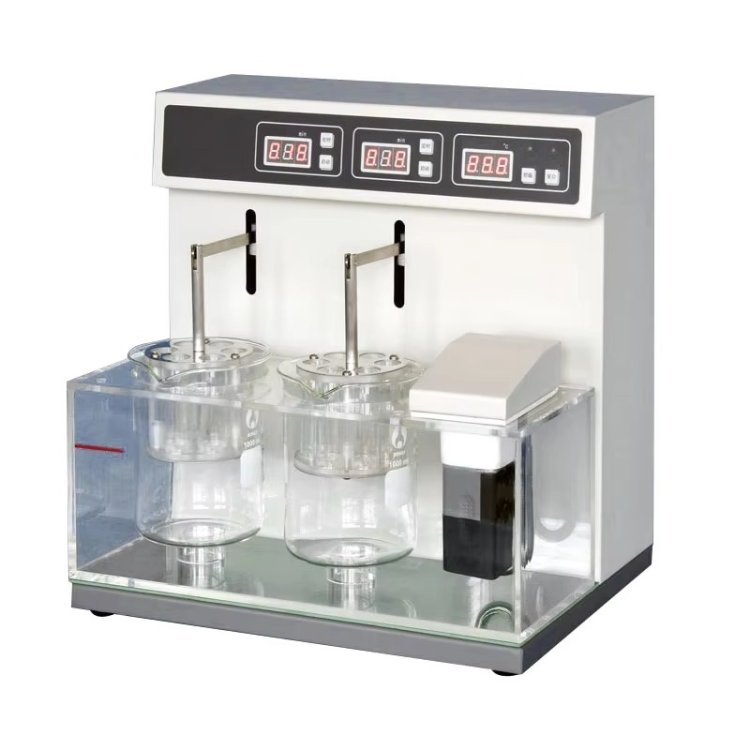
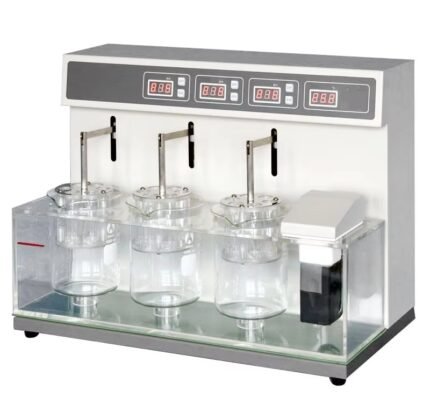
A Tablet Disintegration Test Apparatus is a laboratory instrument used to determine how long a tablet or capsule takes to break down into particles under controlled conditions.
The apparatus simulates the environment a tablet encounters after ingestion by controlling:
-
Temperature (typically near body temperature)
-
Immersion medium (such as water or simulated fluids)
-
Mechanical motion that mimics natural movement
In pharmaceutical laboratories across the USA, this apparatus is a standard fixture in quality control and formulation development.
A Day in a U.S. Pharmaceutical Lab
Picture a quality control analyst in New Jersey starting the morning shift. A new batch of tablets has just come off the production line. Before the batch can move forward, it must pass a series of physical tests.
One of the first stops is the disintegration lab.
The analyst carefully places tablets into transparent tubes, lowers the basket into a temperature-controlled bath, and starts the test. Over the next several minutes, all eyes are on the tablets—not for color changes or chemical reactions, but for something simpler.
Do they fall apart the way they’re supposed to?
How the Tablet Disintegration Test Apparatus Works
At its core, the apparatus operates on a beautifully simple principle.
The Basket Assembly
The heart of the system is a basket containing multiple transparent tubes. Each tube holds one tablet and is closed at the bottom with a mesh screen.
The Medium
The basket is immersed in a liquid medium maintained at a controlled temperature, often close to human body temperature.
The Motion
The basket moves up and down at a consistent speed, allowing the medium to flow through the tablets repeatedly.
The Observation
The test ends when the tablet has fully disintegrated—meaning no solid core remains on the screen.
The time taken is recorded and evaluated against predefined acceptance criteria.
Why Temperature Control Matters
Temperature plays a critical role in disintegration behavior.
-
Too cold, and tablets may appear artificially slow
-
Too hot, and results may not reflect real-life conditions
That’s why modern disintegration apparatuses used in U.S. labs feature precise temperature control systems to ensure repeatable and reliable results.
Types of Dosage Forms Tested
The tablet disintegration test apparatus is used for more than just standard tablets.
Common dosage forms include:
-
Immediate-release tablets
-
Capsules (hard and soft gelatin)
-
Coated tablets
-
Orally disintegrating tablets
Each dosage form presents unique challenges, making disintegration testing essential during both development and routine production.
Disintegration vs Dissolution: A Common Misunderstanding
In pharmaceutical testing, disintegration and dissolution are often confused—but they serve different purposes.
-
Disintegration measures how a tablet breaks apart
-
Dissolution measures how the drug dissolves into solution
Disintegration is usually the first physical test, acting as a gatekeeper before more complex analyses begin.
Why Disintegration Testing Is Critical in the USA
In the United States, pharmaceutical products are expected to deliver consistent performance across millions of doses.
Disintegration testing helps ensure:
-
Batch-to-batch consistency
-
Patient safety
-
Reliable therapeutic outcomes
-
Confidence for healthcare providers
Without this test, variability could creep into even the most carefully formulated medicines.
The Human Cost of Failure
Imagine a tablet that looks perfect but fails to disintegrate properly. The patient may never receive the intended dose. Symptoms may persist. Trust in the medication—and the brand—can erode.
Disintegration testing exists to prevent these silent failures.
It protects patients who may never know how close a problem came to reaching them.
Design Features of Modern Apparatuses
Today’s tablet disintegration test apparatuses used in U.S. labs often include:
-
Digital timers and displays
-
Transparent baths for easy observation
-
Smooth, corrosion-resistant materials
-
Quiet, stable motion mechanisms
These features support accuracy, ease of use, and long-term reliability.
Manual vs Automated Testing
Some labs prefer hands-on observation, while others rely on automated endpoints.
-
Manual systems emphasize visual confirmation
-
Automated systems reduce operator variability
Both approaches coexist in American laboratories, depending on workflow and testing philosophy.
Training and Good Laboratory Practice
Even a simple test requires skill.
U.S. laboratories invest in training analysts to:
-
Handle samples consistently
-
Set up tests correctly
-
Interpret endpoints accurately
Technology and technique must work together to produce trustworthy data.
Maintenance and Calibration
A disintegration test apparatus must perform consistently over time.
Routine practices include:
-
Regular calibration of temperature systems
-
Inspection of basket assemblies
-
Verification of movement frequency
Proper maintenance ensures that results remain dependable year after year.
Supporting Innovation in Drug Development
Beyond quality control, disintegration testing plays a role in innovation.
Formulation scientists use it to:
-
Compare excipients
-
Optimize tablet hardness
-
Improve patient experience
A tablet that disintegrates smoothly is often easier to swallow and more predictable in action.
The Future of Disintegration Testing
As pharmaceuticals evolve, so do testing tools.
Emerging trends include:
-
Enhanced digital data capture
-
Integration with laboratory information systems
-
Improved ergonomics and automation
Yet the core principle remains unchanged: observing how a tablet behaves in a controlled liquid environment.
Frequently Asked Questions (FAQs)
What is the purpose of a tablet disintegration test?
To determine how long a tablet or capsule takes to break apart under controlled conditions.
Is disintegration testing required for all tablets?
Most immediate-release oral solid dosage forms require disintegration testing as part of quality evaluation.
How long does a disintegration test usually take?
Depending on the formulation, tests may range from a few minutes to up to an hour.
Can coated tablets be tested using this apparatus?
Yes, coated tablets are commonly evaluated to ensure the coating does not delay disintegration beyond acceptable limits.
Is disintegration the same as drug release?
No. Disintegration measures physical breakdown, while drug release is evaluated through dissolution testing.
How often is disintegration testing performed?
It is conducted during formulation development and routinely during batch quality control.
Final Thoughts
The Tablet Disintegration Test Apparatus rarely gets attention outside pharmaceutical labs. It doesn’t promise innovation or breakthrough science. Instead, it delivers something just as important: reliability.
It ensures that when a patient in the United States takes a tablet, the medicine inside begins its journey exactly as intended.
In the quiet rhythm of rising and falling baskets, this humble apparatus protects trust—between manufacturers and patients, science and society, medicine and healing.
What's Your Reaction?