Step-by-Step Guide to AI Prediction Analytics Platform Development for Businesses
Choosing the right AI Prediction Analytics Platform Development Company is essential for building a dependable and future-ready solution that aligns with your business goals.
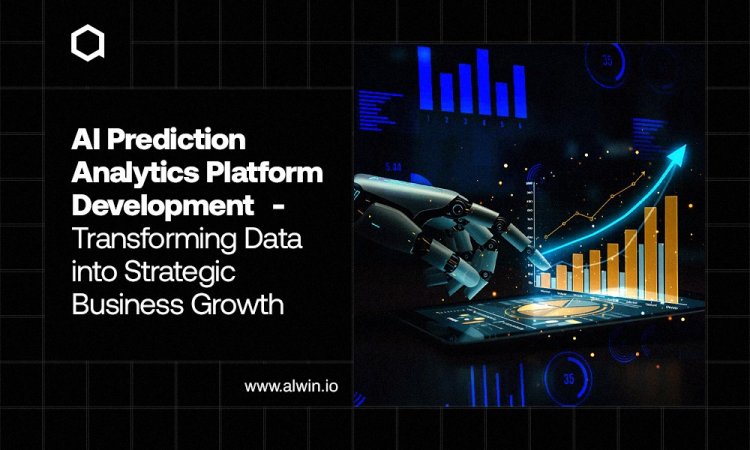
Every day, businesses make hundreds of decisions about who to target, what to stock, when to act. Most of these decisions are based on experience and gut feeling. But what if you could make those same decisions backed by data that actually predicts what's coming next?
That's exactly what AI Prediction Analytics makes possible.
We're living in a world that moves fast. Markets shift overnight, customer behaviour changes in seconds, and the cost of being wrong keeps rising. In this environment, reacting isn't enough you need to anticipate.
This guide breaks down AI Prediction Analytics in plain, simple language. No complicated jargon. No data science degree required. Just clear, honest answers to the questions every business leader, analyst, and decision-maker is asking right now.
What Is an AI Prediction Analytics Platform?
An AI Prediction Analytics Platform is a software solution that brings together data collection, processing, machine learning, and predictive modelling all in one place.
Instead of stitching together dozens of separate tools, a platform gives your team a unified environment to:
● Connect and organise your data sources
● Train and run AI prediction models
● Visualise forecasts and insights
● Integrate predictions into day-to-day business decisions
What Is AI Prediction Analytics Platform Development?
Should we build our own AI Prediction Analytics Platform and what does that actually involve?"
It is the process of designing, building, and deploying a custom AI-powered system that collects your data, learns from it, and generates predictions customized specifically to your business needs.
It's not about buying software off the shelf. It's about creating something built from the ground up for your data, your goals, and your people.
Cost of Developing an AI Prediction Analytics Platform
The cost of developing an AI prediction analytics platform can vary based on features, complexity, and business requirements. On average:
● Basic Platform: $9,500 to $24,000
● Mid-Level Platform: $24,000 to $72,000+
● Advanced Platform: $72,000 to $240,000+
Additional costs may include data storage, cloud services, third-party APIs, maintenance, and upgrades.
Overall, the investment depends on your project scope, but a well-developed AI prediction analytics platform can deliver strong ROI through better decision-making, efficiency, and revenue growth.
Why Are Businesses Adopting Predictive Analytics?
In today’s fast-moving digital environment, businesses are no longer satisfied with just understanding past performance they want to predict what comes next. With increasing data availability and rising competition, organizations are focusing on smarter strategies that deliver accuracy, speed, and measurable outcomes. This shift is driving the demand for advanced technologies that can transform raw data into future-ready insights. As a result, predictive analytics is becoming a key solution for businesses aiming to improve decision-making, improve customer experiences, reduce risks, and unlock new growth opportunities.
Business Benefits of AI Prediction Analytics Platforms
Smarter Decision-Making
Improved decision-making is a major benefit of AI prediction analytics platforms. They help businesses move away from guesswork by using real data and insights. By analyzing past and real-time data, these platforms identify patterns and trends, allowing leaders to make quick, accurate, and confident decisions. This leads to better planning and improved overall business performance.
Improved Customer Insights
AI prediction Analytic platforms analyze customer data, behavior, and preferences to provide a clear understanding of what customers want and expect. By identifying patterns and trends, businesses can deliver more personalized experiences, improve customer satisfaction, and build stronger relationships. This helps companies make better marketing, sales, and service decisions that align with customer needs.
Increased Operational Efficiency
Accurate insights drive better performance, making AI prediction analytics platforms essential for modern businesses. These platforms analyze operational data to identify inefficiencies, streamline workflows, and optimize resource usage. By automating routine processes and improving performance, businesses can save time, reduce costs, and improve overall productivity while focusing on growth and innovation.
Revenue Growth Opportunities
Revenue growth opportunities are a key benefit of AI prediction analytics platforms. These platforms analyze market trends, customer behavior, and sales data to identify new income sources and business opportunities. By predicting demand and optimizing pricing strategies, businesses can increase sales, improve customer targeting, and maximize profits. This helps organizations achieve steady and scalable revenue growth.
Risk Reduction and Fraud Detection
Risk reduction and fraud detection is a critical benefit of AI prediction analytics platforms. These platforms continuously analyze data patterns and transactions to identify unusual activities and potential threats in real time. By detecting risks early, businesses can prevent financial losses, strengthen security, and ensure safer operations. This proactive approach helps organizations build trust and maintain stability.
Competitive Advantage
Competitive advantage is a key benefit of AI prediction analytics platforms. These platforms provide real-time insights and future predictions that help businesses stay ahead of market trends and customer demands. By making faster, data-driven decisions and optimizing strategies, organizations can outperform competitors, adapt quickly to changes, and achieve long-term success.
Types of AI Prediction Analytics Models
AI prediction analytics models come in different types, each designed to solve specific business problems by analyzing data patterns and forecasting future outcomes. Choosing the right model depends on the type of data, business goals, and the level of accuracy required.
1. Regression Models
Regression models are used to predict continuous values such as sales revenue, demand, or pricing trends. They help businesses understand relationships between variables and make data-driven forecasts.
2. Classification Models
These models categorize data into predefined groups. Businesses use them for tasks like customer segmentation, spam detection, and fraud identification, where outcomes fall into specific classes.
3. Time Series Models
Time series models analyze data collected over time to identify trends and seasonal patterns. They are widely used for forecasting stock prices, demand planning, and financial performance.
4. Clustering Models
Clustering groups similar data points together without predefined labels. This helps businesses discover hidden patterns, such as grouping customers based on behavior or preferences.
5. Decision Tree Models
Decision trees use a tree-like structure to make predictions based on different conditions. They are easy to interpret and are commonly used in risk analysis and decision-making processes.
6. Neural Networks
Neural networks are advanced models inspired by the human brain. They handle complex data patterns and are widely used in image recognition, speech processing, and deep learning applications.
7. Ensemble Models
Ensemble methods combine multiple models to improve prediction accuracy. Techniques like Random Forest and Gradient Boosting help reduce errors and deliver more reliable results.
Choose a Right AI Prediction Analytics Platform Development Company?
Choosing the right AI Prediction Analytics Platform Development Company is essential for building a dependable and future-ready solution that aligns with your business goals. A well-qualified company should have strong expertise in AI, machine learning, and data analytics, along with proven experience in delivering successful projects across industries. It is important to evaluate their technical capabilities, portfolio, and approach to customization, ensuring they can develop a flexible platform designed to match your specific needs. Additionally, the company should follow a structured development process, maintain high standards of data security, and provide ongoing support after deployment. Rather than focusing only on cost, businesses should prioritize value, innovation, and long-term benefits. By partnering with the right AI Prediction Analytics Platform Development Company, organizations can transform data into meaningful insights, improve decision-making, and achieve sustainable growth in a competitive market.
Final thoughts
Your AI prediction journey begins with a simple but powerful step identifying the problem you want to solve and the data you already have. Start small, focus on clear business goals, and choose the right tools or partners who can turn raw data into actionable insights. As you move forward, test, learn, and refine your models to match real-world needs. The truth is, the best time to start is not later than it is now. Markets are evolving fast, competition is growing, and businesses that adopt AI-driven prediction today are the ones shaping tomorrow’s success.
What's Your Reaction?