A Human Guide to Environmental Test Chambers
An environmental chamber, also called a climatic chamber or climate chamber, is an enclosure used to test the effects of specified environmental conditions.
1. The Day a Product Learns the Truth
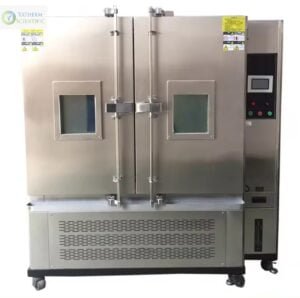
An engineer stands in front of a large steel box with a thick door and a heavy handle. Inside that box is a brand-new electronic device—something that has cost months or even years of development. It looks perfect. It works perfectly. Or at least… it does in the lab.
But the real world is not a lab.
The real world has:
-
Desert heat
-
Arctic cold
-
Coastal humidity
-
Sudden power surges
-
Long years of wear and tear
So the engineer closes the door, presses a few buttons, and walks away.
Inside the chamber, the temperature begins to rise. Or fall. Or cycle. Or moisture starts creeping into the air. The product is about to face years of real-world stress in just a few days or weeks.
That steel box is an Environmental Test Chamber.
And that moment is where confidence is born—or destroyed.
2. What Exactly Is an Environmental Test Chamber?
In simple words:
An environmental test chamber is a controlled environment machine that simulates real-world conditions to test how products behave under stress.
It can simulate:
-
Extreme heat
-
Extreme cold
-
High humidity
-
Dry desert conditions
-
Rapid temperature changes
-
Corrosive environments
-
Long-term aging
-
And sometimes vibration or altitude
These chambers are used to answer one brutal but honest question:
“Will this product survive the real world?”
3. Why America Depends on These Chambers More Than You Think
In the USA, industries don’t just compete on price. They compete on:
-
Reliability
-
Safety
-
Compliance
-
Brand trust
-
Lawsuits avoided
-
Lives protected
Think about where environmental test chambers are used:
-
Aerospace: If a component fails at 35,000 feet, lives are at risk.
-
Automotive: A sensor that fails in winter can cause accidents.
-
Electronics: A phone or server that overheats can destroy data or start fires.
-
Medical devices: Failure is not an option.
-
Defense: Equipment must work in deserts, jungles, and frozen fields.
-
Battery and EV industry: Thermal runaway is a real danger.
-
Solar and energy: Equipment must survive decades outdoors.
Environmental test chambers are not a luxury in America.
They are insurance policies made of steel and sensors.
4. A Walk Through the Different Types of Environmental Test Chambers
Not all chambers are the same. Each one tells a different story.
4.1 Temperature Test Chambers
These are the most common.
They test:
-
High temperature resistance
-
Low temperature performance
-
Temperature cycling (hot to cold to hot)
Used for:
-
Electronics
-
Plastics
-
Automotive parts
-
Aerospace components
4.2 Temperature & Humidity Chambers
Now we add moisture to the story.
They simulate:
-
Tropical heat
-
Monsoon humidity
-
Condensation
-
Long-term damp conditions
Perfect for:
-
Circuit boards
-
Coated metals
-
Packaging
-
Medical devices
4.3 Thermal Shock Chambers
This is where things get violent.
The product is moved suddenly from:
-
Very hot → very cold
or -
Very cold → very hot
This tests:
-
Cracking
-
Expansion and contraction failures
-
Solder joint reliability
-
Material fatigue
4.4 Walk-In Environmental Chambers
When your product is:
-
Big
-
Heavy
-
Or produced in large quantities
You don’t put it in a small box.
You build a room around it.
Used for:
-
Vehicles
-
Large batteries
-
Pallets of products
-
Aerospace assemblies
4.5 Altitude Chambers
These simulate:
-
High mountain conditions
-
Low pressure environments
-
Air transport conditions
Critical for:
-
Aerospace
-
Defense
-
Sensitive electronics
4.6 Corrosion and Special Chambers
Some chambers simulate:
-
Salt spray
-
Chemical exposure
-
Dust and sand
-
Rain and water ingress
Because nature is not polite.
5. How These Chambers Are Actually Built
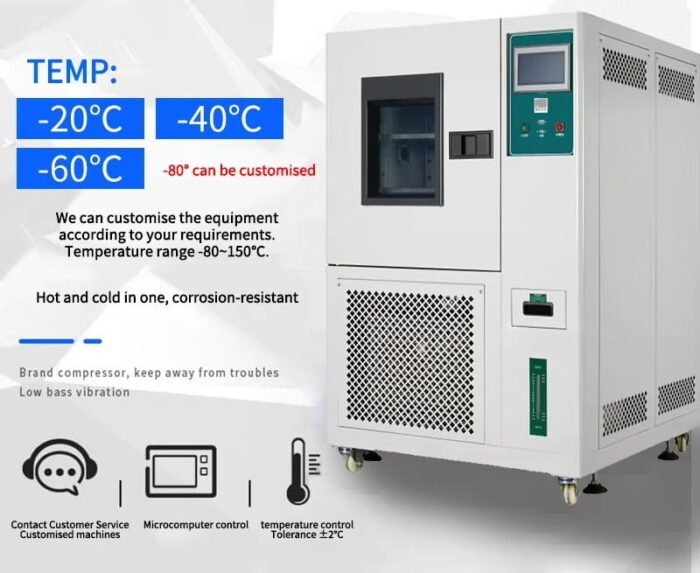
At first glance, an environmental test chamber looks like a big refrigerator.
But inside, it’s more like:
-
A weather factory
-
A physics lab
-
A precision instrument
Key components include:
-
Heavy insulated panels
-
Powerful heating systems
-
Industrial refrigeration systems
-
Humidifiers and dehumidifiers
-
Air circulation systems
-
Sensors and controllers
-
Safety systems
Everything must work together perfectly, because a 1°C error or a 2% humidity mistake can ruin a test.
6. The Rise of Environmental Test Chamber Manufacturers in the USA
America has always been obsessed with:
-
Standards
-
Quality
-
Repeatability
-
Documentation
-
Compliance
So it’s no surprise that the USA is one of the largest markets and innovation centers for environmental test chambers.
Over the years, manufacturers have evolved from:
-
Simple hot/cold boxes
to -
Smart, connected, programmable, highly efficient test systems
Modern American buyers expect:
-
High accuracy
-
Long-term reliability
-
Energy efficiency
-
Excellent service support
-
Custom-built solutions
7. How to Choose the Right Environmental Test Chamber Manufacturer
This is where many companies make expensive mistakes.
They look only at:
“What’s the price?”
But the smarter question is:
“What will this machine cost me over the next 10 years?”
Here’s what American companies usually look for:
7.1 Build Quality
-
Thick insulation
-
Strong doors
-
Industrial-grade components
-
Clean wiring and plumbing
7.2 Performance Accuracy
-
Stable temperature control
-
Uniform conditions inside the chamber
-
Repeatable results
7.3 Customization
Not every product is the same.
Good manufacturers offer:
-
Custom sizes
-
Special ports
-
Unique temperature ranges
-
Special safety features
7.4 Service and Support in the USA
This is critical.
Because when the chamber goes down:
-
Testing stops
-
Production stops
-
Deadlines are missed
-
Money is burned
7.5 Compliance and Documentation
In the USA, paperwork matters:
-
Calibration
-
Validation
-
IQ/OQ/PQ
-
Audit support
8. Let’s Talk About Price (Honestly)
Now we come to the big question:
“How much does an environmental test chamber cost in the USA?”
The honest answer:
It depends.
But here’s a realistic idea:
8.1 Small Bench-Top Chambers
-
Rough range: $5,000 – $15,000
8.2 Standard Reach-In Chambers
-
Rough range: $15,000 – $40,000
8.3 Large or Walk-In Chambers
-
Rough range: $40,000 – $200,000+
8.4 Highly Customized or Special Chambers
-
Can go well beyond $250,000
What affects the price?
-
Size
-
Temperature range
-
Heating and cooling speed
-
Humidity control or not
-
Brand and build quality
-
Control system sophistication
-
Safety features
-
Custom requirements
The Hidden Cost Nobody Talks About
-
Electricity consumption
-
Maintenance
-
Downtime
-
Calibration
-
Spare parts
Sometimes a cheaper chamber ends up being the most expensive decision.
9. The American Buyer’s Mindset: ROI Over Price
In the USA, most serious manufacturers don’t ask:
“How cheap can I get this?”
They ask:
“How much risk does this remove from my business?”
Because one product failure in the field can cost:
-
Millions in recalls
-
Lawsuits
-
Brand damage
-
Lost trust
An environmental test chamber is not a cost.
It’s a shield.
10. The Future of Environmental Testing in the USA
The industry is changing fast.
10.1 Smarter Chambers
-
Touchscreen controls
-
Remote monitoring
-
Data logging
-
Cloud connectivity
10.2 Energy Efficiency
-
Better insulation
-
Smarter compressors
-
Heat recovery systems
Because electricity is not getting cheaper.
10.3 EV and Battery Boom
With electric vehicles and energy storage:
-
Battery testing
-
Thermal runaway testing
-
Abuse testing
…are driving huge demand for advanced chambers.
10.4 Faster Testing Cycles
Companies want:
-
Faster ramp rates
-
Faster results
-
Faster product launches
Time is money.
11. A Real-World Story (That Happens Every Day)
A mid-sized electronics company in the USA once skipped proper environmental testing to save time.
Their product passed basic lab tests.
Six months after launch:
-
Failures started coming from hot and humid regions.
-
Returns piled up.
-
Their support lines were flooded.
-
Retailers lost confidence.
The cost of recalls and brand damage?
Far more than ten environmental test chambers would have cost.
That’s not a rare story.
That’s a common one.
12. Environmental Test Chambers Are Not Just Machines
They are:
-
The last honest judge before a product meets the world
-
The place where weak designs are exposed
-
The reason customers trust your brand
-
The quiet guardians of quality
In America, where competition is brutal and expectations are high, you don’t get a second chance at first impressions.
13. Final Thoughts: Buying a Chamber Is Buying Peace of Mind
When you buy an environmental test chamber, you’re not just buying:
-
Steel
-
Compressors
-
Controllers
You’re buying:
-
Confidence
-
Predictability
-
Safety
-
Reputation
And in today’s world, that is priceless.
Frequently Asked Questions (FAQs)
Q1: How long does an environmental test chamber last?
A good quality chamber can easily last 10–20 years with proper maintenance.
Q2: How much electricity do these chambers consume?
It depends on size and performance, but they are industrial machines and should be planned with proper power infrastructure.
Q3: Can chambers be customized for my product?
Yes. Many manufacturers build fully customized chambers based on size, temperature range, and test requirements.
Q4: Is calibration really necessary?
Absolutely. Without proper calibration, your test data may be invalid or rejected in audits.
Q5: Should I buy cheap or premium?
If your product quality and reputation matter, always think in terms of total cost of ownership, not just purchase price.
Q6: What is the biggest mistake companies make when buying chambers?
Buying based only on price and ignoring service, reliability, and long-term costs.
Q7: Are walk-in chambers worth the investment?
If you test large products or high volumes, yes—they save time and improve workflow dramatically.
Q8: Can one chamber do all types of tests?
Some can do multiple types, but specialized tests often need specialized chambers.
What's Your Reaction?