What Are the Common Email Marketing Mistakes That Hurt Open Rates?
If you publish email-related content or landing pages, alignment with Google's helpful-content direction matters.
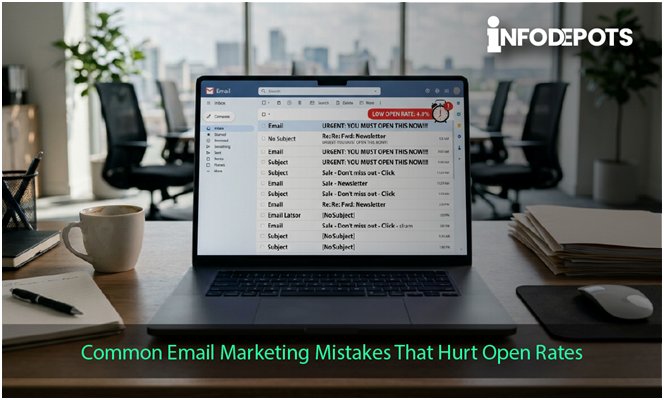
You spent hours crafting the perfect campaign. The offer is strong, the design is clean, and the timing feels right. Then the report comes in, and your open rate barely cracks 15%. Sound familiar? If your messages keep landing with a thud, the problem usually isn't your product. It's a handful of avoidable errors that quietly sabotage performance.
Below, we break down the most common slip-ups in email marketing, why they matter, and how to fix them fast.
Why Open Rates Still Matter in 2026
Some marketers argue that open rates are a vanity metric. They have a point, especially after privacy changes made tracking less precise. But open rates remain the first checkpoint in the funnel. If nobody opens your email, nobody clicks, replies, or buys. For US companies competing in crowded inboxes, that first impression decides everything.
Strong email marketing tips for US businesses all start in the same place: getting the message seen before it gets ignored.
The Mistakes That Quietly Kill Your Open Rates
Most low-performing campaigns share the same root causes. Here are the big ones:
- Weak or generic subject lines: "Newsletter #47" or "Update from our team" gives readers zero reason to click. Specificity and curiosity win.
- Sending from a no-reply address: A faceless sender feels like a billboard, not a conversation. People open emails from people.
- Poor list hygiene: Emailing stale, unverified contacts inflates bounce rates and damages your sender reputation, which pushes future messages into spam.
- Ignoring mobile readers: More than half of emails open on phones. A subject line that gets cut off at 35 characters loses the plot.
- Batch-and-blast sending: One message to your entire list ignores where each subscriber sits in their buying journey.
- Inconsistent timing: Showing up randomly trains readers to forget you exist.
"People don't open emails because of what you sell. They open them because of what's in it for them.”A principle every seasoned marketer learns the hard way.
How Can I Improve Email Open Rates?
This question is one of the most pressing concerns for digital marketers, so let’s address it head-on. How can I improve email open rates? Focus on these levers:
- Write subject lines for one person, not a crowd: Use the reader's language, hint at a benefit, and keep it under 50 characters when possible.
- Clean your list every quarter: Remove hard bounces and re-engage inactive subscribers before they hurt deliverability.
- Use a real sender name: "Sarah from Infodepots" outperforms "Marketing Department" almost every time.
- Test, then test again: A/B test subject lines, preview text, and send times across small segments before rolling out.
- Personalize beyond the first name: Reference industry, past behavior, or a recent interaction to feel relevant.
Making small changes can significantly increase your open rates by several percentage points. These improvements add up across all campaigns.
Where B2B Campaigns Go Wrong
Selling to businesses follows different rules than selling to consumers, yet many teams treat them the same. The most damaging B2B email marketing mistakes USA companies make include:
- Talking about features instead of outcomes: Decision-makers care about revenue, time saved, and risk reduced, not your software's specs.
- Buying low-quality lists: Cheap, unverified data wrecks deliverability and burns your domain reputation.
- Skipping segmentation: A CFO and an IT manager need very different messages, even at the same company.
- Forgetting the human on the other end: Stiff, corporate language gets deleted. Clear, conversational copy gets read.
Avoiding these traps is the foundation of solid B2B email marketing best practices. The brands that win treat every send as a relationship, not a transaction.
Aligning With Google's Latest Ranking Signals
If you publish email-related content or landing pages, alignment with Google's helpful-content direction matters. Google now rewards content that demonstrates real experience and genuine usefulness rather than keyword stuffing. Practically, that means:
- Write for humans first, search engines second.
- Back claims with concrete examples and clear reasoning.
- Keep pages fast, mobile-friendly, and easy to scan.
- Earn trust through transparency, accurate data, and consistent value.
The same logic applies to your inbox strategy. Helpful, honest messaging builds the engagement signals that mailbox providers reward with better placement.
Turn Insight into Action
Open rates are not luck. They are the predictable result of clean data, sharp subject lines, smart segmentation, and respect for your reader's time. Audit your last five campaigns against the mistakes above, fix the obvious gaps, and watch your numbers climb.
If your biggest challenge is reaching the right people in the first place, that's where the right data partner makes the difference. Accurate, verified, and segmented contact lists give every campaign a fighting chance before you write a single word. Ready to stop guessing and start connecting? Partner with a trusted data provider and put your email marketing to work.
What's Your Reaction?