Tablet Hardness Tester
A Tablet Hardness Tester is a laboratory instrument designed to measure the force required to break a tablet under controlled conditions.
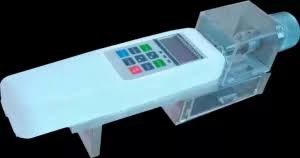
Tablet Hardness Tester: Measuring Strength, Protecting Trust
Why Tablet Hardness Matters More Than It Seems
Imagine opening a bottle of tablets and finding broken pieces at the bottom. The label may be perfect. The dosage may be correct. But trust is already damaged.
Tablet hardness is not about making pills tough for the sake of it. It is about balance.
If a tablet is too soft:
-
It may break during handling
-
It may chip during coating
-
It may crumble in packaging
If a tablet is too hard:
-
It may not dissolve properly
-
It may release medicine too slowly
-
It may fail to deliver the intended effect
In the U.S. pharmaceutical environment, where patient safety and consistency are critical, hardness testing ensures that every tablet strikes the right balance.
What Is a Tablet Hardness Tester?
A Tablet Hardness Tester is a laboratory instrument designed to measure the force required to break a tablet under controlled conditions.
This force, often referred to as crushing strength, provides a clear indication of a tablet’s mechanical integrity. The tester applies pressure gradually until the tablet breaks, recording the exact force at the point of fracture.
In simple terms, it answers one essential question:
Is this tablet strong enough — but not too strong?
From Hand Pressure to Precision Measurement
In the early days of tablet manufacturing, hardness was sometimes judged informally — by feel, by experience, or by visual inspection.
As pharmaceutical production scaled up across the United States, such methods became unacceptable. Consistency, documentation, and repeatability were required.
The Tablet Hardness Tester emerged as a solution that replaced subjectivity with measurable data.
How a Tablet Hardness Tester Works
At its core, the process is straightforward, yet highly precise.
Step 1: Tablet Placement
The tablet is carefully placed between two anvils or platens.
Step 2: Controlled Force Application
Force is applied gradually and evenly. The speed and pressure are controlled to ensure consistent testing conditions.
Step 3: Fracture Detection
The moment the tablet breaks, the tester records the force applied.
Step 4: Result Display
Results are displayed clearly, often in digital format, allowing easy interpretation and documentation.
This repeatable process ensures that every test tells a reliable story.
Manual vs Digital Hardness Testers
Manual Testers
Manual testers rely on operator input. They are simple and cost-effective, often used in small laboratories or educational settings.
Digital and Automatic Testers
Modern U.S. laboratories increasingly use digital or automatic testers that offer:
-
Higher accuracy
-
Reduced operator error
-
Faster testing
-
Digital data recording
Automation reflects the American focus on efficiency, compliance, and scalability.
Applications Across the U.S. Pharmaceutical Industry
Quality Control Laboratories
Hardness testing is a routine part of in-process and final product quality checks. It ensures batch-to-batch consistency before release.
Research and Development
During formulation development, scientists adjust binders, compression force, and ingredients. Hardness testing provides immediate feedback on these changes.
Generic Drug Manufacturing
Matching the physical characteristics of reference products is critical. Hardness testing helps ensure equivalent performance.
Academic and Training Institutions
Pharmacy and pharmaceutical science programs across the USA use hardness testers for hands-on education.
Why Hardness Testing Is Critical in the USA
The U.S. pharmaceutical market is one of the most regulated and competitive in the world. Companies must deliver products that are:
-
Safe
-
Effective
-
Consistent
-
Reliable
Tablet hardness testing supports all four.
It also helps manufacturers avoid:
-
Product recalls
-
Customer complaints
-
Brand damage
-
Financial loss
Relationship Between Hardness and Dissolution
Hardness does not exist in isolation.
A tablet that is too hard may fail dissolution tests. A tablet that is too soft may fail friability tests. Hardness testing acts as a bridge between mechanical strength and drug release behavior.
In U.S. labs, hardness data is often evaluated alongside:
-
Dissolution results
-
Friability data
-
Weight variation
Together, they tell the full quality story.
User-Friendly Design for Modern Laboratories
Modern tablet hardness testers are designed with the operator in mind.
Common features include:
-
Clear digital displays
-
Simple operation
-
Compact design
-
Easy calibration
This usability supports productivity in busy quality control environments.
Training and Workforce Efficiency
With skilled labor at a premium, especially in high-volume U.S. facilities, easy-to-use instruments matter.
Tablet hardness testers:
-
Reduce training time
-
Ensure consistent results across shifts
-
Minimize operator dependence
This consistency strengthens overall quality systems.
Cost Savings Through Early Detection
Hardness testing helps catch problems early.
Identifying tablets that are too soft or too hard during production prevents:
-
Large batch rejections
-
Downstream processing issues
-
Waste of materials and time
Over time, this translates into significant savings.
The Human Impact Behind the Numbers
Behind every hardness value is a person — a patient relying on consistent medication.
The technician performing the test understands the responsibility. The quality manager reviewing results knows that small deviations can have big consequences.
The Tablet Hardness Tester quietly supports both.
Choosing the Right Tablet Hardness Tester
When selecting a tester, U.S. buyers often consider:
-
Measurement accuracy
-
Digital capability
-
Ease of use
-
Reliability
-
After-sales support
The right instrument becomes a long-term partner in quality.
The Future of Tablet Hardness Testing
As pharmaceutical technology evolves, hardness testers will continue to advance.
Future developments may include:
-
Greater automation
-
Integrated data systems
-
Faster throughput
-
Smarter analytics
But the core purpose will remain unchanged: protecting tablet integrity.
Frequently Asked Questions (FAQs)
What is a tablet hardness tester used for?
It measures the force required to break a tablet, ensuring mechanical strength and quality.
Why is tablet hardness important?
Because it affects handling, packaging, dissolution, and patient experience.
Is digital hardness testing better than manual testing?
Yes. Digital testing offers higher accuracy, consistency, and easier data recording.
Who uses tablet hardness testers in the USA?
Pharmaceutical manufacturers, research labs, and academic institutions.
Can hardness testing prevent product recalls?
Yes. Early detection of improper hardness helps avoid quality failures.
Does hardness affect how a tablet works in the body?
Yes. Hardness influences dissolution and drug release behavior.
Final Thoughts: Strength You Can Trust
A tablet’s strength is not measured by how hard it feels between fingers, but by how reliably it performs from factory to patient.
The Tablet Hardness Tester ensures that strength is consistent, measurable, and trustworthy.
In laboratories across the United States, it stands as a quiet guardian — transforming pressure into data, data into confidence, and confidence into better healthcare.
What's Your Reaction?